
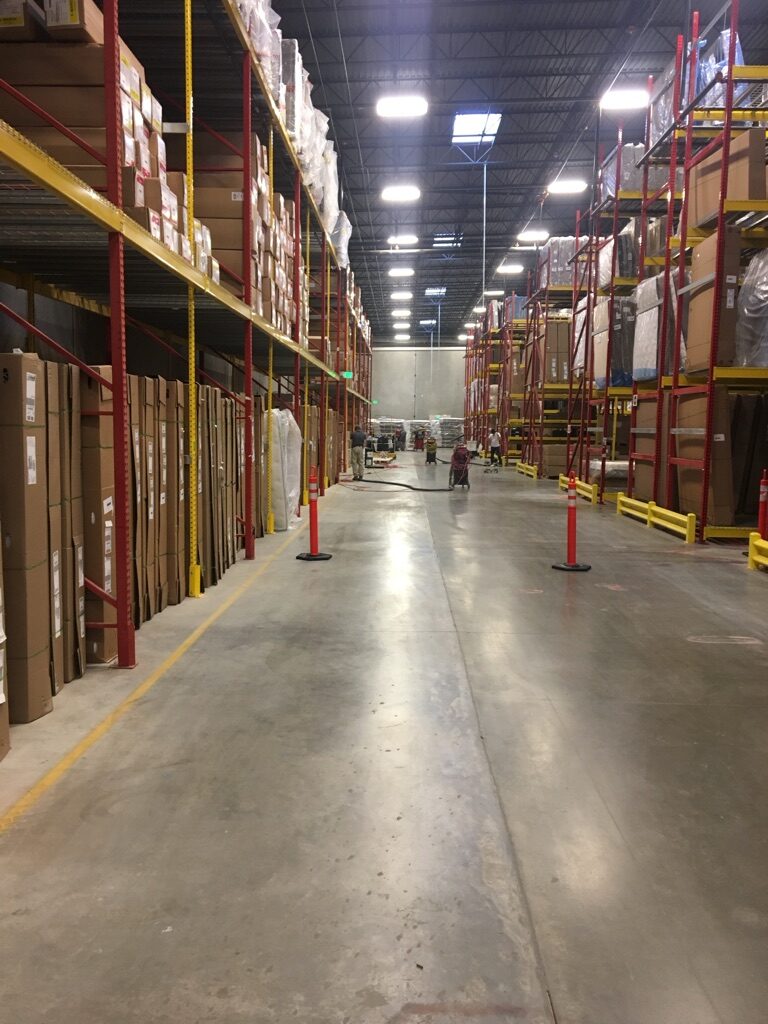
Repair & resurfacing in progress · our install
Commercial · Industrial · Front Range
Concrete Repair in Denver — Facility & Floor Specialists
Looking for concrete repair in Denver for a working facility? Colorado Concrete Repair focuses on commercial and industrial floor repair across Denver and the Front Range. Start with the conditions that affect your operation: cracked concrete, spalled surfaces, damaged joints, rough forklift aisles, or worn loading dock edges.
For warehouses, plants, multifamily common areas, and commercial properties, the repair conversation should connect the slab condition with traffic, access, and the next use of the floor. Is the goal a localized repair, broader restoration, or preparation for a coating? Bring the affected area, facility type, and available work windows to the assessment discussion. Call 303-974-6707 to request a facility assessment and discuss concrete floor repair for your site.
Concrete Floor Repair
Start with the floor’s condition and intended use. For an exposed slab, the assessment discussion centers on damaged areas and traffic transitions. For a future coating, include existing patches, joints, moisture concerns, and the finish under consideration. A repair plan needs more detail than the size of the visible defect.
Compare concrete grinding for surface preparation with concrete leveling when changes in elevation are part of the problem. Ask which conditions need repair before selecting epoxy flooring or urethane cement. Material choice belongs with the assessment: epoxy or resinous repair materials, polyurea joint fillers, and urethane mortar systems are discussion points where relevant, not a specification for every damaged floor.
Denver Facility Concrete Repair
For Denver and Front Range facility managers, GCs, and property managers, concrete repair starts with a clear description of the space. Note the facility location, indoor or outdoor exposure, loading dock access, and whether the affected floor serves production, storage, or shared circulation.
Commercial and industrial floors are the focus here. For light commercial spaces, multifamily common areas, or a garage within a commercial property, describe the use and traffic when you call so the scope can be discussed in context.
Concrete Cracks, Spalls and Joints
Use the visible problem to start the assessment conversation. The repair approach depends on the underlying condition and the facility’s use.
| Problem to show at the assessment | Repair direction to discuss | Facility information to bring |
|---|---|---|
| Cracks or repeated cracking beside an old patch | Crack behavior, failed material removal, and the suitability of a repair system | Changes over time, traffic, and previous repairs |
| Spalls, holes, or broken surface edges | Extent of deterioration and localized patching or rebuilding | Affected area, exposure, and the intended finish |
| Broken joint shoulders or missing joint filler | Joint condition, edge rebuilding, and a compatible filler | Wheel traffic, joint movement, and cleaning conditions |
| Forklift damage in warehouse aisles | Local repair areas and transitions across the traffic route | Vehicle loads, wheel types, turning points, and alternate routes |
| Damaged dock edges or loading transitions | Limits of edge repair and whether further evaluation is needed | Loading access, impacts, and indoor/outdoor exposure |
| Uneven slabs or recurring elevation changes | Whether grinding, leveling, repair, or further evaluation fits | Where the elevation changes and whether it is progressing |
| Widespread wear or multiple failed patches | Restoration scope compared with replacement | Floor history, future use, and available access windows |
Commercial Concrete Repair
Commercial concrete repair starts with the areas people and equipment use every day: slabs, loading docks, aisles, joints, and transitions. Bring a marked floor plan or photos of damaged areas to the discussion, along with any limits on access. Separate isolated defects from a broader floor restoration need so the scope addresses the condition of the space.
For an occupied property, include deliveries, shared entrances, tenant access, and cleaning schedules in the planning conversation. These details help define the work area and the questions that need answers before a repair schedule is agreed.
Industrial Concrete Repair
Plant floors need a repair discussion that accounts for the work around them. Identify traffic class, equipment loads, chemical exposure, temperature conditions, and the requested reopen window. Include existing patches and any planned coatings so the repair and finish can be considered together.
Warehouse Floor Repair
For warehouse floor repair, map forklift travel through aisles, dock approaches, turning areas, and joints. Show spalls, broken joint edges, and recurring impact damage along those routes. Ask whether the scope can be divided into work zones, what access each zone needs, and how material curing affects the proposed return to traffic.
Planning warehouse concrete repair and a new finish together? Review warehouse epoxy coatings and bring the intended floor use to the assessment. A requested reopen window is a planning input, not a confirmed completion time.
Commercial Concrete Restoration, Repair or Resurfacing?
Use these distinctions to frame the site discussion:
- Repair: address identified defects such as cracks, spalls, damaged joints, or isolated failed patches.
- Restoration: consider the floor as a whole, including multiple repair areas and its intended service condition.
- Resurfacing or coating: discuss the next wearing surface alongside substrate condition and preparation requirements.
- Replacement: include this option in the evaluation when deterioration, movement, or repeated failures put the suitability of repair in question.
The choice needs an assessment of the floor. Describe the problem and intended use before selecting a finish or assuming replacement is necessary.
Planning Concrete Repair Around Facility Operations
Bring these four stages into the scope discussion:
- Assessment: identify damaged areas, prior repairs, exposure, traffic, and the facility’s access constraints. Flag changes in elevation or continuing movement for evaluation.
- Surface preparation: discuss removal of failed material, preparation of the repair area, and separation of work from nearby operations.
- Repair system: confirm the proposed material and scope against the floor condition, equipment use, chemical exposure, and any planned coating.
- Reopen timeline: agree the work zones and access arrangements, then confirm return-to-use requirements for the selected system and actual site conditions before traffic resumes.
For a live facility, identify possible alternate routes and preferred shutdown windows early. Ask about phasing and the controls needed around each work zone. Scheduling and return to traffic depend on the agreed scope and site conditions.
Concrete Repair for Commercial and Industrial Facilities
Explore the context for your facility before the site discussion:
- Warehouse flooring: bring aisle, dock, joint, and forklift-route details.
- Manufacturing flooring: identify production access, equipment traffic, and exposure conditions.
- Food processing flooring: describe cleaning routines, moisture, and the intended floor system.
- Cold storage and freezer flooring: include operating temperatures and access limits in the scope discussion.
Browse CCR case studies for project context, and share your facility details to start a repair discussion.
Request a facility assessment
Call 303-974-6707 to discuss the damaged areas, your facility type, and available access windows.
Concrete Repair — Common Questions
Does CCR offer concrete repair in Denver and the Front Range?
Colorado Concrete Repair focuses on commercial and industrial floor repair in Denver and the Front Range. Call 303-974-6707 with your facility location and the affected areas to discuss fit and access. Include whether the damage is indoors or outdoors, since exposure is part of the scope discussion.
Is concrete floor crack repair the same as structural repair?
This page focuses on facility floors, cracks, spalls, and joints. Describe any continuing movement, changing elevations, or repeated failures during the assessment discussion rather than assuming a surface repair fits. For industrial concrete crack repair, include equipment loads and prior repairs; confirm whether separate structural evaluation is needed before agreeing a repair scope.
How should we plan commercial downtime and warehouse aisle repair?
Bring shift times, delivery needs, forklift routes, and possible alternate aisles to the discussion. Ask whether the work can be phased and what separation and access controls each zone needs. Confirm the repair system, site conditions, and return-to-traffic requirements before setting a reopen time; a preferred shutdown window is not a confirmed schedule.
Can a floor receive a coating after repair, or does it need leveling first?
Discuss uneven areas, cracks, joints, old patches, and the proposed finish together. Ask which conditions call for leveling or grinding, which need repair, and what preparation and compatibility checks the selected coating requires. Include epoxy or urethane cement in the discussion where relevant to the facility’s use.
When should we consider commercial concrete restoration instead of replacement, and what affects cost?
Ask the assessment to compare the extent and depth of damage, slab condition, prior repairs, and future floor use. Local repair, broader restoration, resurfacing, and replacement are different scope options. Cost drivers include the affected area, removal and preparation, access, material selection, and work phasing. A site-specific scope is needed to compare the options.
What warranty questions should a facility manager ask about concrete repair?
Ask which written warranty terms, if any, apply to the proposed repair scope and material system, and review the stated limitations before agreeing to the work. Bring questions about existing damage, movement, exposure, and maintenance to that discussion. This page states no warranty term or coverage.