
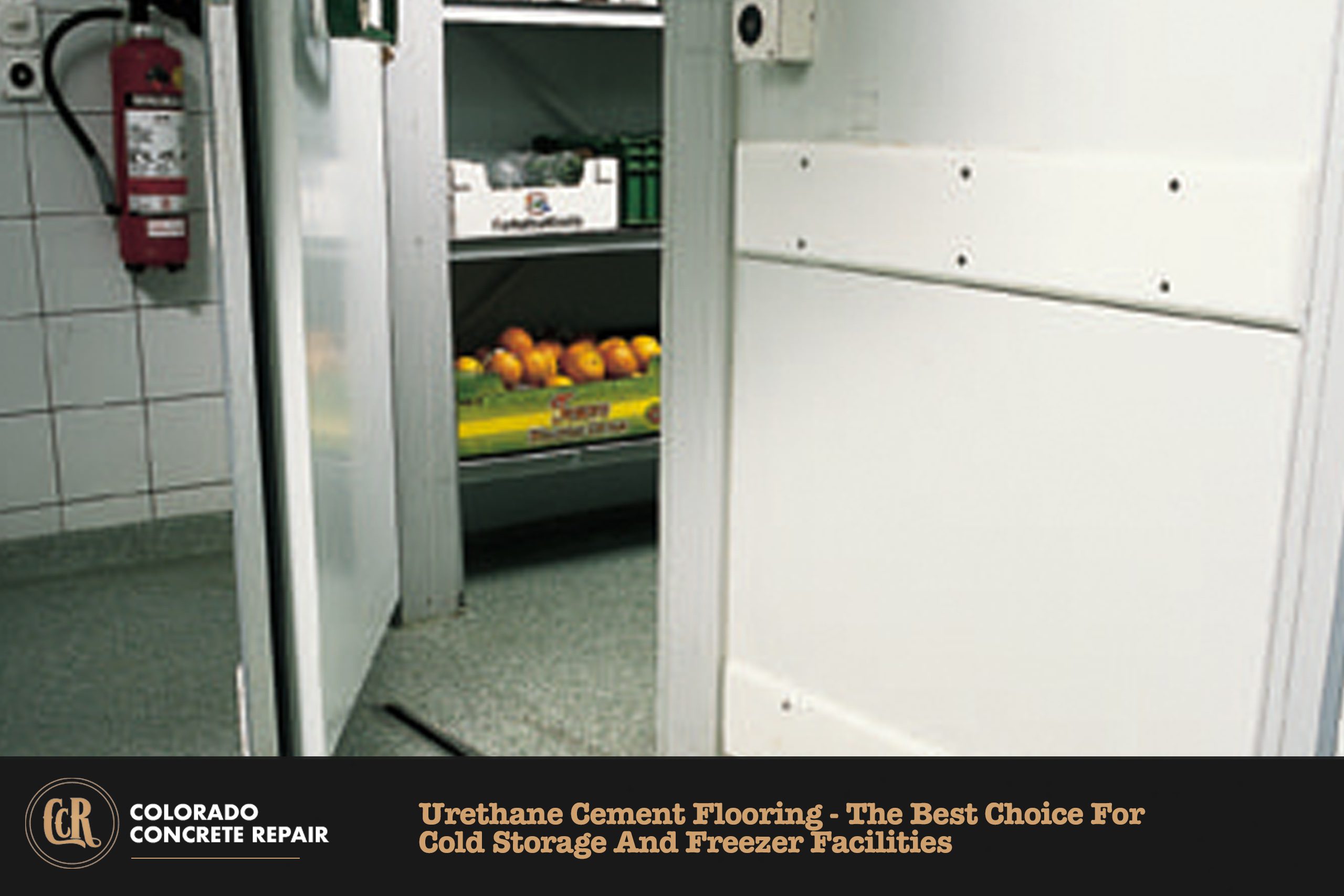
Urethane Cement Flooring: The Best Choice for Cold Storage and Freezer Facilities
Cold storage and freezer floors fail for predictable reasons — thermal shock, moisture migration, aggressive washdowns, and relentless forklift traffic. Colorado Concrete Repair installs urethane cement flooring systems built from the substrate up to handle every one of these conditions in refrigerated and frozen environments.
Thermal Shock Rated
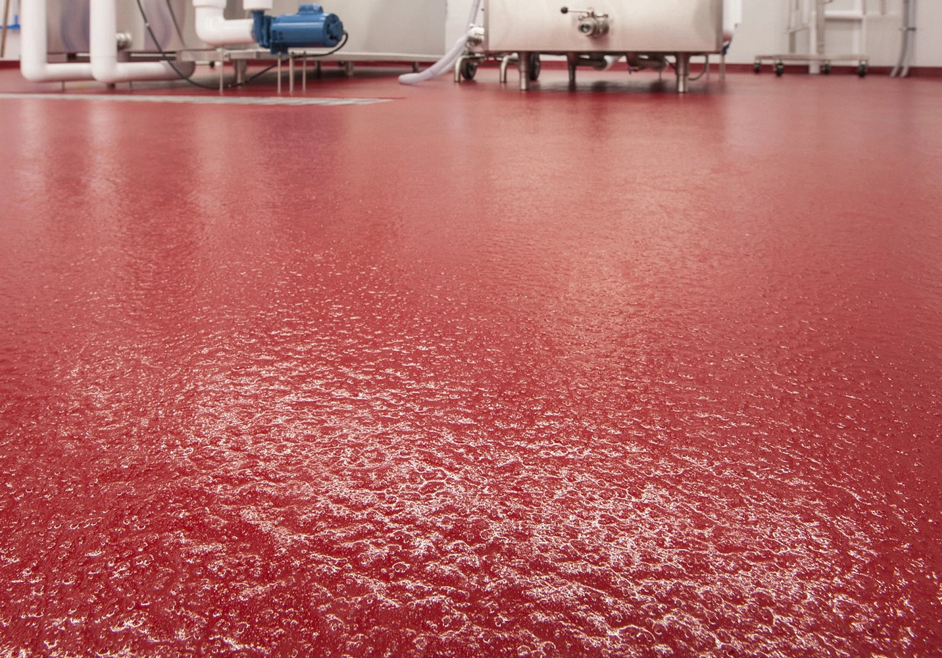
Urethane cement withstands rapid temperature swings from sub-freezing storage to hot-water washdowns — without cracking, blistering, or debonding
Weekend/Holiday Scheduling
CCR schedules cold storage urethane cement projects around production — including weekend and holiday installs to minimize disruption to operations
Resinwerks BioCem
CCR installs Resinwerks BioCem urethane cement — a high-build, moisture-tolerant system specified for cold chain and food processing environments
Cold Storage and Freezer Flooring Systems Compared
Not every flooring system survives the thermal cycling, moisture conditions, and mechanical abuse in cold-chain environments. Here is how the main options compare.
Urethane Cement (BioCem)Cold Storage Standard▼
Best for: Freezer rooms, refrigerated warehouses, cold-chain processing areas, and any temperature-controlled environment where the floor must handle thermal shock, moisture, and heavy traffic simultaneously
✓ Strengths:
- Industry-leading thermal shock resistance — handles swings from sub-zero to hot washdown without bond failure
- Moisture-tolerant formulation bonds to slabs with elevated moisture vapor transmission
- High-build, dense wearing surface stands up to pallet jacks, forklifts, and cart traffic
- Seamless surface prevents bacterial growth and supports USDA/FDA sanitation requirements
- Chemical resistance against cleaning agents, organic acids, and deicing compounds
Tradeoffs:
- Multi-day installation per zone — requires coordination with production schedules
- Higher material cost than standard epoxy or sealed concrete
- Substrate must be properly prepared — diamond grinding and crack repair before application
Common applications: urethane cement flooring, cold storage warehouses, freezer rooms, food and beverage cold-chain operations
Standard Epoxy CoatingGeneral Industrial▼
Best for: Ambient-temperature warehouses and dry storage areas where thermal shock is not a factor — corridors, staging areas, and non-refrigerated zones adjacent to cold rooms
✓ Strengths:
- Lower installed cost than urethane cement systems
- Good chemical and abrasion resistance for ambient conditions
- Wide range of color and finish options for zone marking
Tradeoffs:
- Cannot tolerate thermal shock — will crack, blister, or delaminate in freezer and cold-room conditions
- Lower moisture tolerance from substrate — bond failure is common in slabs with high MVT
- Not recommended for any area exposed to regular freeze-thaw cycling
Common applications: epoxy flooring systems, ambient warehouses, dry staging areas, non-refrigerated support spaces
MMA (Methyl Methacrylate) ResinFast-Cure Alternative▼
Best for: Cold storage facilities where extremely short installation windows are the primary constraint and the system must cure at low temperatures
✓ Strengths:
- Extremely fast cure — can be installed and returned to service within hours
- Cures at low temperatures where epoxy and some urethane cements cannot
- Good chemical and abrasion resistance for cold storage environments
Tradeoffs:
- Strong odor during installation — requires ventilation and may not be suitable for occupied facilities
- Typically thinner build than urethane cement — less impact resistance under heavy loads
- Higher material cost per square foot than standard urethane cement builds
Common applications: cold storage emergency repairs, concrete repair and resurfacing, freezer threshold zones, rapid-turnaround cold-chain projects
Sealed or Densified ConcreteBasic Protection▼
Best for: Dry cold storage areas with light traffic where the primary concern is dust control and basic surface hardening — not chemical resistance or sanitation compliance
✓ Strengths:
- Lowest installed cost of any cold storage flooring approach
- Penetrating sealers harden and densify the concrete surface without adding a topical layer
- Minimal maintenance and no delamination risk — there is no coating to fail
Tradeoffs:
- No chemical resistance — not suitable for areas with washdowns or chemical exposure
- No seamless barrier — cannot meet USDA/FDA sanitation requirements
- Limited protection against freeze-thaw damage, spalling, and joint deterioration
Common applications: polished and sealed concrete, dry cold storage, pallet storage areas, non-washdown freezer zones
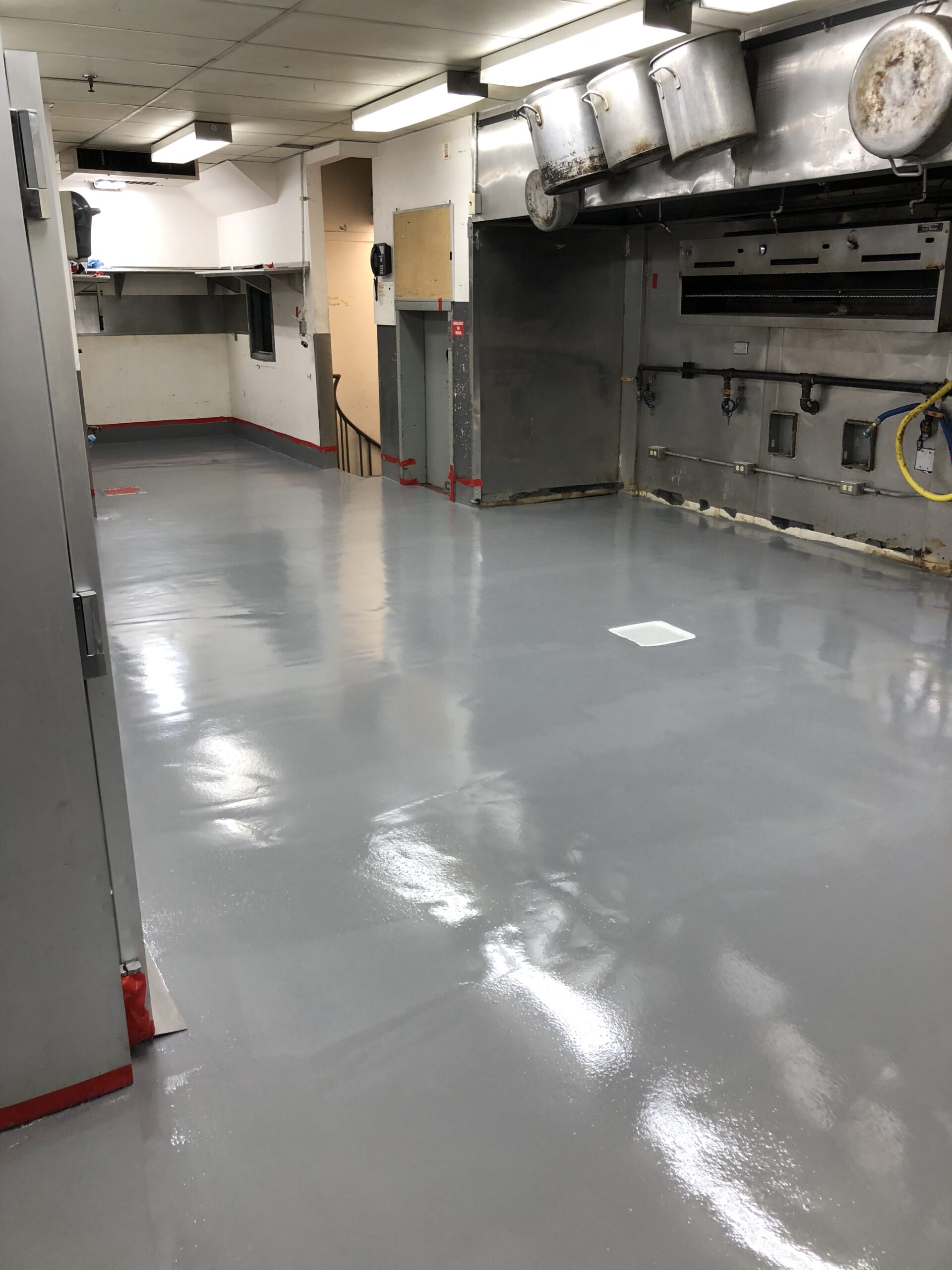
COLD STORAGE URETHANE CEMENT
Frequently Asked Questions About Urethane Cement for Cold Storage
Why does epoxy fail in cold storage and freezer environments?
Standard epoxy systems are rigid and have limited tolerance for thermal expansion and contraction. When a cold-room floor cycles between sub-freezing operating temperatures and hot-water washdowns, the substrate and coating expand and contract at different rates. Epoxy cannot absorb that stress — leading to cracking, blistering, and delamination. Urethane cement is formulated with greater flexibility and moisture tolerance specifically to handle these conditions.
How does CCR prepare concrete in cold storage for urethane cement?
Surface preparation in cold storage starts with bringing the slab to a workable temperature and removing any existing coatings or failed systems. CCR uses diamond grinding and shot blasting to achieve the correct concrete surface profile, repairs cracks and deteriorated joints, and tests for moisture conditions. In freezer environments, substrate prep is especially demanding because ice formation, moisture migration, and existing damage all affect the bond of the new system.
Can urethane cement be installed while the cold storage facility is operating?
Yes, but it requires careful scheduling. CCR phases cold storage urethane cement installations around production — isolating zones, coordinating temperature management, and working during weekend or holiday shutdown windows when possible. Recent cold-chain projects have been scheduled specifically to avoid disrupting storage, picking, and production operations while still completing the work within tight timelines.
How long does urethane cement last in a freezer or cold room?
When properly specified and installed on a well-prepared substrate, urethane cement systems in cold storage environments typically deliver many years of service life — far exceeding what standard epoxy or sealed concrete can achieve in the same conditions. Longevity depends on traffic intensity, cleaning protocols, and the quality of the original installation. CCR focuses on substrate preparation and system specification to maximize the service life of every cold-chain project.
Does urethane cement handle moisture vapor transmission from the slab?
Urethane cement has inherently higher moisture tolerance than epoxy systems — it can bond and perform on slabs with elevated moisture vapor emission rates that would cause standard coatings to fail. This is particularly important in cold storage where temperature differentials between the slab and operating environment can drive moisture through the concrete. CCR tests MVT conditions as part of every cold storage substrate evaluation.
Request a Site Assessment
Tell us about your facility. We’ll evaluate your substrate condition, exposure profile, and operational constraints — then recommend the right system.