
Reviewed June 12, 2026 · Nick Ferguson, owner — industrial flooring contractor, Denver, since 2009
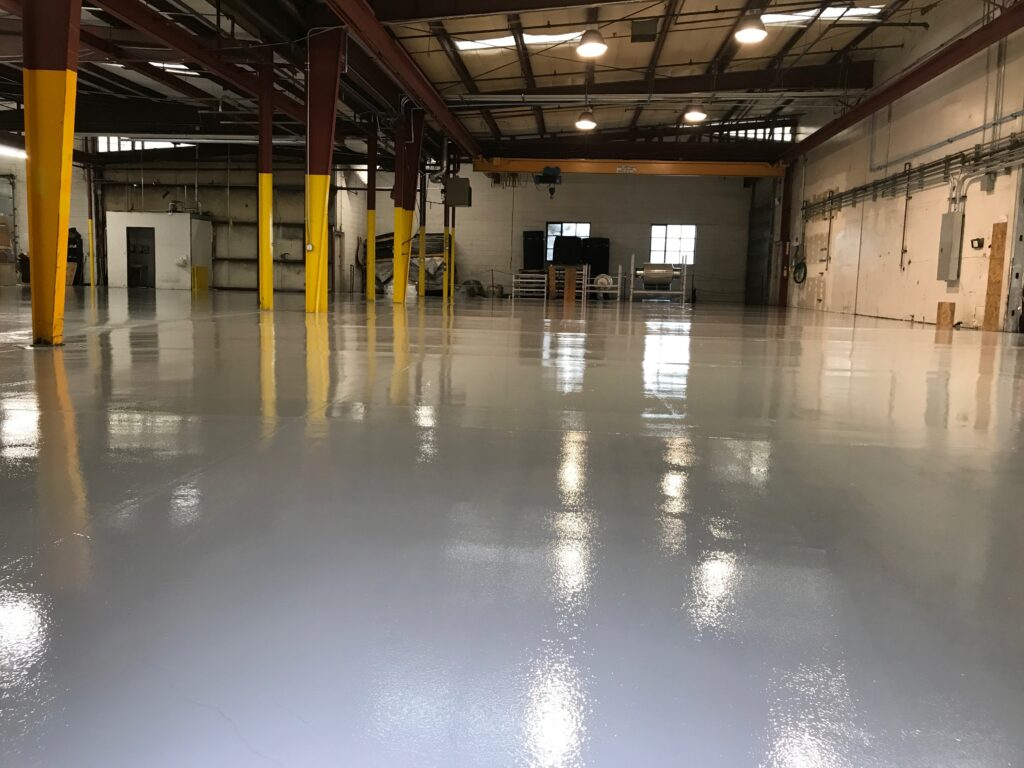
Manufacturing & Industrial Flooring Denver
Novolac Epoxy, Urethane Cement & Epoxy Systems for Production Floors & Machine Shops, Plus the Repairs Under Them
Which floor system survives your forklifts and your chemicals? Colorado Concrete Repair repairs and coats manufacturing and industrial floors in the Denver metro. Our industrial quotes list Resinwerks novolac epoxy, urethane cement and epoxy systems, plus patch, crack and joint repairs where the floor needs them. 1,000+ completed projects. Proud member of Associated General Contractors (AGC).
OR, TELL US ABOUT YOUR PROJECT:
Which System Holds Up to Forklifts and Chemicals?
It depends on the traffic and the chemicals. Each maker’s data sheet sets its product’s ratings. Our quote for a chemical-resistant floor in a water district building lists Resinwerks novolac epoxy with a silica sand broadcast. Our quote for a cold storage dock in a warehouse and manufacturing building lists 1/4 inch BioCem urethane cement.
Can It Go Down on a Weekend?
It can when the quote plans for it. Phasing, off-hours and weekend work can be part of a quoted plan. Our line striping quote for a warehouse and manufacturing building included off-hours and weekend work. Our lobby quote covered one phase and noted that extra phases for access would mean a change order.
How Long Until We Can Drive on It?
That comes from the maker’s data sheet for the product in your scope. Resinwerks lists heavy traffic on its novolac epoxy at 3 to 5 days at 72°F. Resinwerks lists heavy traffic on BIO-CEM SL at 24 hours at 72°F. Cure time changes with the product and the conditions on site.
FREQUENTLY ASKED QUESTIONS
Industrial Floor Repair and Coating Questions From Plant Managers
What flooring system holds up best under heavy machinery and forklift traffic?
It depends on what runs over the floor and what spills on it. Our industrial quotes list epoxy, novolac epoxy and urethane cement systems, some with a sand broadcast. Each maker’s data sheet sets the traffic and chemical rating for its product. We usually install one system on a floor.
How can a manufacturing facility repair floors exposed to chemicals?
Repair the concrete first, then put down a system rated for those chemicals. Our chemical-resistant novolac quote lists grinding or media blasting on HEPA vacuums, then patches filled and ground flush where necessary. The quote then lists a novolac epoxy broadcast coat with silica sand and a novolac topcoat. Resinwerks’ data sheet sets that system’s chemical rating.
Can you install safety line striping and demarcation as part of the flooring project?
Yes, when the scope includes it. Lanes and hatch areas can be part of the floor work. Our striping quote for a warehouse and manufacturing building lists shot blasting on a HEPA vacuum, then taping the lines in the layout and width you want. That quote then lists Kinetic 85 polyaspartic polyurea striping.
Our concrete floors generate dust that contaminates products. What are our options?
Grind and seal is one option. Our grind and seal quote for a manufacturer’s lobby lists 30-grit to 80-grit diamond grinding on HEPA vacuums to take off the top layer of dirt and concrete. It also lists crack fill if desired, joint fill if applicable and a sealer. Where chemicals hit the floor, a coated system may fit better.
Our production floor has impact damage and spalling from dropped tools and heavy parts. Can it be repaired?
It depends on how deep the damage goes. Partial-depth floor repair is part of our work. Our coating quotes list steps such as removing, filling and grinding flush cracks, spalls and joints where they occur, with construction joints honored. Our urethane cement quote also saw cuts honored expansion joints and fills them with polyurea joint filler.
Manufacturing Flooring Systems Compared
Select a system to see installation details, performance strengths, and tradeoffs.
High-Build EpoxyProduction & assembly▼
Best for: Floors where the maker’s data sheet fits your traffic and chemicals. Resinwerks lists its novolac epoxy for secondary containment, industrial and manufacturing floors, battery charging areas and auto and equipment service.
✓ Strengths:
- Silica sand broadcast and a novolac topcoat in our chemical-resistant quote
- Resinwerks states its novolac epoxy can go direct on slab-on-grade concrete and suits high moisture slabs
- HDC 100 urethane topcoat over epoxy as an upgrade option in our quotes
- Resinwerks lists its CRU topcoat for floors with heavy chemical attack
Tradeoffs:
- Resinwerks lists heavy traffic on its novolac epoxy at 3 to 5 days at 72°F
- Our quotes list grinding or media blasting to clean, profiled concrete before it goes down
- Each product’s chemical rating comes from its own data sheet
Urethane CementChemical & thermal exposure▼
Best for: Floors the maker lists the product for. Sherwin-Williams lists Poly-Crete MDB, a 1/4 inch urethane cement with quartz broadcast, for warehouses, manufacturing, machine shops and tool cribs.
✓ Strengths:
- Resinwerks lists BIO-CEM MF for industrial manufacturing, food and beverage manufacturing, breweries and pharmaceutical facilities
- Resinwerks lists heavy traffic on BIO-CEM SL at 24 hours at 72°F
- Our cold storage dock quote lists a CSP 2 or greater profile, a sand-seeded BioCem TC coat and 1/4 inch BioCem MF
- Honored expansion joints saw cut and filled with Edge-Pro 90 polyurea in that quote
Tradeoffs:
- Cure time depends on the product and the conditions
- Ratings differ from one urethane cement product to the next, so check each data sheet
- Our quote marks which expansion joints get honored in the floor
Polished ConcreteWarehousing & corridors▼
Best for: Epoxy will not stay bonded to concrete with oil contamination in it. On heavily contaminated slabs, a polish is often the lower-risk system.
✓ Strengths:
- We quote polish as its own floor system
- Grinding runs on HEPA-connected dust collection
- Patch, crack and joint repairs can be added where the floor needs them
Tradeoffs:
- Where chemicals hit the floor, a coated system with a maker’s chemical rating may fit better
- Cure and return to service depend on the products in the scope
- Patched spots may not match the existing concrete
Concrete Repair & ResurfacingScope-based · Substrate repair▼
Best for: Floors with cracks, spalls and broken joints. Partial-depth repair can go under a new coating or stand on its own.
✓ Strengths:
- Our urethane cement quote lists removing, filling and grinding flush cracks, spalls and joints where they occur
- That quote honors construction joints, and saw cuts and fills with polyurea the expansion joints marked to be honored
- Moisture mitigation is within our scope
Tradeoffs:
- Repairs are quoted for the cracks, spalls and joints your floor has
- In our coating quotes, the repairs come before the coating
- Timeline depends on the repairs and each product’s cure time
Grind & SealLight-duty & maintenance areas▼
Best for: Lobbies and similar areas. Our grind and seal quote for a manufacturer’s lobby lists diamond grinding on HEPA vacuums, crack fill if desired, joint fill if applicable and a sealer.
✓ Strengths:
- 30-grit to 80-grit diamond grinding takes off the top layer of dirt and concrete
- Where joint fill applies, joints are cleaned with a saw on a HEPA vacuum, filled with flexible polyurea and shaved flush
- Epoxy basecoat and HDC 100 urethane topcoat as an upgrade in place of the sealer
Tradeoffs:
- Cementitious patches are not expected to match the existing concrete
- With many cracks, flexible caulking can look better than routing every crack
- Extra phases for access can mean a change order
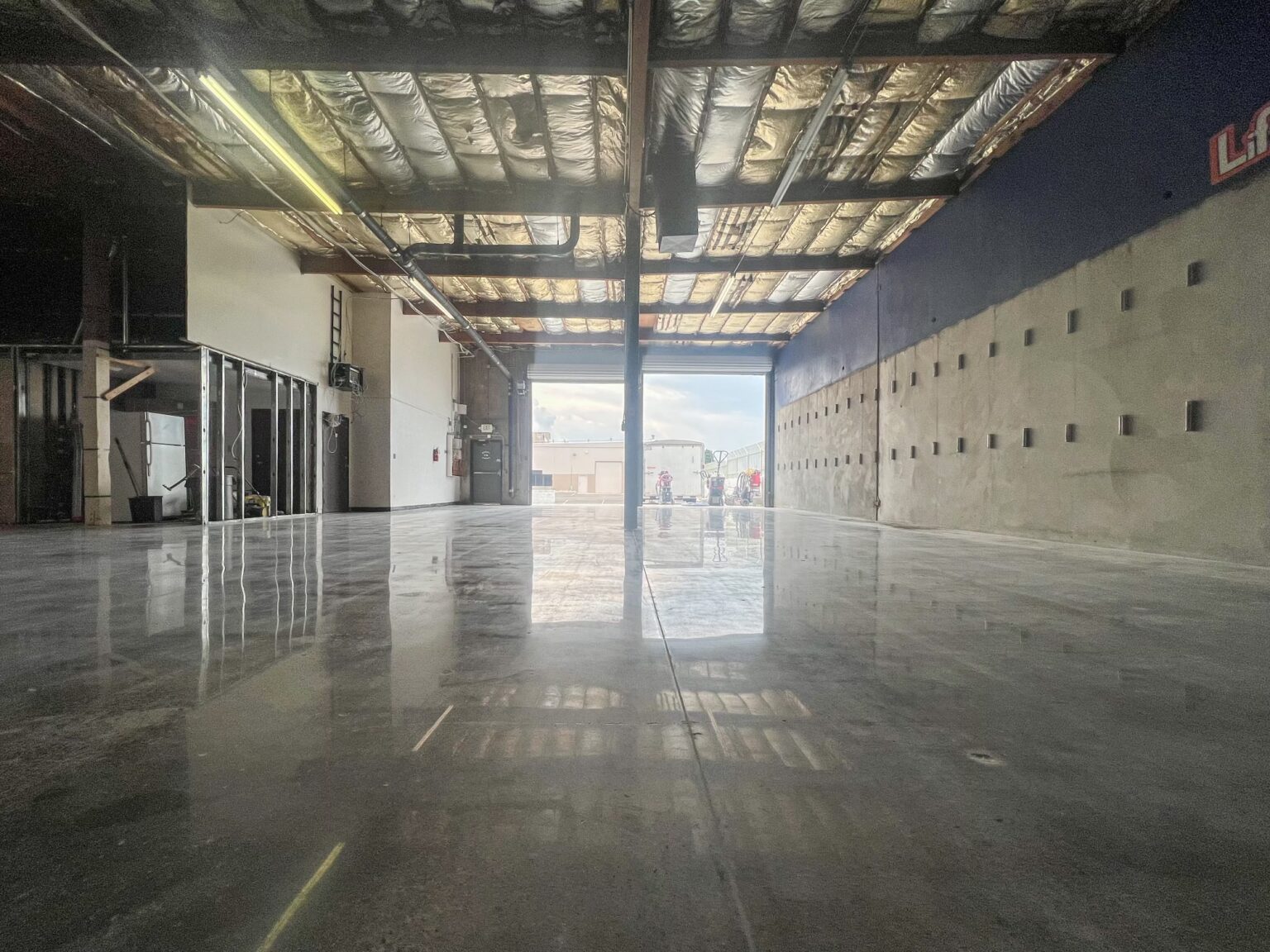
How Our Manufacturing Flooring Process Works
A practical process focused on planning, installation, and clean handoff.
STEP 01
Cooperative Planning
We review site conditions with your team, discuss schedule and operating constraints, and compare suitable system options. The goal is to align scope, phasing, and expectations before work begins.
STEP 02
Install the Chosen System
After scope approval, we execute the selected system and prep approach for the area and use case. Work is sequenced to match operational needs and project constraints defined during planning.
STEP 03
Handoff and Next Steps
We complete a final walkthrough with your team, confirm installed scope, and share practical care guidance. Any remaining punch-list items are documented and closed through the agreed handoff process.
FREQUENTLY ASKED QUESTIONS
More Questions About Manufacturing and Industrial Floor Coatings
Answers on downtime, phasing, striping and failed coatings.
How long does installation take, and how much production downtime should we plan for?
It depends on the floor size, the repairs and the product’s cure. Phasing, off-hours and weekend work can be part of a quoted plan. Foot traffic, vehicle traffic and chemical service each get their own cure time on the maker’s data sheet. We agree access and cure conditions for each job.
Can you work inside an active manufacturing facility that cannot be fully shut down?
Yes, when the work can be phased. Phasing, off-hours and weekend work can be part of a quoted plan, so one area can be worked while others keep running. In our quotes, grinding, scarifying and blasting equipment runs on industrial HEPA filter vacuums. Each area needs its product’s cure time from the maker’s data sheet before traffic goes back on.
Can you add a sand broadcast and safety striping to the floor?
Yes, when the scope includes it. Our chemical-resistant novolac quote broadcasts silica sand aggregate into the coat before the topcoat. Line striping and hatch areas can be part of the floor scope too. Our striping quote lists taping the layout you want on the floor before the striping goes down.
Our existing floor coating is failing. Can it be repaired or does it need full replacement?
It depends on why it failed and how deep the damage goes. Our coating quotes list grinding or media blasting on HEPA vacuums to clean, profiled concrete. They then list removing, filling and grinding flush cracks, spalls and joints where they occur, unless joints are to be honored as construction joints. The new system goes down after those repairs.
Do we need a different floor system in every zone?
Usually not. We usually install one system on a floor. We pick it from the maker’s data sheets against the traffic and chemicals that floor sees. Phasing by area is a separate question. It can be part of a quoted plan, so the other areas of the plant can keep running while one area is down.
Why Manufacturing Teams Choose CCR for Industrial Flooring
- Locally owned and operated in Denver CO since 2009
- One system for your floor. We usually install one system on a floor, picked from the maker’s data sheets for its traffic and chemicals.
- Damp floors. Moisture mitigation is within our scope.
- Repairs under the coating. Our coating quotes list patch, crack and joint repairs where the floor needs them, with construction joints honored.
- Work planned around production. Phasing, off-hours and weekend work can be part of a quoted plan.
- Makers we install. Resinwerks, Dur-A-Flex, Metzger/McGuire and Sherwin-Williams resin flooring.
- Novolac, ESD and urethane cement. We offer novolac and ESD systems, and our quotes include urethane cement.
- Line striping in the floor scope. Lanes and hatch areas can be part of the floor work.
Colorado Concrete Repair
Projects Completed
1,000+
Industry Association
AGC Member
Based In
Denver, CO
Manufacturing Systems
Epoxy · Novolac · Urethane Cement · Repair
Also Quoted
Line Striping · Cove Base
Request a Manufacturing Flooring Assessment in Denver, CO
Forklifts and chemicals wear plant floors down. We repair and coat manufacturing and industrial floors across the Denver metro. Our industrial quotes include novolac epoxy, urethane cement, epoxy, polish and grind and seal, plus crack, spall and joint repairs.
Each product’s traffic and chemical ratings come from its maker’s data sheet. Our coating quotes list grinding or media blasting on HEPA vacuums, then repairs where the floor needs them.
Give us a call, or contact us to set up a site visit. We’ll walk the floor with you and go over your production schedule before we recommend a system.
OR, TELL US ABOUT YOUR PROJECT: