
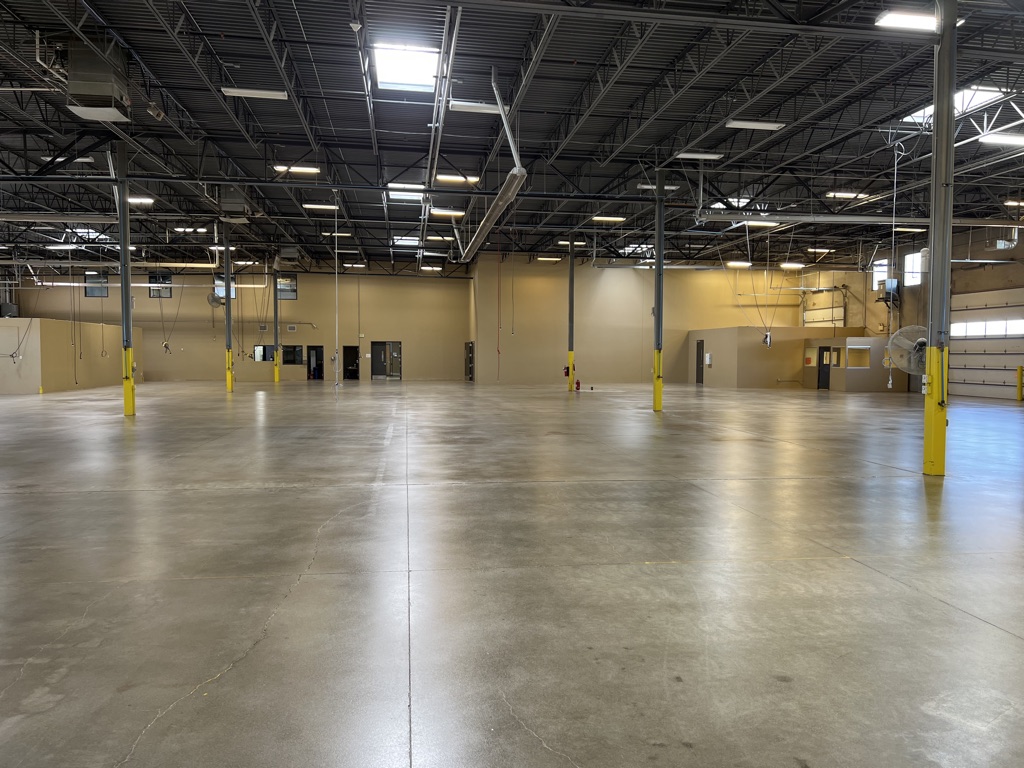
Commercial Concrete Flooring
Grind & Seal Concrete Flooring Denver
Decorative and Functional Sealed Concrete for Retail, Showrooms, Lobbies, Labs, and Light Commercial Facilities
Colorado Concrete Repair grinds, densifies, and seals concrete to a satin or high-gloss finish for commercial and light-industrial environments across the Denver Front Range.
OR, TELL US ABOUT YOUR PROJECT:
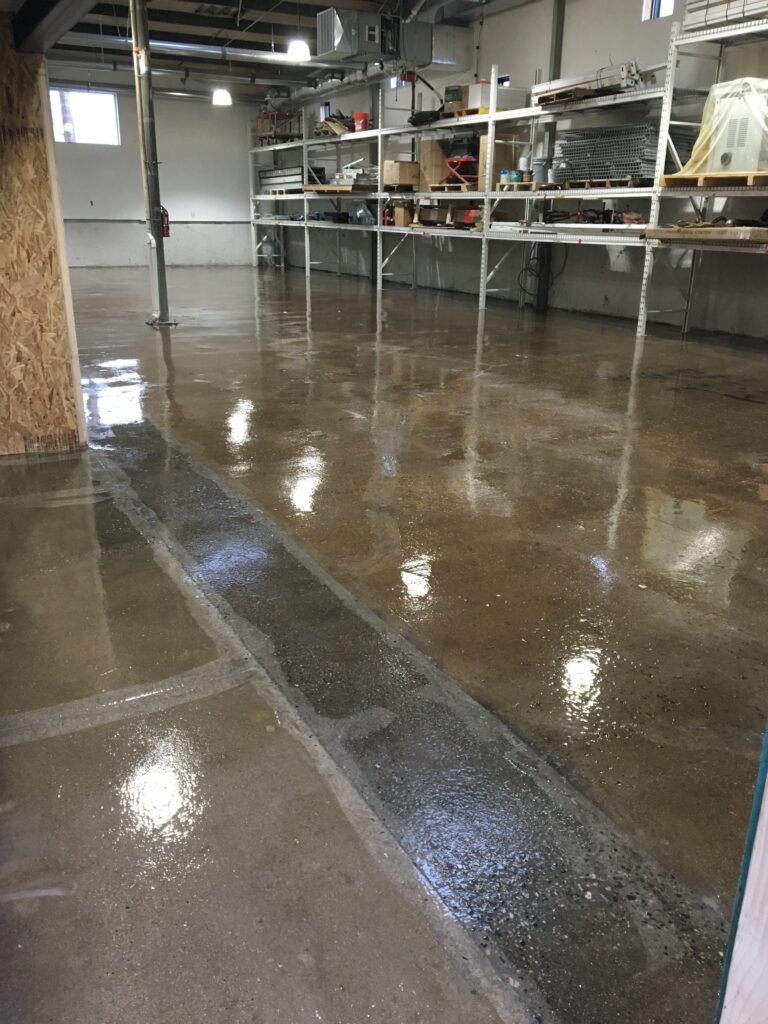
Grind & seal, workshop · our install
Quick answers · this page
Grind-and-seal or full epoxy — when is sealed concrete enough?
When you need cleanable, dust-free, sealed concrete without a full resinous build — support areas, mezzanines, light traffic.
What about silica dust?
Vacuum-shrouded grinders and OSHA-aligned dust control. Your facility keeps operating.
How fast is the turnaround?
Among the fastest floors we do — many areas return to service same-day.
What does it cost?
Experts scope it on site, then you get a fixed bid — the number on the proposal is the number on the invoice. (Genuinely unknowable scope? Day-rate terms, agreed in writing first.)
Don’t see your question? Call 303-974-6707 — you’ll get a person who’s installed these floors.
Concrete Grinding and Grind-and-Seal Floor Systems
Concrete grinding is the foundation of every grind-and-seal project and most epoxy flooring installations. Surface prep through concrete grinding establishes the mechanical profile that determines how well a sealer or coating bonds to the concrete floor. CCR uses diamond grinding equipment calibrated for industrial concrete floors across warehouses, manufacturing facilities, and high traffic commercial spaces in Denver, CO and along the Colorado Front Range.
Grind-and-seal systems deliver a low maintenance concrete floor finish for environments that need durability without the build of a full epoxy flooring system. The concrete grinding process removes surface contamination, opens the pore structure, and creates the profile needed for penetrating sealers and densifiers. The result is a concrete floor that resists dusting, handles high traffic forklift and foot loads, and maintains its appearance with minimal long term upkeep.
On every project, CCR evaluates concrete floor conditions before recommending grind-and-seal versus polished concrete or epoxy flooring. Concrete floors with moisture issues, aggressive chemical exposure, or heavy impact loads may point toward a different system. Grind-and-seal works well for concrete floors in commercial warehouses, retail back-of-house, light industrial, and institutional buildings where the slab is sound and the service environment is moderate. The distinction matters for long term performance.
If you are evaluating concrete grinding or grind-and-seal options for a commercial or industrial concrete floor in Denver, CO, contact Colorado Concrete Repair for a site assessment. We will evaluate the slab, discuss the right floor system for the space, and provide a clear scope of work.
FREQUENTLY ASKED QUESTIONS
Grind and Seal Flooring — Common Questions
Technical answers for owners, facility teams, architects, and general contractors comparing sealed concrete options.
Is grind and seal the same thing as polished concrete?
No. Grind and seal stops after the slab is ground to the desired look and profile, then a sealer becomes the wear surface. Polished concrete continues through densification and multiple honing steps so the concrete itself becomes the finished wear surface.
Can you expose aggregate with a grind-and-seal floor?
Yes, but the amount of aggregate exposure depends on slab condition, desired appearance, and budget. Light salt-and-pepper exposure is common. Deeper aggregate exposure requires more grinding and brings more patch history and slab variation into view.
How long does a grind-and-seal floor last?
The concrete itself lasts. The maintenance variable is the sealer. Service life depends on traffic, cleaning methods, grit exposure, and sealer chemistry. A well-selected system can perform very well, but owners should expect periodic refresh or recoat as part of the maintenance plan.
What repairs should be expected before sealing?
Common prep includes crack filling, joint rebuilding, patching spalls, removing failed coatings, and flattening high or damaged areas. Those repairs often remain faintly visible in the finished floor because grind and seal keeps the slab visually present rather than hiding it under a thick coating.
Is grind and seal slippery?
Slip resistance depends on texture, sealer choice, contamination, and maintenance. Glossier is not always better. We discuss slip expectations up front and can guide the project toward a sheen and surface texture that fits the use of the space.
How do you decide between acrylic, epoxy, and polyaspartic top layers?
We look at traffic load, desired sheen, cure window, maintenance plan, and whether the project is more decorative or more performance-driven. Acrylics can be economical and easy to refresh. Epoxy sealers can provide a richer build. Polyaspartic is typically used as a topcoat when fast return to service and added durability justify it.
Why Facility Owners Choose CCR for Grind and Seal in Denver
- Real grinding volume — 215 grind-related jobs in Jobber means this is not theoretical content. CCR handles grinding, leveling, joint work, and finish decisions in the field.
- Repair-first mindset — projects like The Feed show that joint filler, grinding, and patching are often inseparable from a successful finish.
- System honesty — if the slab should be polished, coated, repaired more aggressively, or left out of grind and seal entirely, that should be said before installation, not after failure.
- Commercial experience — from workshops and lab rooms to warehouses and subcontract scopes, CCR sees how concrete is actually used after turnover.
- Professional communication — owners, GCs, and facility teams get clear scope language around prep, repair visibility, sealer type, and expected maintenance.
CCR Snapshot
Grinding Jobs
215
Joint / Repair Depth
61 joint jobs · 152 repair jobs
Typical Uses
Retail · Showrooms · Lobbies · Labs
Coverage
Denver Metro + Front Range
How to Make Your Site Assessment Productive
A site assessment is where we walk your facility, see the floor in the conditions it actually works in, and give you a credible read on what it needs. The more ready the visit is, the faster it turns into a clear next step. Here is how to make one visit count.
Who should be there
Have the person who knows how the floor is used day to day — a facility manager, operations lead, or maintenance lead — available during the walk. They can answer how the space runs, when it is busy, and what has gone wrong before, which is what lets us match a recommendation to your reality instead of a generic spec. If a different person signs off on the next step, it helps to know who that is so the path forward is clear.
Site access and the operating window
We need to get into the areas that matter — including the spots that take the most traffic, moisture, or wear — during a window that works for your operation. Tell us up front about any access, safety, escort, or PPE requirements on your side so the walk runs smoothly and on schedule. If parts of the floor are only reachable during a shutdown or off-hours window, that is useful to plan around.
The operating context to have on hand
You do not need a formal report. It just helps to have a working sense of how the space is used — your busy versus slow periods, any areas you already know give you trouble, anything you know about the floor’s history, and your own timeline and internal decision process. That context lets the assessment go straight to what matters for your facility. The detailed slab, traffic, chemistry, and schedule specifics that decide the system are what the assessment itself is for — we map those on site so the recommendation holds.
What you walk away with
You get an honest read on your floor and a credible next step — not a hard sell. We find the conditions that matter before anyone names a system, and we do not claim every unknown can be eliminated. There is no obligation and no pricing invented before we have seen your floor.
The next step is a site assessment.
Make One Site Assessment Count
A grind-and-seal recommendation is decided on site — we see the floor in the conditions it actually works in before we name a system. Bring whoever knows how the floor is used day to day, tell us about access and your operating window, and we will give you an honest, no-obligation read. See how to make one visit productive on our site assessment page.
OR, TELL US ABOUT YOUR PROJECT:
Why Colorado Concrete Repair
Floors under J.M. Smucker · Green Chef · Dessert Holdings · Izzio Bakery · Denver Beer Co. · Leiters Health
Reviewed June 12, 2026 · Nick Ferguson, owner — industrial flooring contractor, Denver, since 2009