
Reviewed June 12, 2026 · Nick Ferguson, owner — industrial flooring contractor, Denver, since 2009
Case Studies
Highlighted Colorado commercial and industrial flooring projects
These projects show the range of CCR work: loading bay resurfacing, epoxy and polished concrete packages, municipal deck resurfacing, pharmaceutical flooring, and food-manufacturing renovation. Each profile is built from real Jobber work history and framed around the challenge, system selection, and outcome that mattered to the client.
OR, TELL US ABOUT YOUR PROJECT:
Commercial Scale
Profiles include six-figure warehouse and construction scopes where phasing and substrate management mattered as much as material selection.
Technical Range
The mix includes loading bays, epoxy urethane, polished concrete decision-making, municipal deck resurfacing, and regulated manufacturing environments.
Colorado Coverage
CCR project history spans Denver metro, the Front Range, mountain resort work, and municipal projects outside the core metro market.
HIGHLIGHTED PROJECTS
Five projects that show how CCR scopes difficult floors
These are not generic testimonials. They are representative project types from CCR’s real work history. The specifics matter because the right flooring system is usually defined by traffic, substrate condition, chemistry, temperature swing, access limitations, and shutdown tolerance — not by product marketing alone.
CASE STUDY 01
CMC Materials
Loading Bay Floor Resurfacing · January 2024
Scope: Large-format resurfacing work in a loading bay environment with truck traffic, edge exposure, and operational sequencing concerns.
Challenge: Loading bays are hard on floors. The slab sees concentrated wheel loads, impact at transitions, weather exposure near door lines, and schedule pressure because dock downtime affects operations immediately.
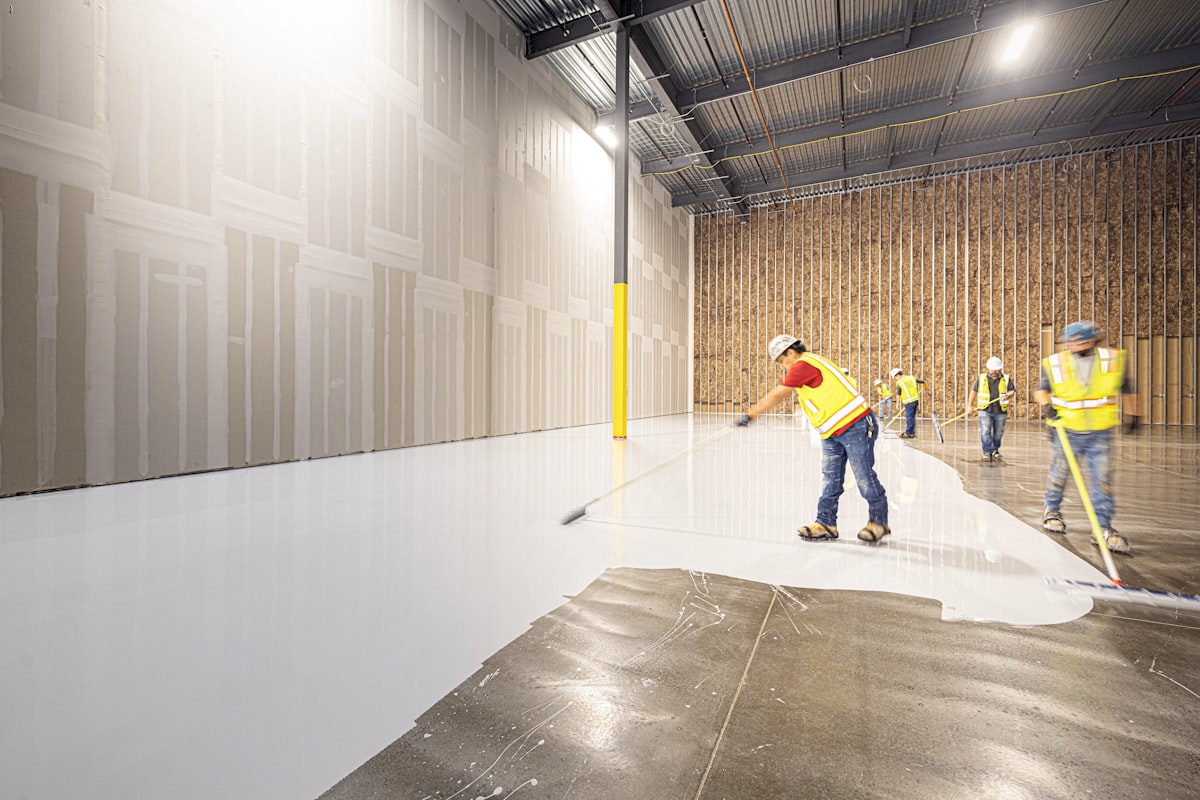
CCR solution: The work was approached as a resurfacing and traffic-management problem, not just a coating install. Prep, repair, containment, and phasing had to be tied to active dock use so the project could move without creating avoidable disruption.
Outcome: A six-figure dock project like this demonstrates CCR’s ability to handle large commercial concrete restoration where the real value is disciplined execution under operating constraints.
CASE STUDY 02
Bryan Construction
Epoxy or Polish · January 2021
Scope: Major commercial flooring package where the decision framework included epoxy versus polished-concrete outcomes.
Challenge: Projects at this scale are rarely about a single finish name. They require a decision about appearance, lifecycle maintenance, schedule, slab condition, and how the finished space will actually be used.
CCR solution: CCR’s value in this kind of project is system selection discipline. The team compares the slab’s readiness for polishing against the build, uniformity, and protection benefits of an epoxy assembly rather than forcing one answer across every room.
Outcome: The project stands out because it reflects high-value specification work: selecting the right finish architecture and executing it at meaningful commercial scale.
CASE STUDY 03
City of Salida
Pool Deck Decorative / Industrial Seamless Epoxy Resurfacing · May 2025
Scope: Municipal pool deck, lobby, and office resurfacing with a seamless epoxy specification.
Challenge: Public environments have different demands than warehouses or production plants. Appearance matters, but so do slip resistance, cleanability, durability, and the expectation of a neat finish in spaces the public sees every day.
CCR solution: CCR approached the project as a hybrid decorative-and-functional resurfacing scope, using seamless system logic while accounting for deck conditions, transitions, and public-facing finish expectations.
Outcome: The project shows CCR can carry industrial installation discipline into municipal and civic work where finish quality and public durability both matter.
CASE STUDY 04
STAQ Pharma
Epoxy Urethane · October 2019
Scope: Pharmaceutical manufacturing flooring delivered through 5280 Contract Flooring for a controlled production environment.
Challenge: Pharmaceutical spaces punish sloppy detailing. Joints, patch transitions, dust management, material handling, and cure protection all affect whether the floor supports clean operations.
CCR solution: An epoxy urethane assembly provides the seamlessness and cleanability expected in regulated interiors while adding a more durable wear surface than a basic coating-only approach. The project required controlled prep and disciplined finish work suitable for a pharmaceutical setting.
Outcome: This project is proof that CCR’s experience is not limited to general commercial floors; the team can execute in higher-control environments where contamination and maintenance expectations are materially higher.
CASE STUDY 05
Opal Foods
CIP Warehouse / Manufacturing Industrial Flooring Renovation · November 2025
Scope: Industrial flooring renovation tied to a food-manufacturing and warehouse environment with CIP-related operating demands.
Challenge: Food manufacturing environments combine moisture, washdown, forklift traffic, sanitation chemistry, and production continuity. Floors fail quickly when systems are underbuilt or when repair issues are left under the finish.
CCR solution: CCR scoped the work as a renovation, meaning existing floor conditions, substrate correction, and zone-by-zone compatibility were part of the decision. This is the kind of project where urethane cement, epoxy, and repair scope may all work together by room and exposure level.
Outcome: The project highlights CCR’s strength in food-related industrial floors where the specification has to reflect actual process abuse instead of a one-system-fits-all approach.
What these projects have in common
The facility types differ, but the pattern is the same. CCR tends to be strongest where the floor is part of a larger operating problem. Dock work has to respect logistics. Pharmaceutical work has to respect housekeeping and controlled conditions. Municipal deck resurfacing has to balance appearance and traction. Food-manufacturing renovation has to survive washdown and maintenance. Large commercial packages have to choose the right finish system before crews ever mobilize.
That is why CCR talks so much about prep, repairs, moisture, and phasing. These project examples are not valuable simply because of the contract values. They are valuable because they show CCR working in environments where wrong assumptions are expensive. The company’s Jobber history includes warehouse, food processing, municipal, pharmaceutical, dealership, restaurant, school, hangar, and technical-space work, which is exactly the kind of mix that forces better judgment about systems.
For owners and general contractors, the takeaway is straightforward: the floor should be specified around use, risk, and lifecycle. A fast-talking product pitch is not enough. Real case history is more useful, because it shows where a contractor has actually delivered under field conditions.
The case studies also show why CCR is careful about language like “best floor” or “best coating.” In practice, each of these scopes had a different center of gravity. CMC Materials was about heavy traffic and dock sequencing. Bryan Construction was about finish strategy at large commercial scale. Salida was about public durability and appearance. STAQ Pharma was about controlled-environment execution. Opal Foods was about sanitation, moisture, and renovation reality. A contractor that treats those as the same job type usually ends up overselling the product and underscoping the prep.
Another useful lesson is that complexity does not always map directly to contract size. A controlled pharmaceutical room can demand more finish discipline than a much larger open industrial floor, while a six-figure loading bay or renovation scope can be won or lost on sequencing, access, and substrate correction rather than specialty chemistry alone. Buyers are usually better served by asking how the floor will be built and phased than by focusing only on the resin name.
That project mix is also useful for buyers comparing bidders. A company that has only done decorative garage coatings will not approach a loading bay, municipal deck, or pharmaceutical room the same way as a contractor with commercial field history. CCR’s records show experience across public, industrial, warehouse, technical, and food-related spaces, which is why the firm tends to frame the work around substrate, operating conditions, and lifecycle instead of a one-line coating description.
Project types compared
Different environments call for different flooring logic.
Loading bays and warehouse trafficHigh impact / operational phasing▼
Projects like CMC Materials are won or lost on substrate correction, edge durability, traffic sequencing, and tolerance for operational interruption. The scope is often more about the concrete and the sequence than about the finish layer by itself.
Controlled manufacturing environmentsHousekeeping / seamless finish▼
Projects like STAQ Pharma depend on dust control, finish continuity, cure protection, and cleanable detailing. The substrate still matters, but the tolerance for contamination and sloppy transitions is much lower.
Public and municipal resurfacingAppearance + function▼
Projects like the City of Salida pool deck and lobby work have to support public use, traction, and visual quality at the same time. They are not industrial-only problems, but they still demand disciplined system selection.
Food-manufacturing renovationMoisture / sanitation / abuse▼
Projects like Opal Foods are usually multi-variable scopes. Washdown, chemistry, repair history, and traffic all influence whether urethane cement, epoxy, repair work, or a combination of systems will be the right answer.
What owners can learn
Ask how the contractor is accounting for substrate condition, repairs, shutdown tolerance, and long-term maintenance. If the answer is only a product name, the scope is probably underdeveloped.
What general contractors can learn
Flooring decisions affect schedule, access, cure windows, and turnover risk. The best time to resolve those issues is before mobilization, not after demolition and prep have begun.
NEXT STEP
Talk through your facility, substrate, and operating constraints
If your project involves warehouse traffic, regulated production, public-facing resurfacing, or a flooring system decision with real lifecycle consequences, CCR can review the site conditions and recommend the right scope.
The best next step is a site assessment so CCR can understand substrate condition, phasing constraints, and facility use before the system recommendation is finalized.