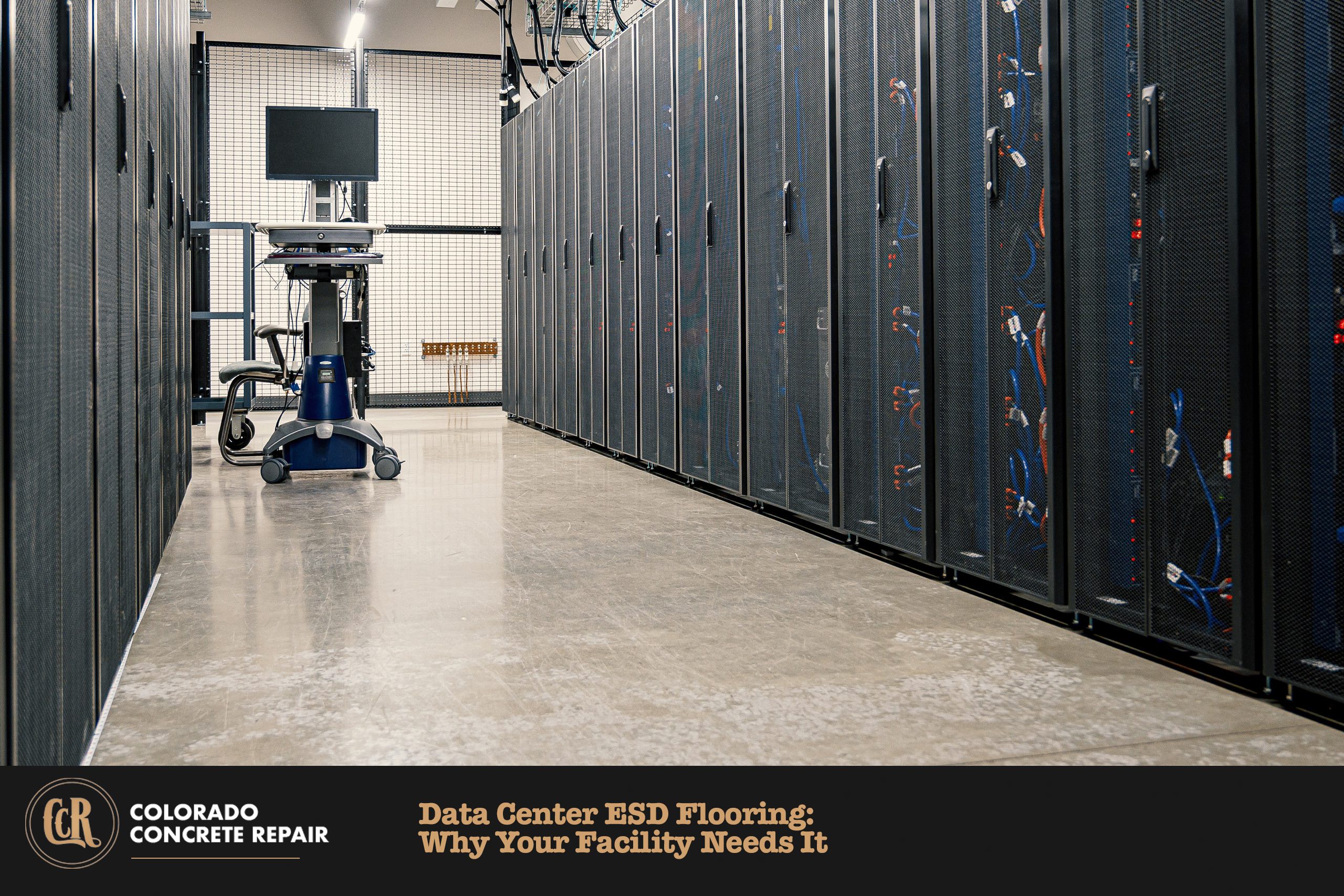
Data Center ESD Flooring: Why Your Facility Needs It
Data Center ESD Flooring: Why Your Facility Needs It
Electrostatic discharge in mission-critical environments can damage sensitive hardware and disrupt operations without warning. Colorado Concrete Repair installs specialized ESD flooring systems engineered to control static behavior from the substrate up — protecting equipment, supporting compliance, and keeping data centers running.
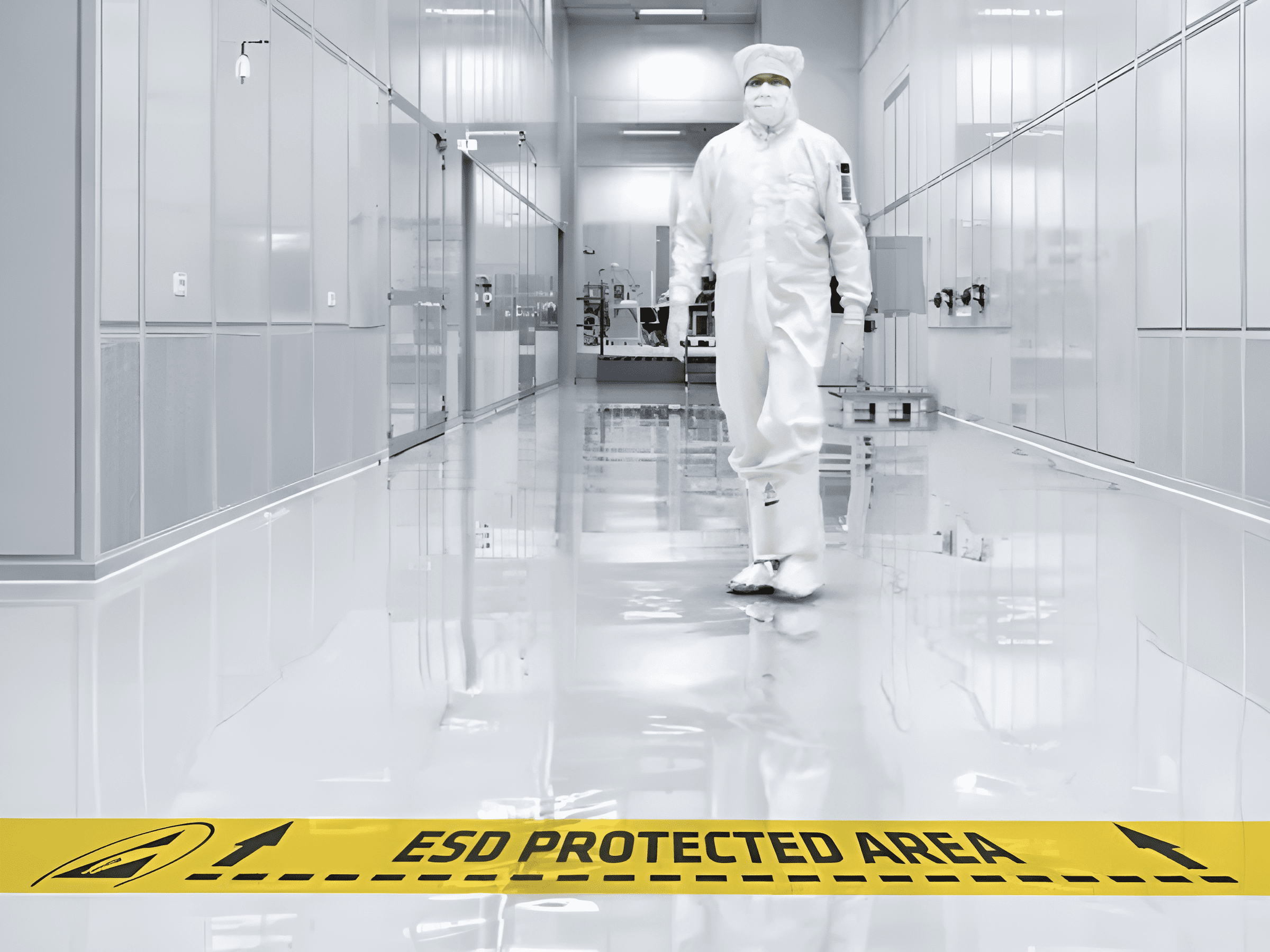
Nearly 14,500 Sq Ft
Recent ESD flooring installation for an aerospace/defense facility using RESUFLOR SDU — a full static-dissipative urethane system
10⁶ – 10⁹ Ohms
Standard static-dissipative resistance range required for data center and electronics environments per ANSI/ESD S20.20
Resinwerks Certified
CCR is a certified Resinwerks installer — materials like RESUFLOR SDU and ElectraSeal are specified for mission-critical ESD applications
Data Center ESD Flooring Systems Compared
Not all ESD flooring performs the same. The right system depends on your electrical performance requirements, traffic profile, and installation constraints.
Static-Dissipative Urethane (RESUFLOR SDU)High-Performance ESD▼
Best for: Data halls, server rooms, network operations centers, and mission-critical equipment rooms requiring full static-dissipative performance
✓ Strengths:
- Consistent static-dissipative performance across the entire floor surface (10⁶–10⁹ ohms)
- High-build, seamless resinous system — durable under cart and foot traffic
- Bonds directly to prepared concrete substrate for long-term adhesion
- Chemical-resistant and cleanable — supports data center hygiene standards
Tradeoffs:
- Requires proper copper grounding grid installed before topcoat
- Multi-day installation with controlled environmental conditions
- Higher material cost relative to standard epoxy coatings
Common applications: industrial flooring systems, aerospace and defense facilities, colocation data centers
ESD Sealer Systems (ElectraSeal)Thin-Film ESD▼
Best for: Electronics manufacturing floors, assembly areas, and support spaces where static control is needed without a heavy-build system
✓ Strengths:
- Rapid deployment with minimal downtime — lower disruption to operations
- Effective static-dissipative performance for electronics environments
- Lower installed cost compared to full urethane ESD builds
- Works on properly prepared existing concrete substrates
Tradeoffs:
- Thinner film — less impact resistance than full urethane systems
- May require reapplication sooner in high-traffic areas
- Not suited for extremely heavy mechanical loads
Common applications: Resinwerks-specified projects, electronics assembly lines, testing and calibration labs
Conductive Epoxy SystemsLow-Resistance ESD▼
Best for: Environments with stringent conductivity requirements below 10⁶ ohms — explosive atmosphere zones, munitions handling, and specialized manufacturing
✓ Strengths:
- Provides rapid charge dissipation at very low resistance values
- Meets specifications for highly sensitive or hazardous environments
- Seamless resinous build with chemical and abrasion resistance
Tradeoffs:
- More aggressive conductivity may not be appropriate for standard data center use
- Requires precise grounding infrastructure and installation
- Typically higher specification complexity and project coordination
Common applications: munitions facilities, explosive-atmosphere zones, specialized industrial installations
Raised Access Floor with ESD TileModular ESD▼
Best for: Data centers using raised floor infrastructure for cable management and HVAC distribution where ESD properties are integrated into the tile system
✓ Strengths:
- Combines static control with underfloor cable/air distribution
- Individual tiles are replaceable without full floor disruption
- Familiar format for data center operators and designers
Tradeoffs:
- Substrate underneath still requires preparation and may need a base coating
- Panel seams can collect contaminants and affect cleanability
- Load capacity depends on pedestal and panel specification — not all systems equal
Common applications: enterprise data centers, concrete substrate preparation beneath raised floors, network operations centers
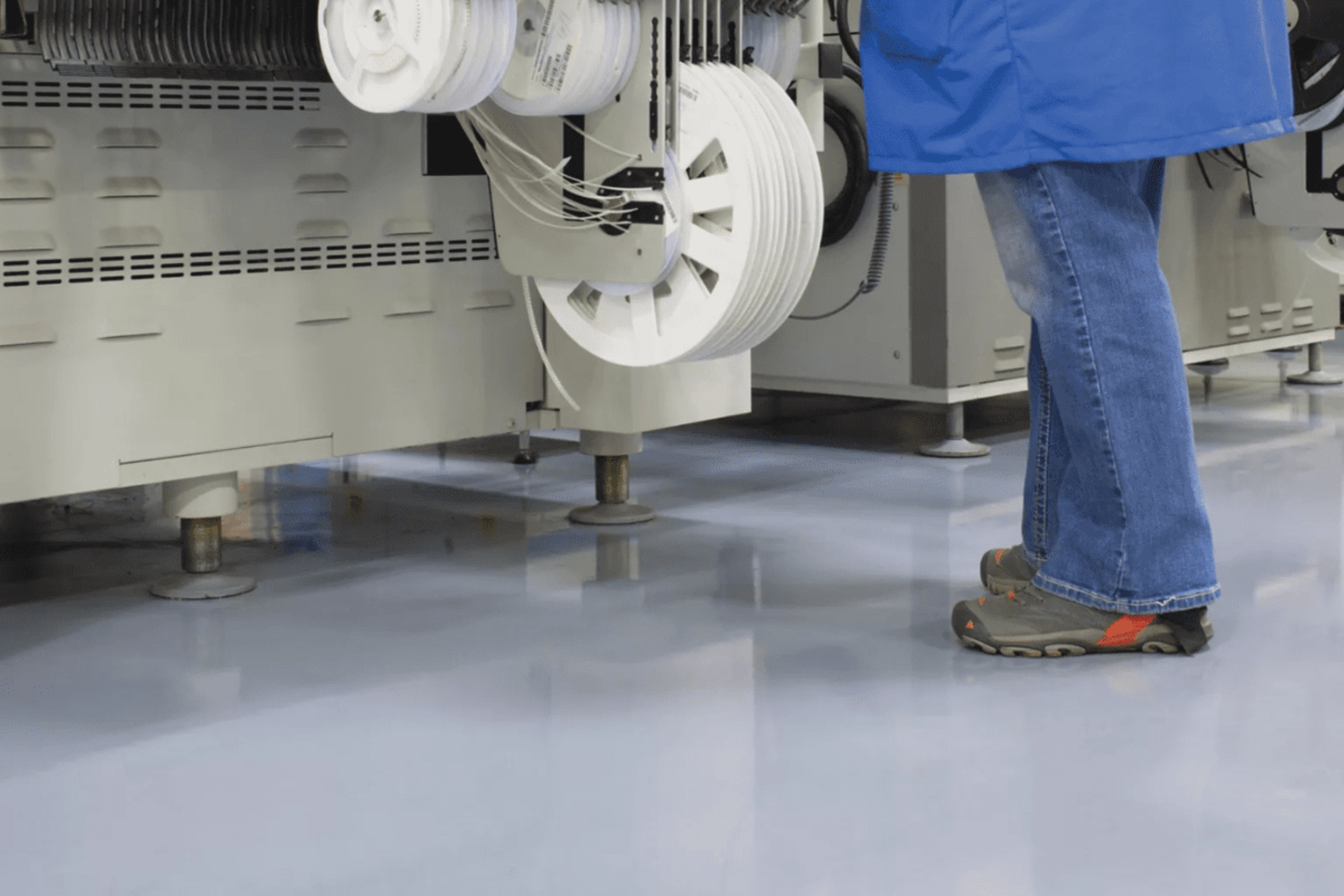
DATA CENTER ESD FLOORING
Frequently Asked Questions About Data Center ESD Flooring
What is the difference between anti-static and static-dissipative flooring?
Anti-static is a broad term often used without a defined performance standard. Static-dissipative flooring operates within a specific resistance range (typically 10⁶–10⁹ ohms) and is designed to control the rate of charge dissipation across the surface. For data centers with sensitive electronics, static-dissipative systems are typically what the specification actually requires.
Why does surface preparation matter for ESD flooring in data centers?
ESD flooring systems rely on continuous contact with the concrete substrate and the grounding infrastructure beneath them. If the surface is not properly profiled, cleaned, and tested for moisture, the system cannot bond correctly — and the electrical performance will be compromised. CCR begins every ESD project with thorough surface prep, including diamond grinding and moisture testing, to ensure the system performs as specified.
Can ESD flooring be installed in an active data center?
Yes, but it requires careful project sequencing. CCR regularly phases ESD installations around live operations — isolating zones, managing dust control, and coordinating cure schedules with facility teams. The recent nearly 14,500 sq ft aerospace/defense project was completed with phased scheduling to maintain uptime throughout the process.
How long does a data center ESD flooring installation take?
Timeline depends on the system specified, the condition of the existing substrate, and how the work is phased around operations. A full RESUFLOR SDU installation with copper grounding is typically a multi-day process per zone — including surface prep, primer, grounding grid, body coats, and topcoat. CCR provides detailed scheduling before work begins.
Does CCR test ESD flooring after installation?
CCR verifies electrical performance after installation to confirm the system meets the specified resistance range. This includes point-to-point and point-to-ground resistance testing per ANSI/ESD standards. Verification ensures the grounding grid, conductive primer, and topcoat are functioning as an integrated system.
Request a Site Assessment
Tell us about your facility. We’ll evaluate your substrate condition, exposure profile, and operational constraints — then recommend the right system.