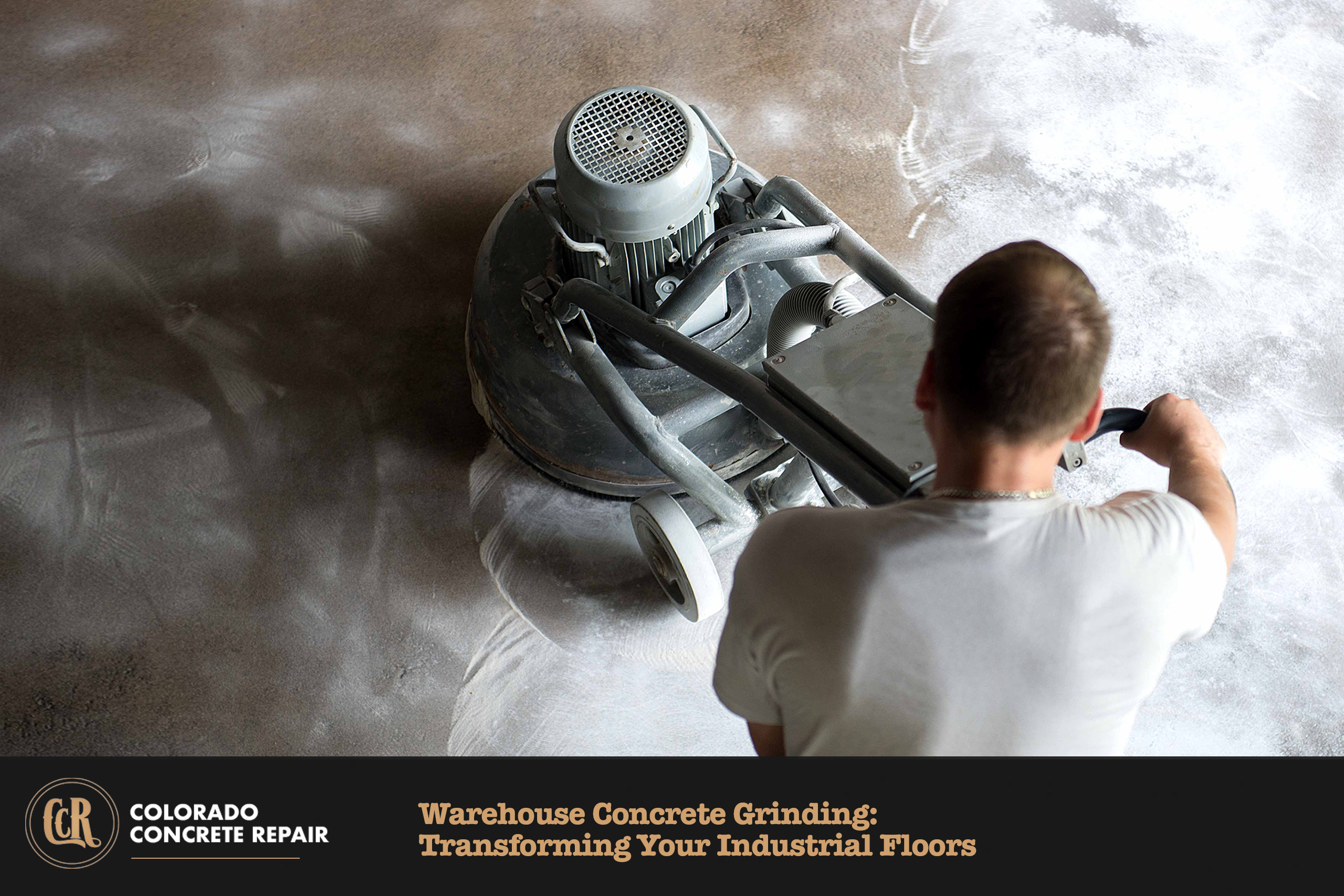
Warehouse Floor Resurfacing: When Is It Time to Act?
Warehouse Floor Resurfacing: When Is It Time to Act?
Colorado Concrete Repair has installed flooring in hundreds of warehouse and distribution facilities across the Denver Front Range. This guide covers warehouse epoxy systems — from system selection by zone to installation scheduling and long-term maintenance.
20+ Years
Commercial and industrial flooring experience across the Denver Front Range.
1,000+ Projects
Across coatings, concrete repair, polishing, and specialty flooring systems — matched to each facility’s actual operating conditions.
~3-Day Installs
Average project duration for this system type — phased around operating schedules.
Warehouse Flooring Systems — By Operational Zone
Select a zone to see the recommended system, performance specs, and considerations.
General Warehouse & StorageDistribution & fulfillment▼
Best for: Main storage and distribution areas with forklift traffic, pallet storage, and rolling load requirements. 100% solids epoxy provides a durable, seamless, cleanable surface. CCR recently completed this type of scope at a northeast Colorado warehouse requiring flexible joint filler, Armor-Hard structural epoxy, and Metzger McGuire joint system.
✓ Strengths:
- Withstands forklift traffic, pallet drops, and heavy rolling loads
- Seamless surface eliminates joints that collect debris
- Chemical resistant against fuel, oil, and cleaning agents
- Light-reflective finishes improve visibility and reduce lighting costs
Tradeoffs:
- Requires 2-3 day cure before full forklift traffic
- Moisture vapor testing required — high MVER can cause delamination
- Standard epoxy yellows in UV-exposed loading dock areas
Common applications: distribution centers, fulfillment warehouses — see warehouse epoxy systems.
Loading Dock & ReceivingHeavy traffic & wet exposure▼
Best for: Loading docks, receiving areas, and doorway transitions exposed to weather, moisture, and concentrated traffic from trucks and forklifts. CCR recently completed this type of scope at a Denver metro warehouse requiring flexible joint filler, Metzger McGuire joint system, and concrete maintenance.
✓ Strengths:
- Quartz broadcast provides anti-slip texture in wet conditions
- Impact resistant against dock plate drops and pallet impacts
- Chemical resistant against diesel, hydraulic fluid, and deicing salt
- Integral cove base option for docks requiring wash-down capability
Tradeoffs:
- Textured finishes require more aggressive cleaning than smooth epoxy
- Outdoor-adjacent areas need UV-stable topcoat to prevent yellowing
- Transition zones between dock and warehouse floor need careful detailing
Common applications: loading docks, receiving bays — see commercial epoxy flooring.
Cold Storage & FreezerThermal cycling & moisture▼
Best for: Cold storage, freezer facilities, and temperature-controlled environments where thermal cycling causes standard epoxy to crack and delaminate. CCR recently completed this type of scope at a Westcliffe-area commercial facility.
✓ Strengths:
- Urethane cement withstands freeze-thaw cycling without cracking
- Bonds to damp concrete where epoxy cannot
- Thermal shock resistant — handles rapid temperature changes
- Seamless surface meets cold chain sanitation requirements
Tradeoffs:
- Higher material cost than standard epoxy systems
- Requires specialized mixing and application equipment
- Thicker build profile needs transition planning at doorways
Common applications: cold storage, freezer floors, urethane cement installations.
Line Striping & Safety MarkingsTraffic management & OSHA▼
Best for: Forklift lanes, pedestrian walkways, storage zones, and safety perimeters that require durable, code-compliant markings. CCR recently completed this type of scope at a south Denver commercial facility.
✓ Strengths:
- OSHA-compliant color coding for traffic and safety zones
- Durable paint systems rated for forklift and foot traffic
- Integrates with existing floor coating systems
- Zone identification improves warehouse efficiency and safety
Tradeoffs:
- Line paint wears under heavy traffic — plan for periodic touch-up
- Must be applied over cured, clean floor coating for proper adhesion
- Layout planning needed before application to avoid rework
Common applications: warehouse traffic management, safety zones — see our installation process.
WAREHOUSE FLOORING QUESTIONS
Frequently Asked Questions About Warehouse Floor Resurfacing When Needed
What type of flooring is best for warehouses?
It depends on the warehouse operations. General storage and distribution typically use 100% solids epoxy. Cold storage requires urethane cement for thermal cycling resistance. Loading docks need quartz broadcast for anti-slip texture. Most warehouses benefit from zone-specific specifications rather than one system everywhere. For example, a northeast Colorado warehouse required flexible joint filler — a common scope for this question.
How long does warehouse epoxy flooring last?
Properly specified and installed warehouse epoxy typically lasts 15–20+ years with appropriate maintenance. The main factors that shorten lifespan: wrong system for the traffic type, inadequate surface preparation, and neglecting joint maintenance. Forklift traffic, pallet drops, and chemical exposure are the primary wear factors CCR accounts for during specification. For example, a Aurora warehouse required flexible joint filler — a common scope for this question.
Can warehouse flooring be installed without shutting down operations?
Yes — zone-phased installation keeps your warehouse operational while flooring work progresses section by section. CCR develops a phased schedule during preconstruction that maps installation to your facility’s operational calendar. The tradeoff is a longer total project timeline compared to full shutdown, but your business keeps running.
How important are floor markings in a warehouse?
Floor markings define forklift lanes, pedestrian walkways, storage zones, and safety perimeters. They are an OSHA compliance requirement in many configurations and a practical necessity for efficient warehouse operations. Durable traffic-rated paint systems outlast standard marking paint by years — especially in high-traffic areas.
What maintenance does warehouse flooring require?
Regular sweeping and wet mopping with pH-neutral cleaners. Periodic machine scrubbing for high-traffic areas. Joint inspection and re-fill on a scheduled basis — failed joints accelerate slab edge deterioration under forklift traffic. Avoid harsh chemicals that attack the coating, and address damage promptly before it spreads.
Request a Site Assessment
Tell us about your facility. We’ll evaluate your substrate, chemical exposure, traffic, and operating conditions — then recommend the system that fits.