
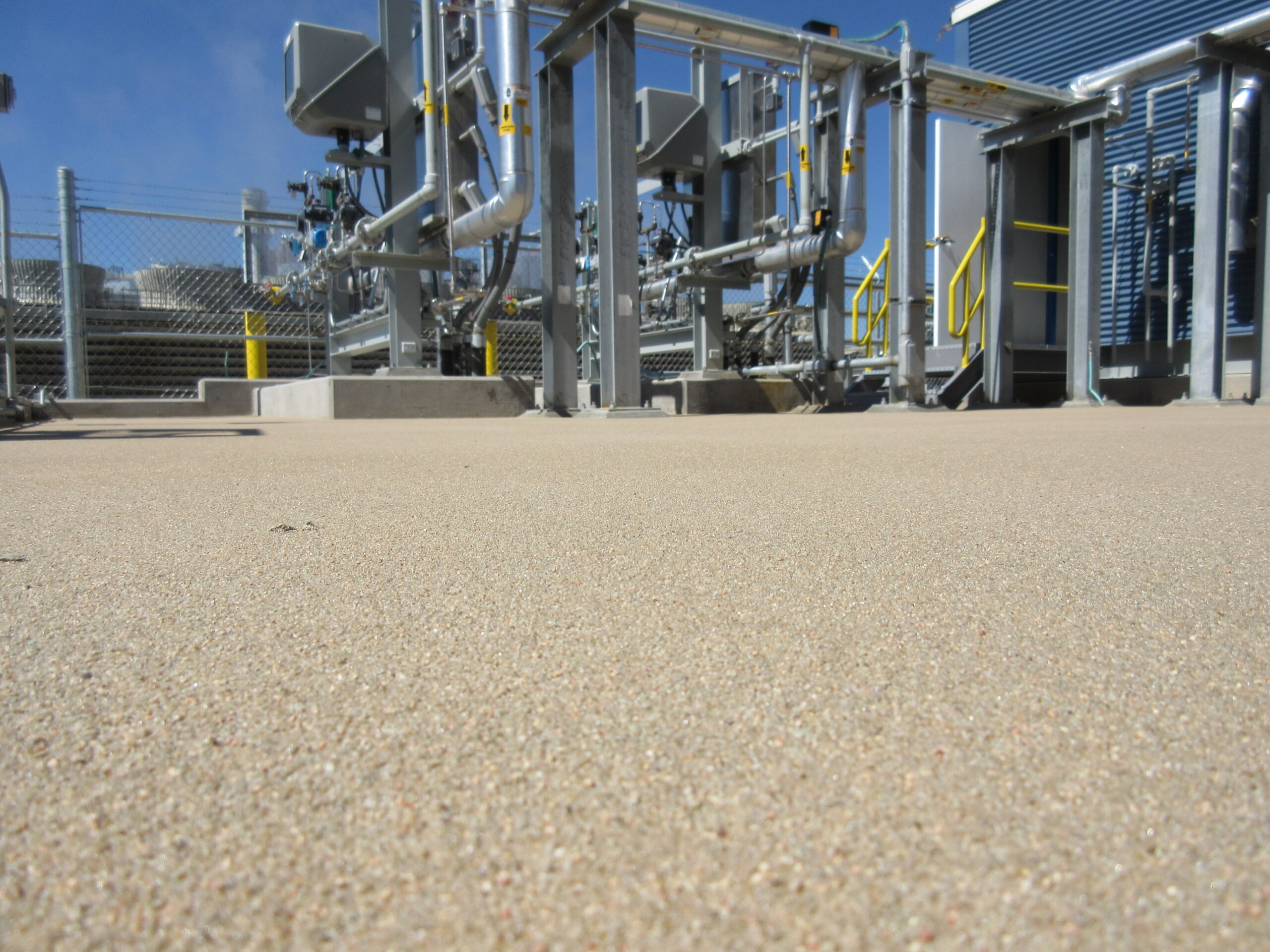
Epoxy Flooring Denver
High-Build Epoxy, Novolac & Quartz Broadcast Systems for Industrial, Commercial & Institutional Facilities
Colorado Concrete Repair installs commercial and industrial epoxy flooring systems across the Denver Front Range. Our systems include 100% solids high-build epoxy, novolac epoxy for chemical resistance, quartz broadcast for textured grip, and polyaspartic topcoats where temperature ranges support them. 20+ years of industrial flooring experience. 1,000+ completed projects. Proud member of Associated General Contractors (AGC).
For warehouses, manufacturing, food processing, and commercial facilities. We do not install residential garage floors.
OR, SHARE YOUR PROJECT DETAILS:
Chemical Resistant
High-build epoxy and novolac systems rated for industrial chemical exposure — acids, solvents, fuels, and aggressive cleaning agents.
1,000+ Projects
Completed across Denver warehouses, manufacturing plants, fleet garages, food processing facilities, and institutional buildings.
80–90%
Of system performance is surface preparation — prep work drives the outcome on most projects.
EPOXY SYSTEMS INSTALLED ACROSS COLORADO
Warehouses, manufacturing plants, chemical facilities, fleet garages, and cleanrooms — built for the environment they serve.
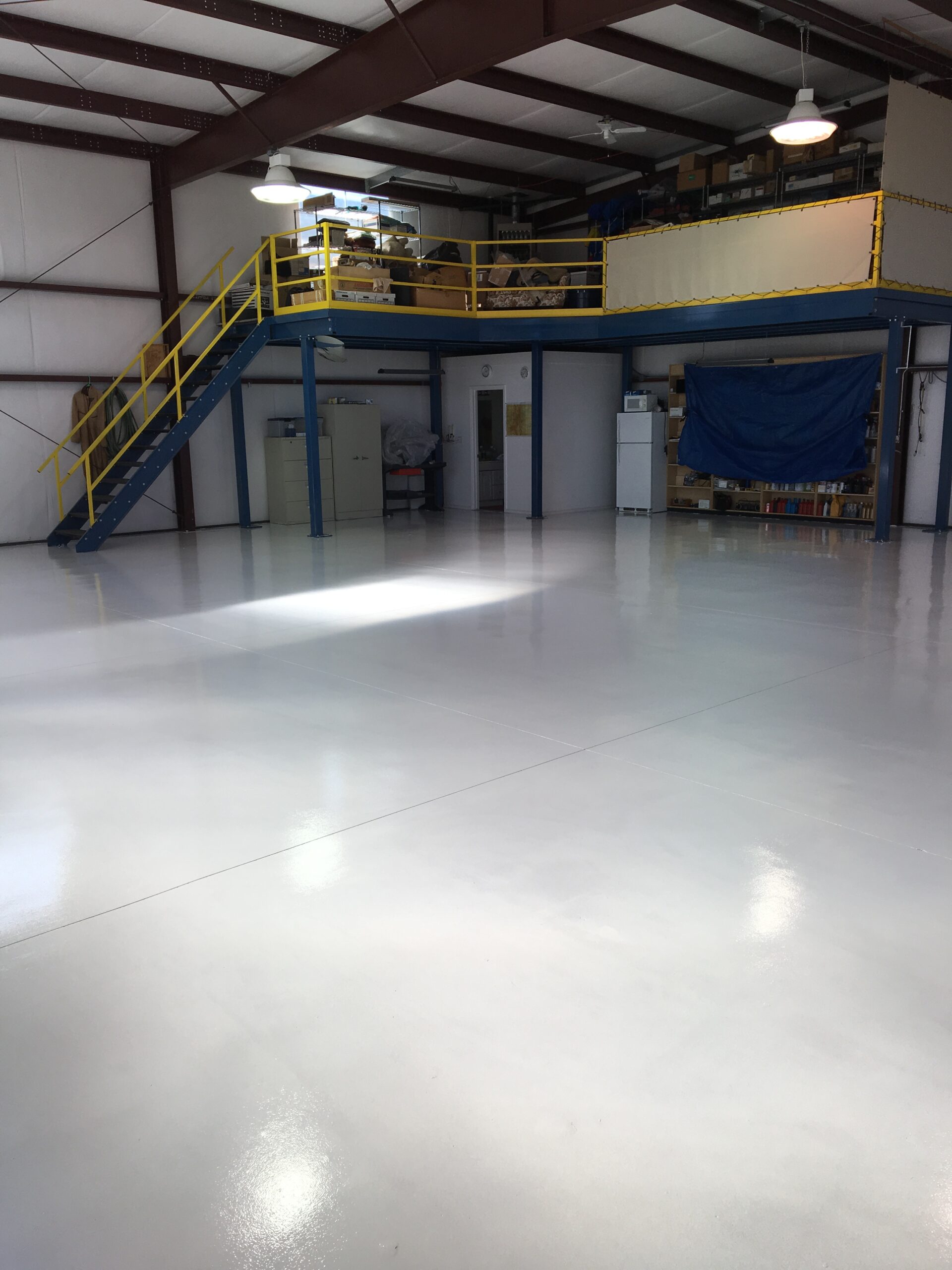
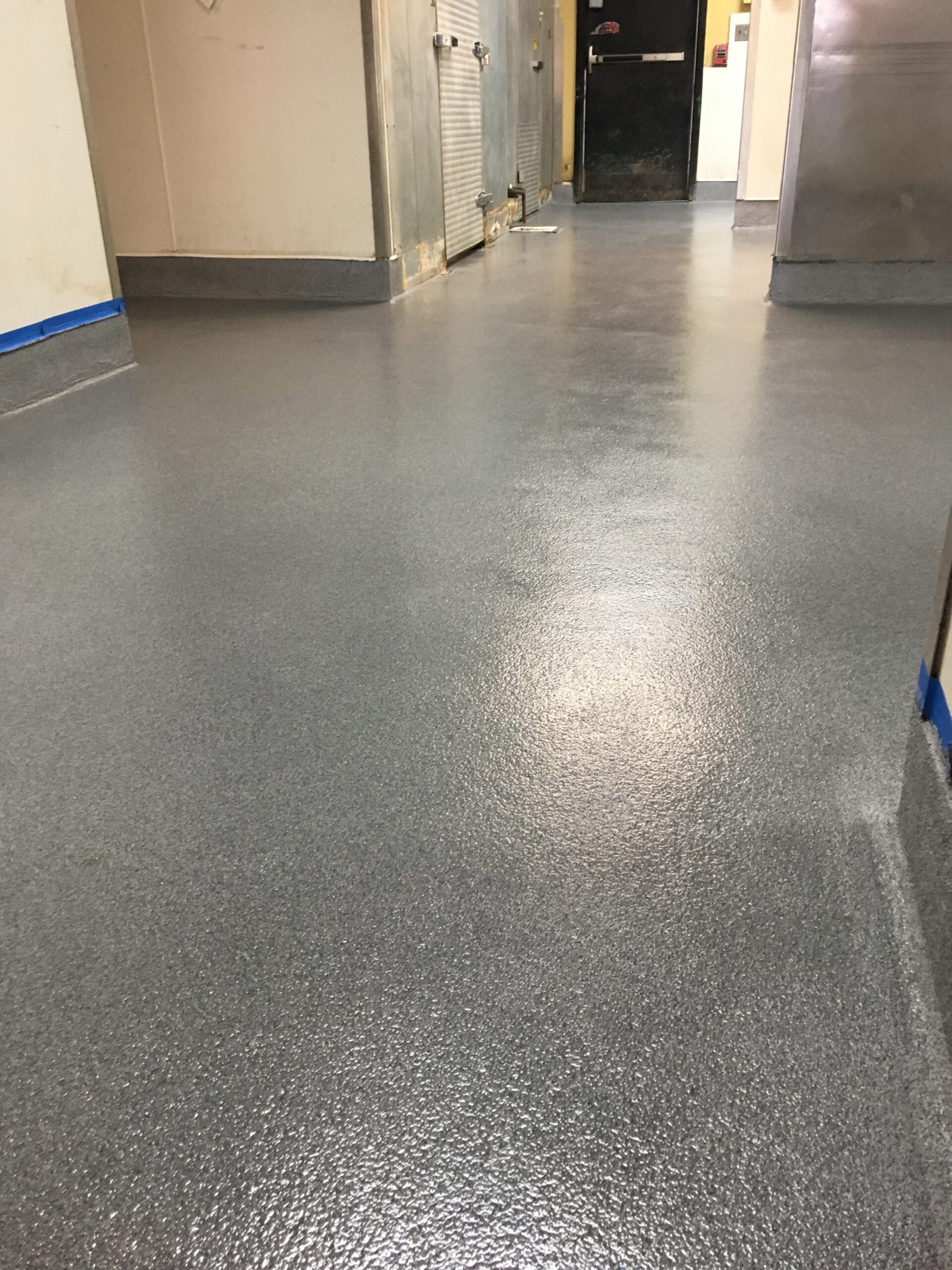
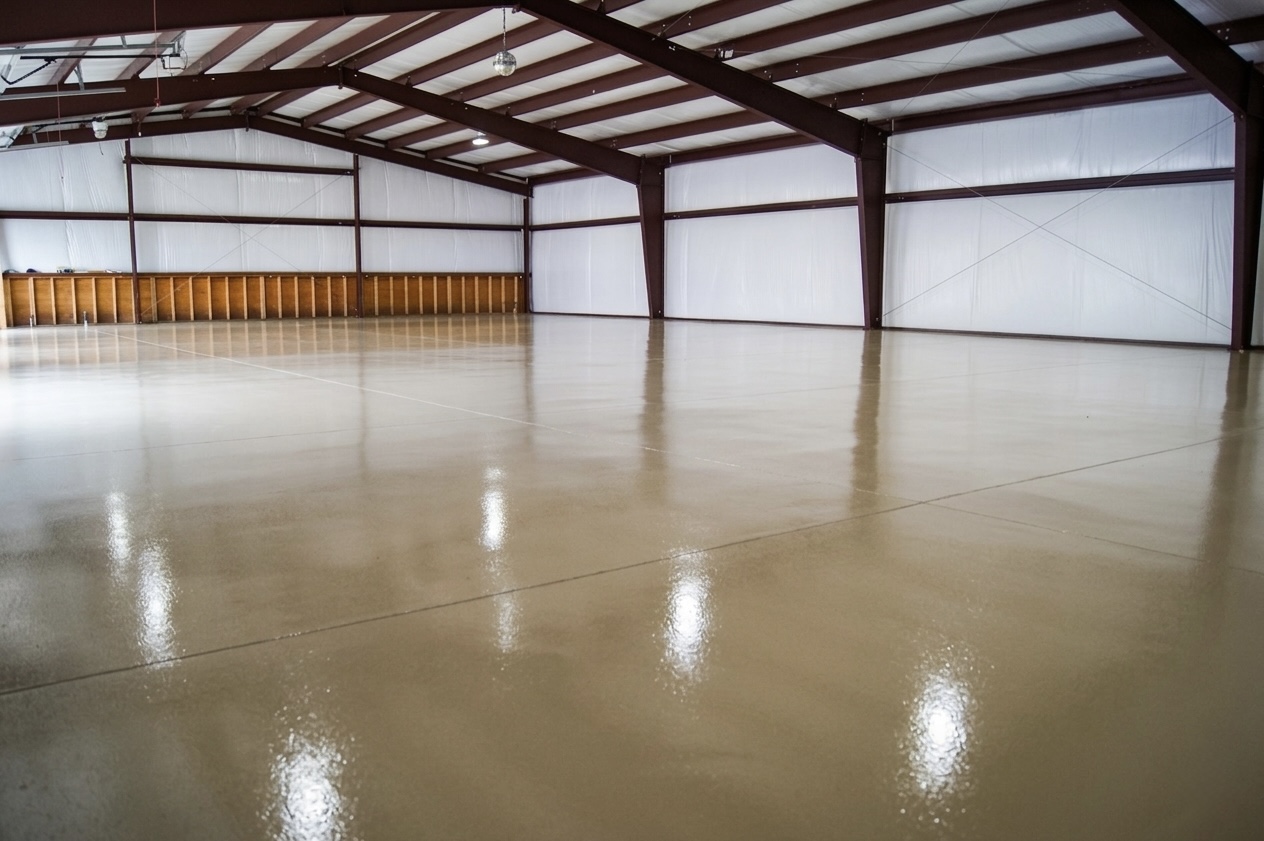
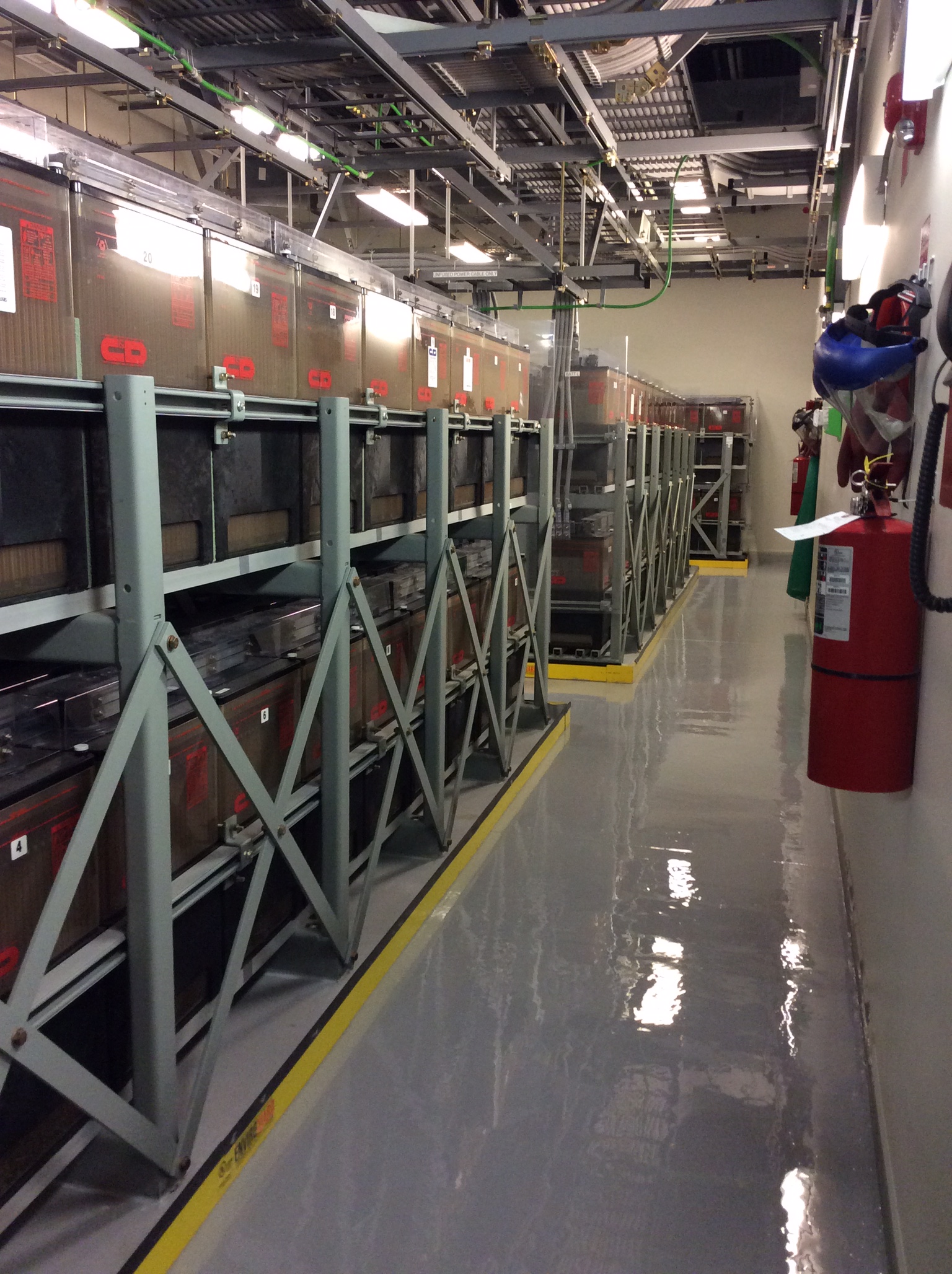
Epoxy Flooring Installations — Denver Front Range


Epoxy Systems & Applications
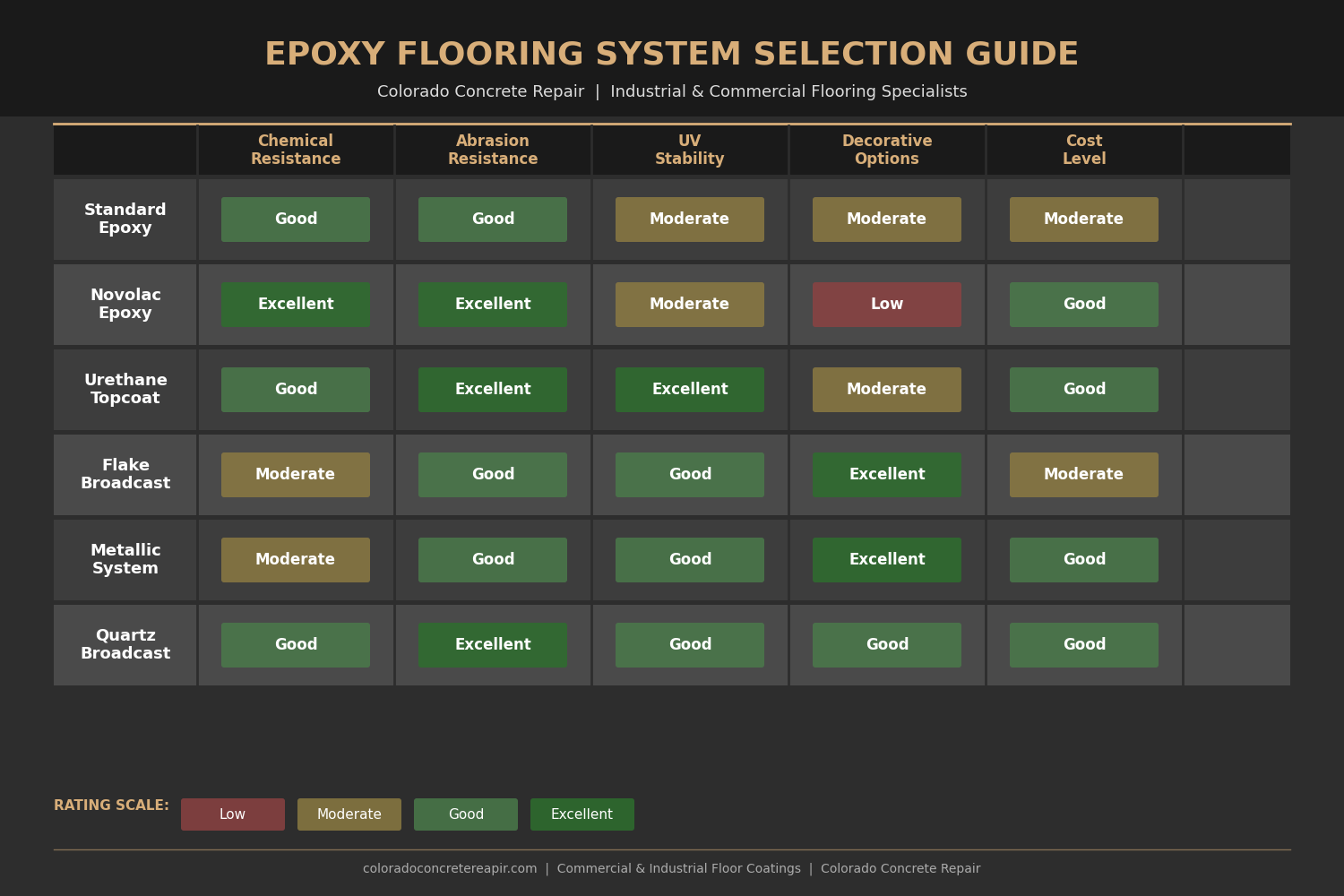
Select a system to see installation details, performance strengths, tradeoffs, and typical pricing.
100% Solids High-Build EpoxyIndustrial & commercial
Best for: Warehouses, manufacturing plants, fleet garages, institutional facilities, and any environment requiring heavy-duty chemical and impact resistance at 20+ mil thickness.
✓ Strengths:
- Full-thickness chemical barrier — no volume loss during cure
- Impact and abrasion resistant for forklift and vehicle traffic
- Seamless, non-porous surface; wide color and finish options
- Compatible with polyaspartic topcoat for UV stability
Tradeoffs:
- Longer cure window than polyaspartic — plan for area downtime
- Sensitive to moisture vapor — MVER testing required
- Yellows under UV without topcoat in sunlit areas
Typical Pricing: installed, depending on substrate condition, area size, and system build.
Novolac EpoxyChemical containment
Best for: Chemical storage areas, secondary containment zones, battery rooms, and environments with concentrated acid, solvent, or caustic exposure.
✓ Strengths:
- Superior chemical resistance — acids, solvents, and caustics
- Higher cross-link density than standard epoxy for extreme exposure
- Suitable for secondary containment and chemical processing areas
- Thermal resistance exceeds standard epoxy formulations
Tradeoffs:
- Highest material cost of epoxy systems
- More brittle than standard epoxy — not ideal for heavy impact zones
- Requires experienced crews due to demanding application window
Typical Pricing: installed, depending on chemical exposure profile, containment requirements, and substrate condition.
Quartz Broadcast EpoxyAnti-slip & decorative
Best for: Lobbies, showrooms, restrooms, commercial kitchens, loading docks, and any area requiring anti-slip texture with a professional finish.
✓ Strengths:
- Broadcast quartz provides durable anti-slip texture
- Multi-layer system builds to 60–125+ mils total thickness
- Wide range of color blends for decorative and branded finishes
- Excellent impact and abrasion resistance
Tradeoffs:
- Multi-day installation due to broadcast and seal coat layers
- Textured surface is harder to clean than smooth epoxy
- Higher material cost than smooth-coat systems
Typical Pricing: installed, depending on aggregate selection, number of broadcast layers, and floor area.
Polyaspartic TopcoatFast-cure finish coat
Best for: UV-exposed areas, showrooms, retail, and any epoxy installation where color stability, abrasion resistance, and fast return-to-service matter. Applied as a topcoat over epoxy — not as a standalone basecoat.
✓ Strengths:
- UV stable — prevents yellowing in sunlit or exterior-adjacent areas
- Fast cure allows same-day return to light traffic
- Excellent abrasion resistance as a finish coat
- Wide temperature application range vs. standard epoxy topcoats
Tradeoffs:
- Not a standalone system — requires epoxy or urethane cement base
- Thin film build provides topcoat protection, not structural thickness
- Short pot life demands experienced, fast-moving crews
Typical Pricing: as topcoat, applied over an epoxy or urethane cement base system.
Concrete Repair & PrepScope-based · Substrate preparation
Best for: Cracked, spalled, or deteriorated slabs needing structural repair before an epoxy system is applied — or as a standalone service to restore slab integrity.
✓ Strengths:
- Crack injection & routing, spall filling, joint repair
- Moisture vapor mitigation and substrate leveling
- Required first step for any epoxy system with compromised concrete
Tradeoffs:
- Scope and cost confirmed during preconstruction site assessment
- Not a standalone surface finish — typically precedes a coating system
- Timeline depends on extent of damage and slab conditions
Typical Pricing: Scope-based — determined during preconstruction site assessment based on damage extent, slab condition, and repair methods required.
How CCR Works With Your Team
A practical process focused on planning, installation, and clean handoff.
STEP 01
Plan
- Investigate site conditions
- Define schedule constraints
- Select the right system
- Lock scope and prep
STEP 02
Install
- Sequence work
- Prep & repairs
- Install system
- Coordinate daily
STEP 03
Closeout
- Close punch list
- Final walkthrough
- Care sheet
FREQUENTLY ASKED QUESTIONS
Epoxy Flooring — Common Questions
What is 100% solids epoxy, and why does it matter?
100% solids epoxy contains no solvents or water that evaporate during cure — every mil applied stays on the floor as cured material. This matters because solvent-based and water-based epoxies lose volume as they cure, leaving a thinner film than what was applied. A 100% solids system at 20+ mils delivers the full-thickness chemical barrier, impact resistance, and service life that industrial and commercial environments demand. It costs more per gallon, but the installed performance is not comparable to thin-film alternatives.
What is the real difference between epoxy and polyaspartic?
Epoxy is a two-part resin system that builds thickness, bonds to concrete, and provides chemical and impact resistance. Polyaspartic is a fast-curing coating that provides UV stability and abrasion resistance. In commercial applications, polyaspartic is commonly used as a topcoat over epoxy — adding UV stability and fast return to service. It can also be used in other system roles depending on the application and environment. The key is matching the system build to the facility’s chemical exposure, traffic, and operational requirements.
What causes epoxy floors to fail, and how do you prevent it?
The most common epoxy failures are delamination from moisture vapor, peeling from inadequate surface prep, and hot-tire pickup from improper cure or thin film builds. Moisture vapor transmission rate (MVER) testing before installation identifies vapor drive issues — if rates are high, we address the substrate before coating. Shot blasting and diamond grinding create the mechanical profile the epoxy needs to bond. And proper film thickness ensures the system can handle the thermal and chemical loads it will actually see. Most failures trace back to prep shortcuts, not product defects.
How long does an epoxy floor last in a commercial or industrial setting?
A properly specified and installed 100% solids epoxy system in a commercial or industrial environment typically delivers 10–20 years of service depending on traffic intensity, chemical exposure, and maintenance practices. The variables that shorten lifespan are the same ones that cause early failure: wrong system for the exposure, thin application, or poor surface prep. We specify system thickness and resin chemistry based on your actual operating conditions — not a generic spec sheet.
Can you coat over an existing epoxy floor?
Sometimes. It depends on the condition and adhesion of the existing coating. If the existing epoxy is well-bonded and free of contamination, we can abrade the surface and apply a new coat. If it’s delaminating, bubbling, or contaminated with oil, the failed material must be removed first — coating over a failing system just delays the next failure. We test adhesion during the site assessment and recommend the right approach based on what we find, not what’s cheapest.
How long does an epoxy flooring installation take?
Timeline depends on floor area, substrate condition, and system selection. A standard 100% solids epoxy installation on a well-prepared slab typically takes 3–5 days including prep, application, and cure. Quartz broadcast systems take longer due to multiple broadcast and seal coat layers. We build a zone-by-zone install schedule before work begins so your operations team has no surprises.
Can you install epoxy in an active facility that cannot shut down completely?
Yes. Zone-phased installation is specifically designed for facilities that must stay operational. We section off one area, install and cure, then move to the next. We coordinate installation windows with your production, shipping, and maintenance schedules to minimize disruption to operations.
How long before we can drive on or use the floor after installation?
Cure times vary by system and conditions. 100% solids epoxy typically allows light foot traffic in 18–24 hours and full vehicle traffic in 72 hours. Polyaspartic topcoats cure faster — light traffic in 4–6 hours. Temperature, humidity, and film thickness all affect cure. We provide a specific return-to-service schedule for your installation based on your system selection and site conditions.
What color, texture, and finish options are available?
Epoxy systems are available in virtually any solid color, and quartz broadcast systems offer a wide range of aggregate color blends for textured, multi-tone finishes. Finish options include high-gloss smooth coat, satin, anti-slip aggregate broadcast, and decorative flake. We help you select based on your facility’s functional requirements — slip resistance, light reflectivity, cleanability — then match aesthetics to your brand or facility standards.
Does temperature affect epoxy installation or performance?
Yes. Most epoxy systems require substrate and ambient temperatures above 50°F for proper cure. Below that threshold, cure slows dramatically and adhesion suffers. In Colorado’s climate, we schedule installations to work within temperature windows and monitor slab temperature during application. For cold environments or tight schedules, polyaspartic topcoats offer a wider temperature application range than standard epoxy topcoats. We factor temperature into project planning.
Why Facility Managers Choose Colorado Concrete Repair for Epoxy Flooring
- Locally owned and operated in Denver CO since 2009
- Right material for the area — 100% solids where thickness and chemical resistance matter, water-based or solvent-based where flow and penetration are the priority. We match the material to the environment, not the other way around.
- System specified for your actual exposure — High-build epoxy for general industrial, novolac for chemical containment, quartz broadcast for anti-slip, polyaspartic topcoat for UV stability. We select the system based on the environment.
- 80–90% of our time is prep work — Shot blasting, diamond grinding, substrate repair, and moisture vapor mitigation. The coating is the last step, not the only step.
- Moisture vapor evaluation built into scope — We test for moisture vapor transmission during preconstruction and recommend mitigation when conditions require it.
- 1,000+ completed industrial projects — Including manufacturing plants, warehouses, fleet garages, food processing facilities, and institutional buildings across Colorado.
- Polyaspartic applied where appropriate — Polyaspartic works well as a topcoat for UV stability and fast return to service. We specify it where the environment and performance requirements support it.
- Zone-phased scheduling around your operations — We build the install sequence around your production, shipping, and maintenance windows so your facility stays operational throughout the project.
Colorado Concrete Repair
Projects Completed
1,000+
Industry Association
AGC Member
Prep Work Share
80–90%
Epoxy Systems
High-Build · Novolac · Quartz · Polyaspartic
Applications
Industrial · Commercial · Institutional
Request a Site Assessment
Tell us about your facility. We’ll follow up within one business day to schedule a walkthrough and discuss system options.