
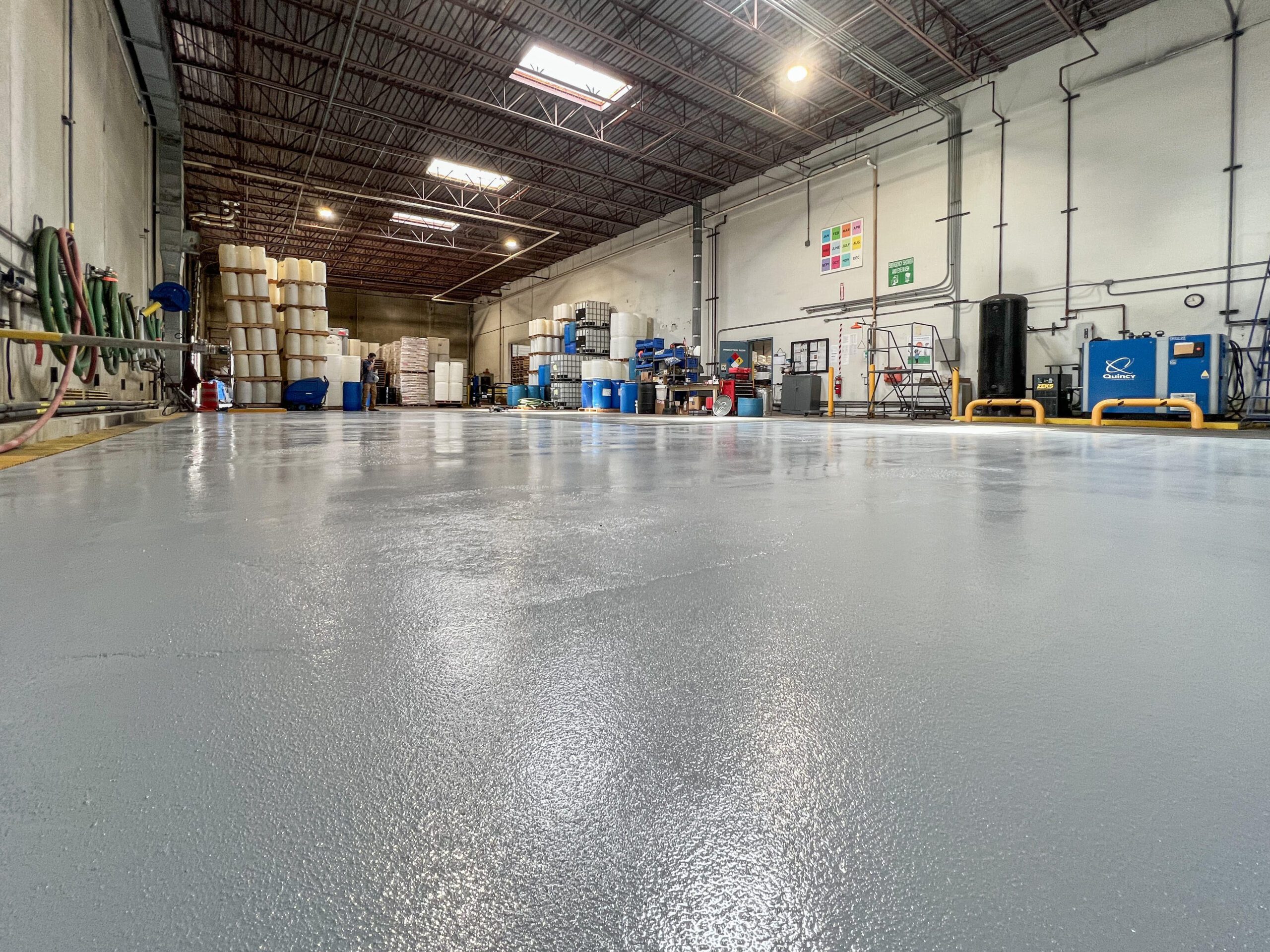
Pharmaceutical Flooring Denver — Cleanroom, Lab & Production Floor Systems
Pharmaceutical Flooring Denver — Cleanroom, Lab & Production Floor Systems
Colorado Concrete Repair installs engineered flooring systems for pharmaceutical manufacturing, lab, cleanroom, and packaging environments across Denver and the Front Range. Our crews specify and install zone-specific systems — from self-leveling epoxy flooring and urethane cement to ESD and novolac systems — matched to each area’s contamination control, chemical exposure, and regulatory requirements.
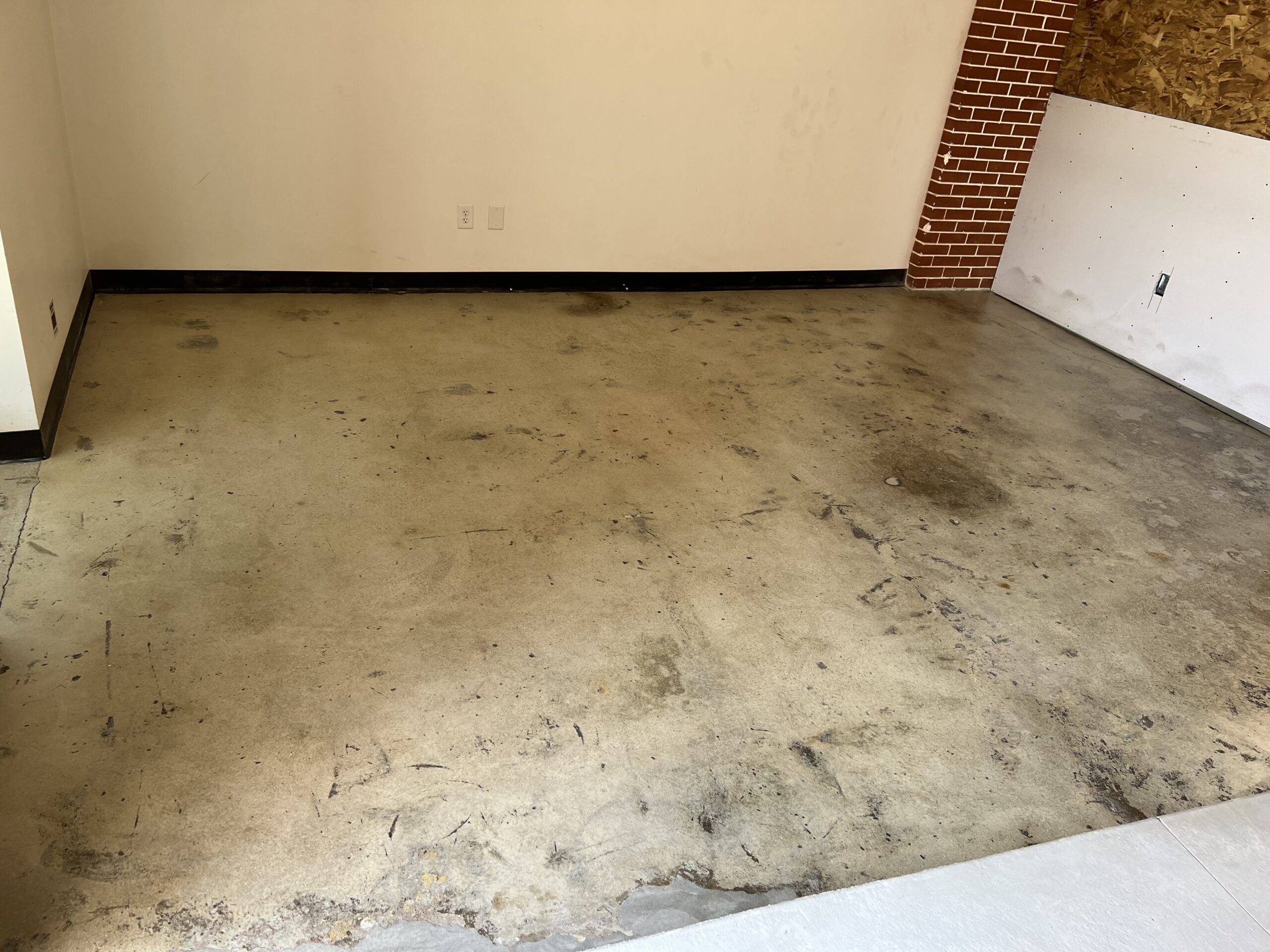
Zone-Specific Systems
Each pharmaceutical area receives its own specification — cleanrooms, labs, packaging, and chemical handling all demand different flooring systems.
Multi-Phase Install Capability
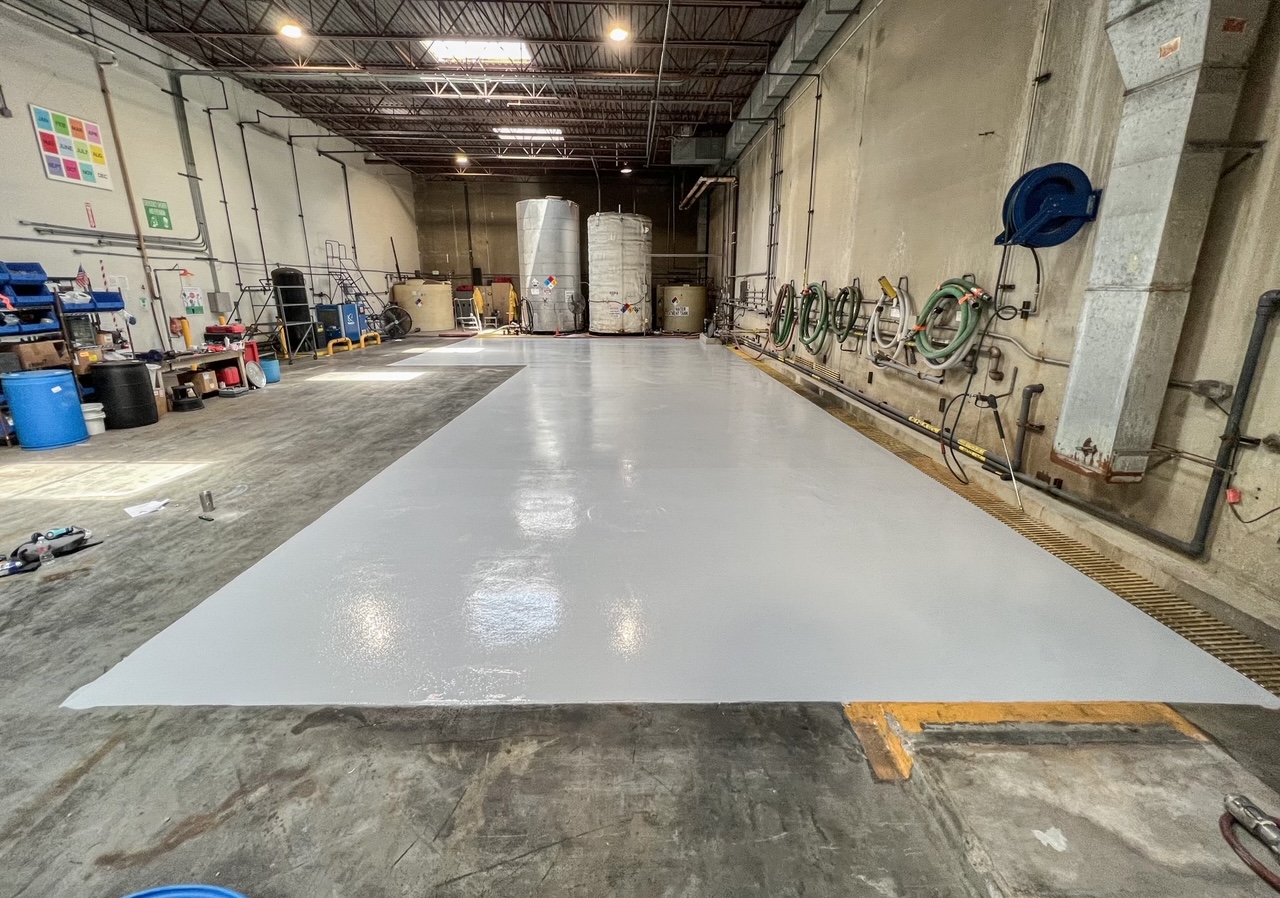
CCR has completed pharmaceutical facility projects in Englewood — urethane cement, epoxy flake broadcast, and multi-phase installs around active operations.
Contamination Control Focus
Seamless, dense, cleanable surfaces engineered for GMP environments — detailed at drains, wall transitions, and equipment pads.
Pharmaceutical Flooring Systems — Specifications by Environment
Select a topic to see details, performance factors, and considerations.
Cleanroom and GMP-Compliant Flooring SystemsContamination control▼
Best for: ISO-classified cleanrooms, GMP manufacturing areas, and contamination-sensitive environments where the floor is part of the contamination control system. Properly specified self-leveling epoxy creates a dense, smooth, seamless surface that reduces particle generation, supports sanitation procedures, and eliminates the dirt traps found in tile, sheet goods, or underbuilt coatings. Integral cove transitions and sealed terminations maintain the cleanroom envelope at floor level.
✓ Strengths:
- Dense, smooth surface minimizes particle generation and simplifies cleaning validation
- Seamless application eliminates joints and seams that harbor contaminants
- Integral cove base maintains cleanroom containment at wall-to-floor transitions
- Chemical resistance supports the cleaning agents used in pharmaceutical sanitation
Tradeoffs:
- Self-leveling epoxy has limited thermal shock resistance — not suitable for steam cleaning areas
- Substrate moisture must be controlled — cleanroom floors are typically on grade with moisture exposure
- Finishes that maximize cleanability may reduce slip resistance — must balance for the environment
Common applications: cleanrooms, GMP manufacturing, sterile packaging — see our epoxy flooring systems.
Urethane Cement for Chemical Processing and Washdown AreasChemical zone specification▼
Best for: Pharmaceutical production areas with chemical exposure, thermal cycling, and aggressive washdown protocols. Where self-leveling epoxy cannot handle the thermal and chemical demands, urethane cement provides the performance needed. CCR has completed pharmaceutical facility projects in Englewood that included urethane cement scope — matched to the specific chemical exposure and washdown conditions of each production zone.
✓ Strengths:
- Handles thermal shock from hot water washdowns and steam cleaning without debonding
- Resists the broad spectrum of pharmaceutical cleaning chemicals and solvents
- Higher moisture tolerance than epoxy — performs in areas with hydrostatic pressure
- Integral cove base creates containment at wall transitions for full washdown capability
Tradeoffs:
- Higher material cost than self-leveling epoxy — specify only where thermal/chemical demands require it
- Textured surface may not meet cleanroom smoothness requirements — zone accordingly
- Shorter working time requires experienced crews for consistent application
Common applications: pharmaceutical production, chemical handling, washdown areas — see our urethane cement flooring page.
ESD Flooring for Static-Sensitive Pharmaceutical EnvironmentsStatic control systems▼
Best for: Pharmaceutical areas where electrostatic discharge poses risks to equipment, products, or personnel — including electronic testing labs, powder handling areas, and certain manufacturing environments. ESD epoxy systems provide controlled conductivity that dissipates static buildup before discharge events occur. CCR evaluates each area’s static control requirements during the preconstruction assessment to determine grounding specifications and conductivity targets.
✓ Strengths:
- Controlled conductivity dissipates static charge before discharge events
- Seamless application maintains ESD performance without joint interruptions
- Copper grounding grid creates consistent static path across the floor surface
- Combined with cleanroom-grade finish for dual contamination and static control
Tradeoffs:
- Grounding grid installation adds complexity and cost to the system build
- Conductivity levels must be tested and verified — not every ESD product meets pharmaceutical requirements
- Chemical resistance may differ from standard epoxy — formulation depends on the environment
Common applications: electronic testing labs, powder handling, static-sensitive manufacturing — see our specialty flooring systems.
Surface Preparation for Pharmaceutical Flooring SystemsSubstrate requirements▼
Best for: Every pharmaceutical flooring project where long-term adhesion and contamination control depend on substrate condition. 80–90% of coating failures trace back to inadequate surface preparation. In pharmaceutical environments, a failed coating is not just a maintenance issue — it compromises contamination control and audit readiness. CCR performs shot blasting, diamond grinding, MVER testing, and complete contaminant removal before any system is applied.
✓ Strengths:
- Shot blasting creates the mechanical profile for permanent coating adhesion
- MVER testing identifies moisture conditions that cause delamination in controlled environments
- Removes existing failed coatings and contaminants that compromise the new system
- Proper preparation prevents the failures that trigger audit findings and production delays
Tradeoffs:
- Adds time to the project — but skipping preparation causes failures that cost more in regulated environments
- Dust and noise control during preparation must meet pharmaceutical containment requirements
- Substrate testing may reveal conditions that change the system specification
Common applications: all pharmaceutical flooring projects — see our installation process.
Schedule-Aware Installation for Active Pharmaceutical FacilitiesPhased installation▼
Best for: Pharmaceutical facilities that cannot shut down operations for flooring work. Most pharmaceutical projects happen in active buildings — that means managing dust control, containment, traffic routing, and cure schedules around production. CCR has completed multi-phase pharmaceutical installations in Englewood, coordinating urethane cement and epoxy flake broadcast scope around active facility operations.
✓ Strengths:
- Zone-phased installation keeps the facility operational during the project
- Containment and dust control protocols meet pharmaceutical clean environment requirements
- Installation schedule mapped to production calendar during preconstruction planning
- Multi-system capability — different areas receive different systems in the same project
Tradeoffs:
- Phased installation extends total project timeline compared to full-facility shutdown
- Containment requirements add cost and complexity in active pharmaceutical environments
- Cure time between phases must be respected — cannot be compressed for schedule convenience
Common applications: pharmaceutical manufacturing, lab renovation, cleanroom flooring — request a site assessment.
PHARMACEUTICAL FLOORING DENVER
Frequently Asked Questions About Pharmaceutical Flooring
What flooring systems does CCR install in pharmaceutical facilities?
CCR installs self-leveling epoxy, urethane cement, ESD (electrostatic dissipative) epoxy, novolac, and polyaspartic systems for pharmaceutical environments. Each area receives a zone-specific specification based on its contamination control requirements, chemical exposure, traffic type, thermal conditions, and cleaning protocols. A packaging corridor does not need the same system as a wet processing room or a chemical handling zone — CCR evaluates each area individually during preconstruction.
How does surface preparation differ in pharmaceutical environments?
The preparation methods — shot blasting, diamond grinding, MVER testing — are the same, but pharmaceutical environments add containment and dust control requirements. Preparation in an active pharmaceutical facility must not introduce contaminants into adjacent clean zones. CCR manages containment barriers, negative air pressure, and HEPA filtration during preparation work to maintain the facility’s controlled environment throughout the project.
Can pharmaceutical flooring be installed while the facility remains operational?
In most cases, yes. Zone-phased installation keeps portions of the facility operational while other sections are completed. CCR develops a phased schedule during preconstruction that maps the work to your production calendar and containment requirements. Pharmaceutical projects in Englewood included multi-phase installations coordinated around active operations — each phase contained, installed, cured, and released before the next began.
When is ESD flooring required in pharmaceutical facilities?
ESD flooring is specified in areas where electrostatic discharge poses risks to sensitive equipment, products, or personnel — electronic testing labs, powder handling zones, and certain manufacturing environments. The system uses conductive epoxy with a copper grounding grid to dissipate static charge before discharge events. Not every pharmaceutical area needs ESD protection — CCR evaluates each zone’s static risk during the preconstruction assessment.
What products does CCR use for pharmaceutical flooring?
CCR installs Resinwerks and Metzger McGuire systems specified for pharmaceutical performance requirements. Product selection depends on the environment — self-leveling epoxy for cleanrooms, urethane cement for chemical and thermal exposure areas, ESD epoxy for static-sensitive zones, and novolac for concentrated chemical resistance. Each system is matched to the area’s actual operating conditions rather than applying one product across the entire facility.
Request a Site Assessment
Tell us about your pharmaceutical facility. We’ll evaluate your contamination control requirements, chemical exposure, traffic patterns, and regulatory needs — then recommend the flooring systems that fit each zone.