
Commercial Polished Concrete Flooring for High-Use Facilities
Commercial Polished Concrete Flooring for High-Use Facilities
Colorado Concrete Repair delivers polished concrete services across the Denver Front Range with 20+ years of industrial experience. This guide explains the process, finish levels, and facility-specific factors that determine whether polished concrete is the right specification.
20+ Years
Commercial and industrial flooring experience across the Denver Front Range.
1,000+ Projects
Across coatings, concrete repair, polishing, and specialty flooring systems — matched to each facility’s actual operating conditions.
~11-Day Installs
Average project duration for this system type — phased around operating schedules.
Polished Concrete — What to Know Before You Specify
Select a topic to see details, performance factors, and considerations.
When Commercial Polished Concrete Flooring Is the Right SpecificationApplication criteria▼
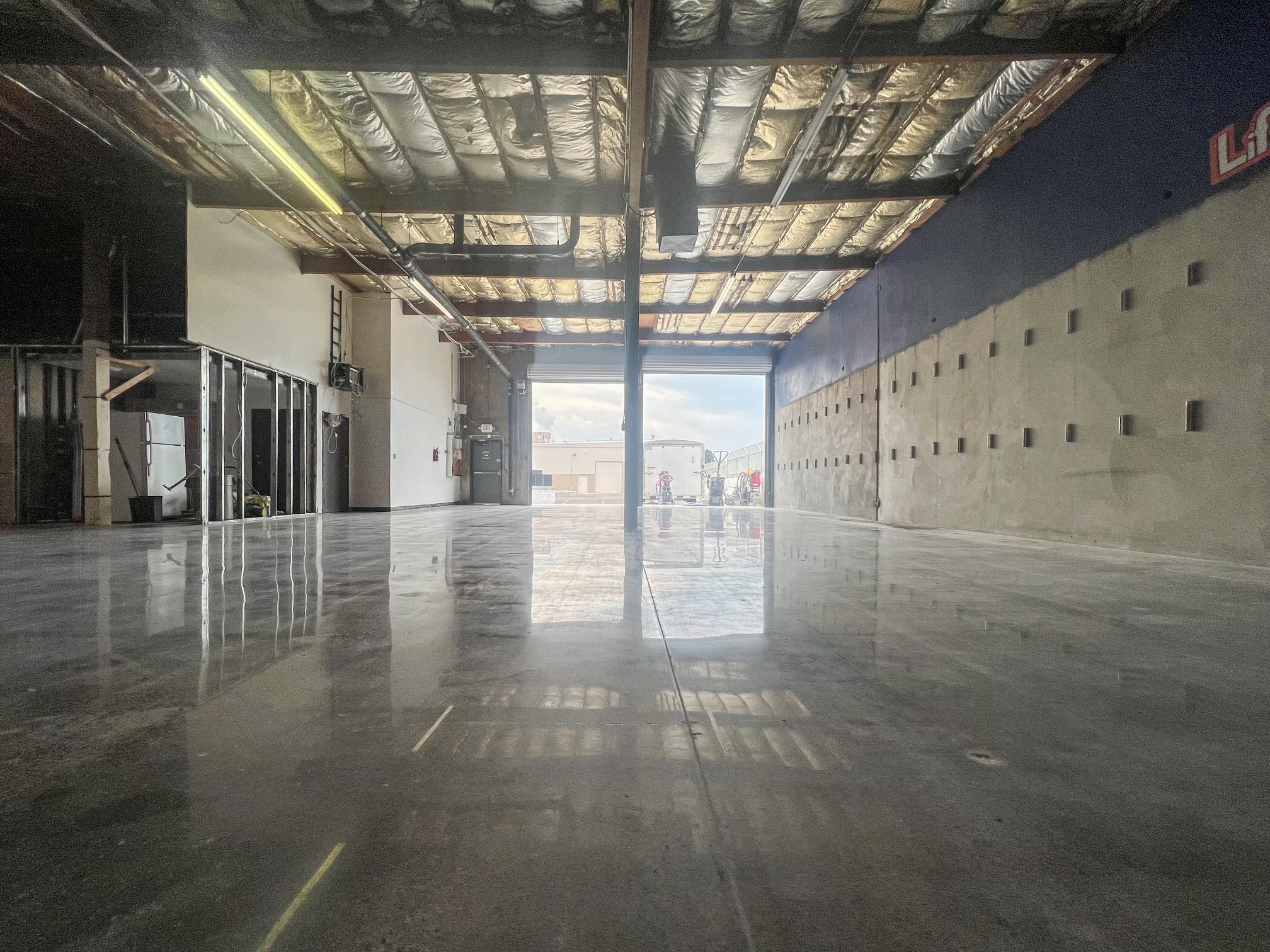
Best for: Commercial and industrial facilities where commercial polished concrete flooring addresses specific substrate, chemical, or operational requirements. CCR evaluates each facility’s conditions during the preconstruction site assessment. CCR recently completed this type of scope at a Florence-area commercial facility requiring polished concrete.
✓ Strengths:
- Matched to your facility’s specific chemical exposure, traffic, and environmental conditions
- Installed by experienced crews with 20+ years of industrial flooring expertise
- Seamless, non-porous finish that simplifies cleaning and maintenance
- Engineered to handle the mechanical loads your facility generates daily
Tradeoffs:
- System selection depends on substrate condition — testing required before specification
- Not every system fits every environment — wrong product selection causes premature failure
- Professional installation required — this is not a DIY or general-contractor operation
Common applications: commercial and industrial facilities — see our polished concrete services page.
Polished Concrete Finish LevelsMatte to high-gloss▼
Best for: The level of polish determines both the aesthetic and the performance characteristics. Higher polish levels increase reflectivity and stain resistance but require more processing steps. CCR recently completed this type of scope at a Boulder County commercial facility requiring polished concrete.
✓ Strengths:
- Multiple finish levels from 400-grit matte to 3000-grit high-gloss mirror finish
- Densifier and hardener treatment increases surface durability at every level
- Light-reflective finishes reduce lighting costs in large facilities
- No topical coatings to peel or delaminate — the finish is in the concrete itself
Tradeoffs:
- Higher gloss levels require more processing passes and cost proportionally more
- Aggregate exposure depends on slab depth and condition — not always controllable
- Polished concrete is not a coating — it requires sound, quality concrete substrate
Common applications: retail, office, warehouse, institutional — see our polished concrete services.
Surface Preparation RequirementsFoundation for performance▼
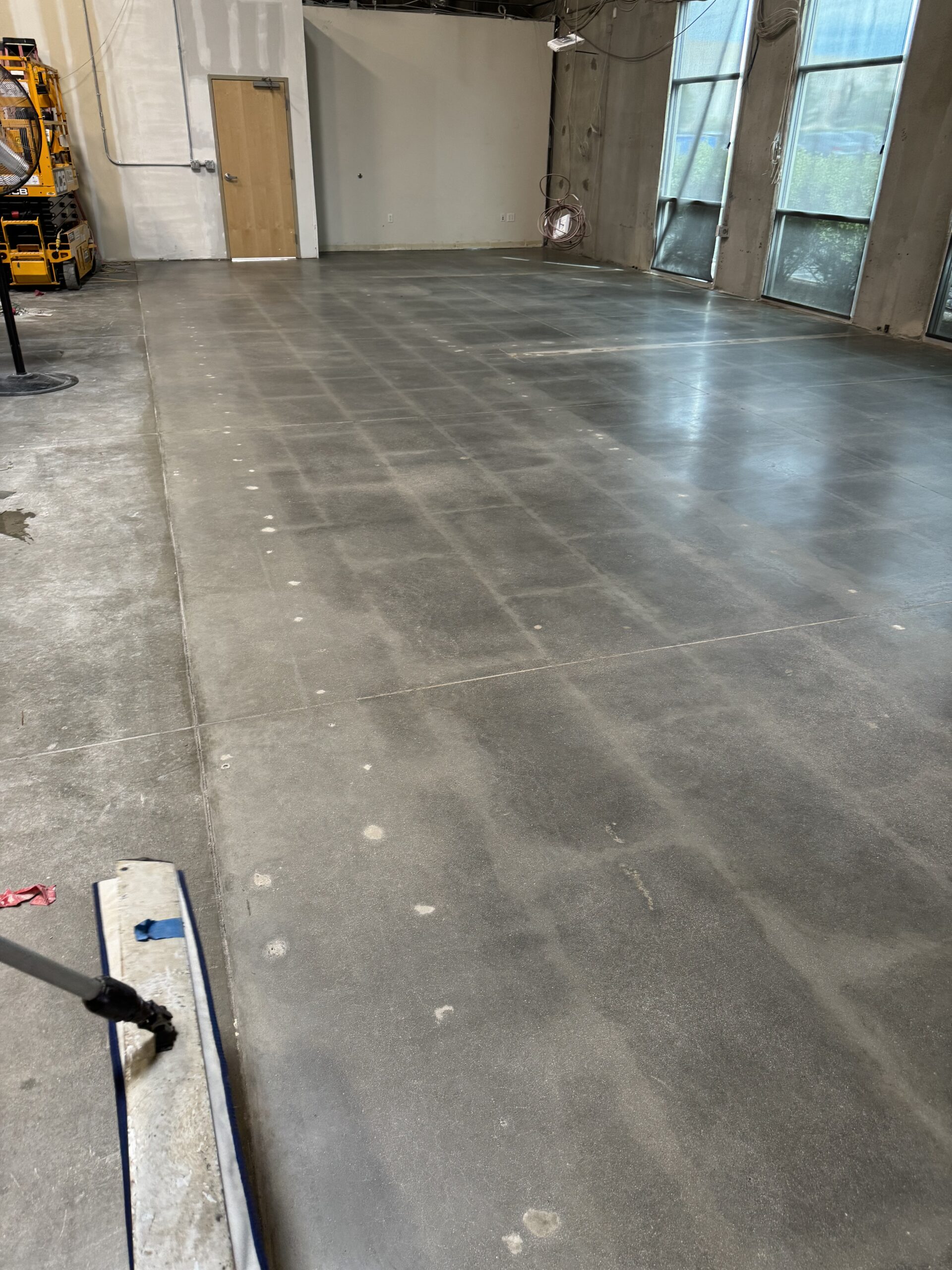
Best for: Every floor coating, polish, or repair starts with proper surface preparation. 80–90% of coating failures trace back to inadequate substrate preparation, not the product itself. CCR recently completed this type of scope at a Denver metro commercial facility requiring polished concrete.
✓ Strengths:
- Shot blasting and diamond grinding create the mechanical profile coatings need to bond
- MVER testing identifies moisture vapor issues before they cause delamination
- Crack and joint repair addresses structural defects the coating cannot bridge
- Proper preparation extends system lifespan by years compared to shortcuts
Tradeoffs:
- Adds time to the project schedule — but skipping it costs more in premature failure
- Requires specialized equipment and trained operators
- Substrate condition may reveal issues that change the system specification
Common applications: all commercial flooring projects — see our installation process.
CCR’s Installation ApproachProcess & scheduling▼
Best for: Facilities that need flooring work completed on schedule, within budget, and without disrupting operations. CCR uses zone-phased installation to keep facilities operational during the work. CCR recently completed this type of scope at a Denver metro commercial facility requiring polished concrete.
✓ Strengths:
- Zone-phased installation keeps your facility operational during the project
- Fixed-bid pricing with no surprise change orders from inadequate preconstruction
- 20+ years of experience anticipating and solving on-site challenges
- Post-installation maintenance guidance specific to your system and facility
Tradeoffs:
- Phased installation may extend total project timeline compared to full-facility shutdown
- Preconstruction assessment takes time — but prevents costly mid-project changes
- Quality installation requires adequate cure time between coats — cannot be rushed
Common applications: all CCR flooring projects — request a site assessment.
COMMERCIAL POLISHED CONCRETE FLOORING QUESTIONS
Frequently Asked Questions About Commercial Polished Concrete Flooring
What should I know before specifying commercial polished concrete flooring?
Start with the substrate: condition, moisture levels, structural integrity, and existing coatings all affect what systems will perform. Then factor in your facility’s chemical exposure, traffic type, temperature range, and operational schedule. CCR evaluates all of these during the preconstruction site assessment — the specification follows the facility’s actual conditions, not a generic product recommendation. For example, a Florence-area commercial facility required polished concrete — a common scope for this question.
How does surface preparation affect commercial polished concrete flooring?
Surface preparation accounts for 80–90% of floor system performance. Shot blasting and diamond grinding create the mechanical profile that coatings need to bond. Moisture vapor testing identifies moisture drive that causes delamination. Crack repair and substrate leveling address structural defects the floor system cannot bridge. Skipping or shortcutting preparation is the most common reason floor systems fail prematurely. For example, a Boulder County commercial facility required polished concrete — a common scope for this question.
How long does commercial polished concrete flooring last in a commercial environment?
Properly specified and installed systems typically deliver 10–20+ years depending on traffic intensity, chemical exposure, and maintenance practices. The variables that shorten lifespan are the same across all systems: wrong product for the exposure, inadequate surface preparation, and insufficient maintenance. CCR specifies based on your actual operating conditions.
Can this work be done while our facility stays operational?
In most cases, yes. Zone-phased installation keeps portions of your facility operational while other sections are being installed or cured. CCR develops a phased schedule during preconstruction that maps the work to your operational calendar. The tradeoff is a longer total project timeline, but your business keeps running.
How do I choose the right contractor for commercial polished concrete flooring?
Look for industrial flooring specialization — not a general contractor who subcontracts flooring. Ask about surface preparation methods, substrate testing, and system specification process. Ask for references from facilities similar to yours. A qualified contractor will ask detailed questions about your facility before recommending a product — not push a single system for every application.
Request a Site Assessment
Tell us about your facility. We’ll evaluate your substrate, chemical exposure, traffic, and operating conditions — then recommend the system that fits.