
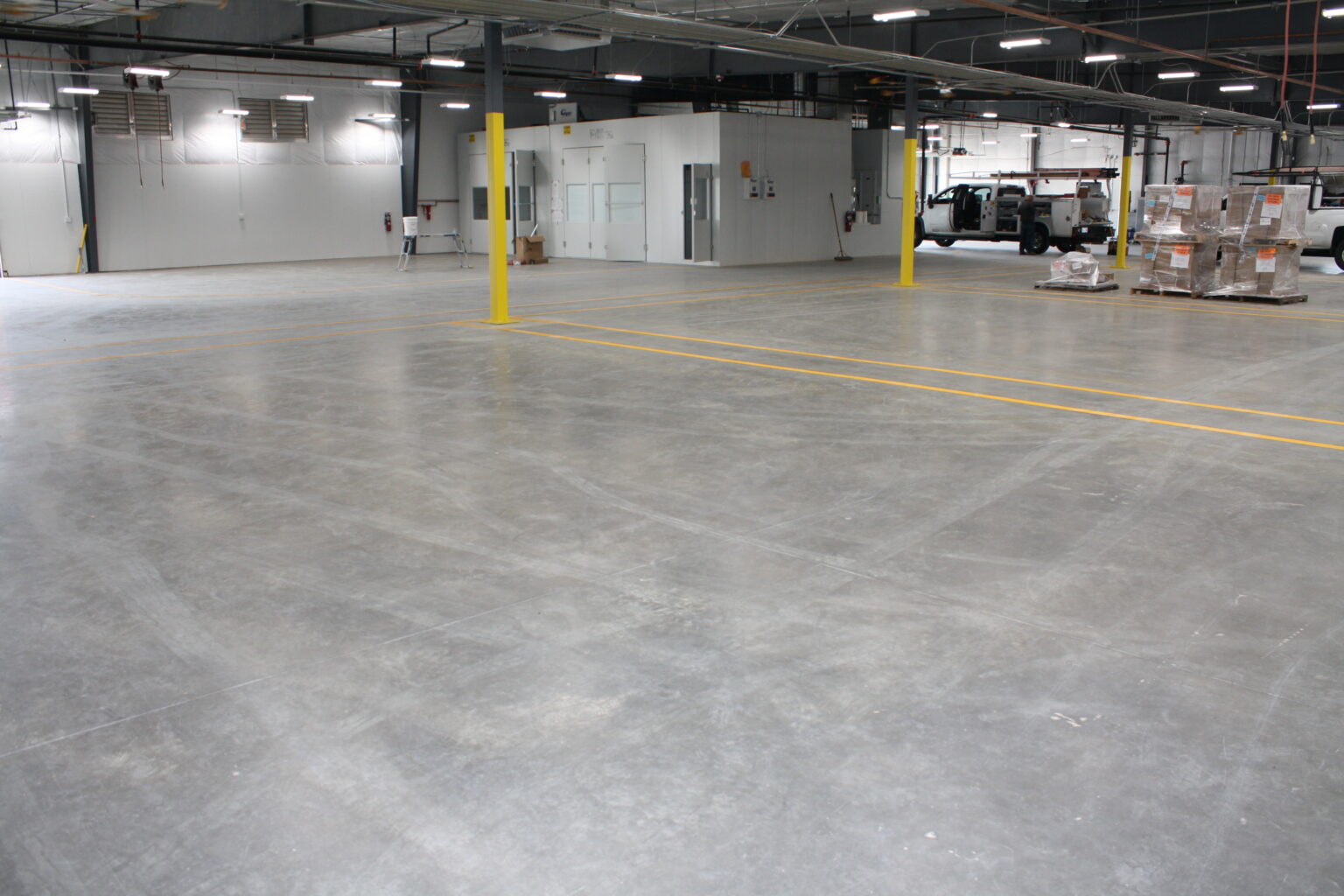
Safety Standards
Dust control, site terms and work planning on commercial and industrial floors
Colorado Concrete Repair works on commercial and industrial concrete floors from its Denver base. This page is for owners, facility managers and GCs checking a contractor. It covers how our quotes control dust at the tool, what our standard terms leave to the site, and how work is planned around operations.
OR, TELL US ABOUT YOUR PROJECT:
OSHA’s Silica Rule
OSHA’s construction silica standard is 29 CFR 1926.1153. Its Table 1 row for walk-behind floor grinders lists water fed to the cutting surface or a dust collection system recommended by the manufacturer.
HEPA Dust Control
Our quotes list grinding, scarifying and blasting equipment attached to industrial HEPA filter vacuums, and joint saws attached to a HEPA vacuum.
Facility Coordination
Phasing, off-hours work and cure time can be part of the quoted plan. Access for each phase is agreed with your team for the job.
CCR SAFETY COMMITMENT
How we handle dust and work around operations
Grinding and saw cutting make concrete dust, and OSHA’s silica rule lists them as Table 1 tasks. Our quotes for grinding, scarifying and blasting list the equipment attached to HEPA filter vacuums. Our coating quotes specify installation in accordance with the manufacturer’s instructions. Cure time depends on the selected product and conditions.
Our standard terms price a Monday to Friday, 40-hour week, excluding holidays and weekends. When a building has to keep running, phasing, off-hours work and cure time can be part of the quoted plan. Quote language that differs from our standard terms takes priority over them.
Silica and airborne dust
Our quotes for grinding list the equipment attached to industrial HEPA filter vacuums. Some also list vacuuming the floor multiple times with HEPA vacuums, with the dust in sealed bags for disposal. OSHA’s silica rule limits dry sweeping where it could add to worker exposure.
Coatings and cure
Our quotes list epoxy, urethane cement and topcoats installed in accordance with the manufacturer’s instructions. The maker’s data sheet sets the cure for foot traffic, vehicle traffic and chemical service. Under our standard terms, heating, cooling and ventilation control are the responsibility of others.
Access and phasing
Access is part of the quote. Shot blasting is limited to where the machine can get access, and work can be phased by area when the plan calls for it. Our standard terms assume lighting for inspection and adequate lay down and parking areas.
Questions owners and GCs ask
Short answers from our quotes, our standard terms and OSHA’s own text.
Who controls ventilation and fire protection?Standard terms▼
Under our standard terms, heating, cooling and ventilation control are the responsibility of others. So are control and isolation of the fire protection system in the work area. We will not mask off smoke or fire detection equipment. Quote language that differs from the terms takes priority.
Who sets cure times?Maker data sheet▼
Cure time depends on the selected product and conditions. The maker’s data sheet sets it for foot traffic, vehicle traffic and chemical service. We agree access and cure conditions with your team for the job.
Who supplies power for the equipment?Standard terms▼
Portable power is excluded under our standard terms. We may require 220V or 3 phase power, and an electrician wires in a pigtail for the 220V supply.
Should we ask for a written exposure control plan?OSHA paragraph (g)▼
Yes, ask any contractor that grinds or saws concrete. OSHA’s silica rule says the employer shall establish and implement a written exposure control plan.
Equipment and jobsite terms
Our quotes name the equipment. For grinding, some list hand grinders and planetary walk-behind floor grinders attached to HEPA filter industrial vacuums. Joint and crack work lists a concrete joint saw attached to a HEPA vacuum. Our coating quotes specify installation in accordance with the manufacturer’s instructions.
Our standard terms list what the site provides. The price assumes an OSHA compliant site with sanitary facilities and a dumpster for our daily cleanup. It also assumes lighting for inspection and adequate lay down and parking areas.
Some of our quotes end with this step: using HEPA vacuums, we remove all debris and concrete dust to clean the entire workspace. Our identifiable debris goes to a dumpster provided by others. Dust protection of finished surfaces is the responsibility of others under our standard terms, unless the quote says otherwise.
Who does what
HEPA vacuums on grinders and saws
Our quotes
Phasing and off-hours work
When quoted
Heating, cooling and ventilation
By others
Fire protection isolation
By others
Debris to a dumpster
Dumpster by others
FAQ
Safety standards — common questions
How does CCR manage silica exposure during grinding and coating removal?
Our quotes for grinding, scarifying and blasting list the equipment attached to industrial HEPA filter vacuums, and joint saws attached to a HEPA vacuum. Some quotes end with HEPA vacuuming of all debris and concrete dust in the workspace. OSHA’s silica rule limits dry sweeping where it could add to worker exposure.
Do you work in active facilities that cannot fully shut down?
Yes, when the plan allows it. Phasing, off-hours work and cure time can be part of the quoted plan, so some areas stay in use while others are worked or cured. Our standard terms price a Monday to Friday, 40-hour week, so nights and weekends are quoted when the job needs them.
Who protects finished surfaces and cleans up the dust?
Under our standard terms, dust protection and protection of finished surfaces are the responsibility of others, unless the quote says otherwise. We clean up our identifiable debris to a dumpster provided by others. Some of our quotes also list HEPA vacuuming of all debris and concrete dust to clean the entire workspace.
What is the best way to prevent silica dust exposure?
OSHA’s silica rule for construction starts at the tool. For walk-behind floor grinders, its Table 1 lists water fed to the cutting surface or a dust collection system recommended by the manufacturer. Indoors, it adds HEPA vacuuming of loose dust between passes. The rule also limits dry sweeping where it could add to exposure.
Plan the work with safety built in from the start
Working in a building that has to keep running? Give us a call. We’ll talk through access, phasing and what your team provides before the scope is written.