Epoxy Flooring Denver
Commercial Epoxy Floor Coating for Warehouses, Plants, Labs & Service Shops
Epoxy flooring and epoxy floor coating for Denver warehouses, plants, labs and service shops. Colorado Concrete Repair repairs concrete floors and installs the coating. Where the floor needs it, our quotes list grinding, then filling cracks, spalls and joints, with construction joints honored. Our systems come from Resinwerks, Sherwin-Williams resin flooring, Dur-A-Flex and Metzger/McGuire.
For warehouses, plants, labs and other commercial floors. We don’t do house garages or basements. Pole barns are the one exception.
OR, TELL US ABOUT YOUR PROJECT:
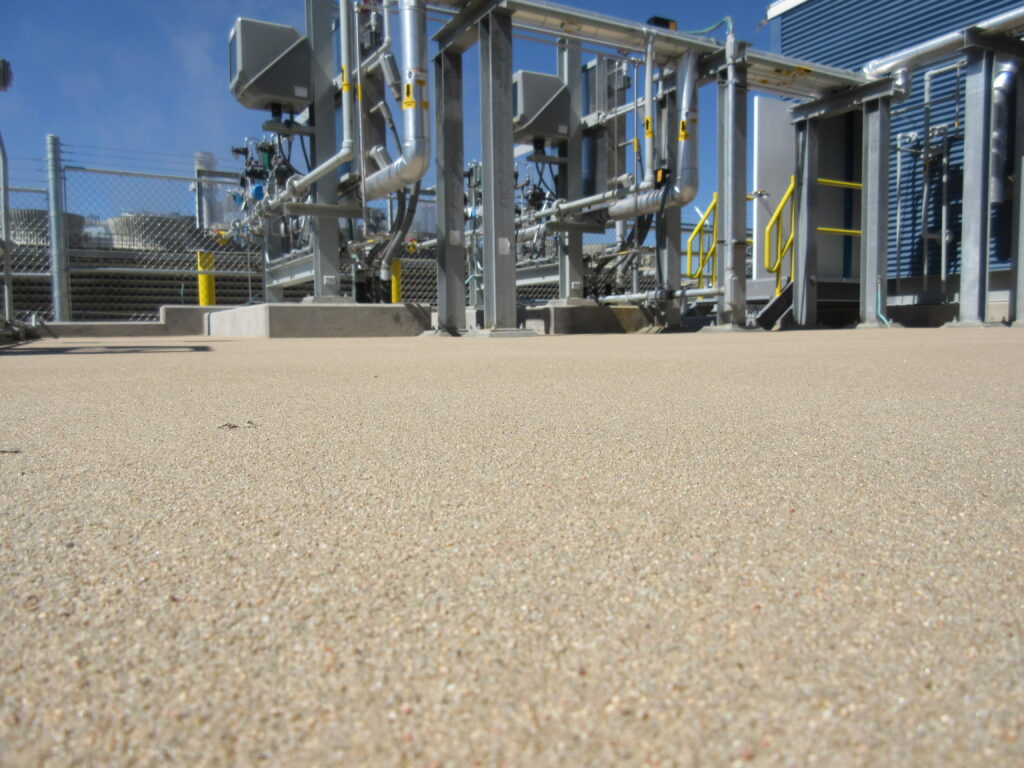
100% solids epoxy, chemical plant · our install
Quick answers · this page
Polyaspartic vs. epoxy — which is better?
Neither, universally: epoxy is the basecoat and moisture-barrier workhorse, polyaspartic the fast-cure UV topcoat. Full comparison →
Which epoxy system fits my facility?
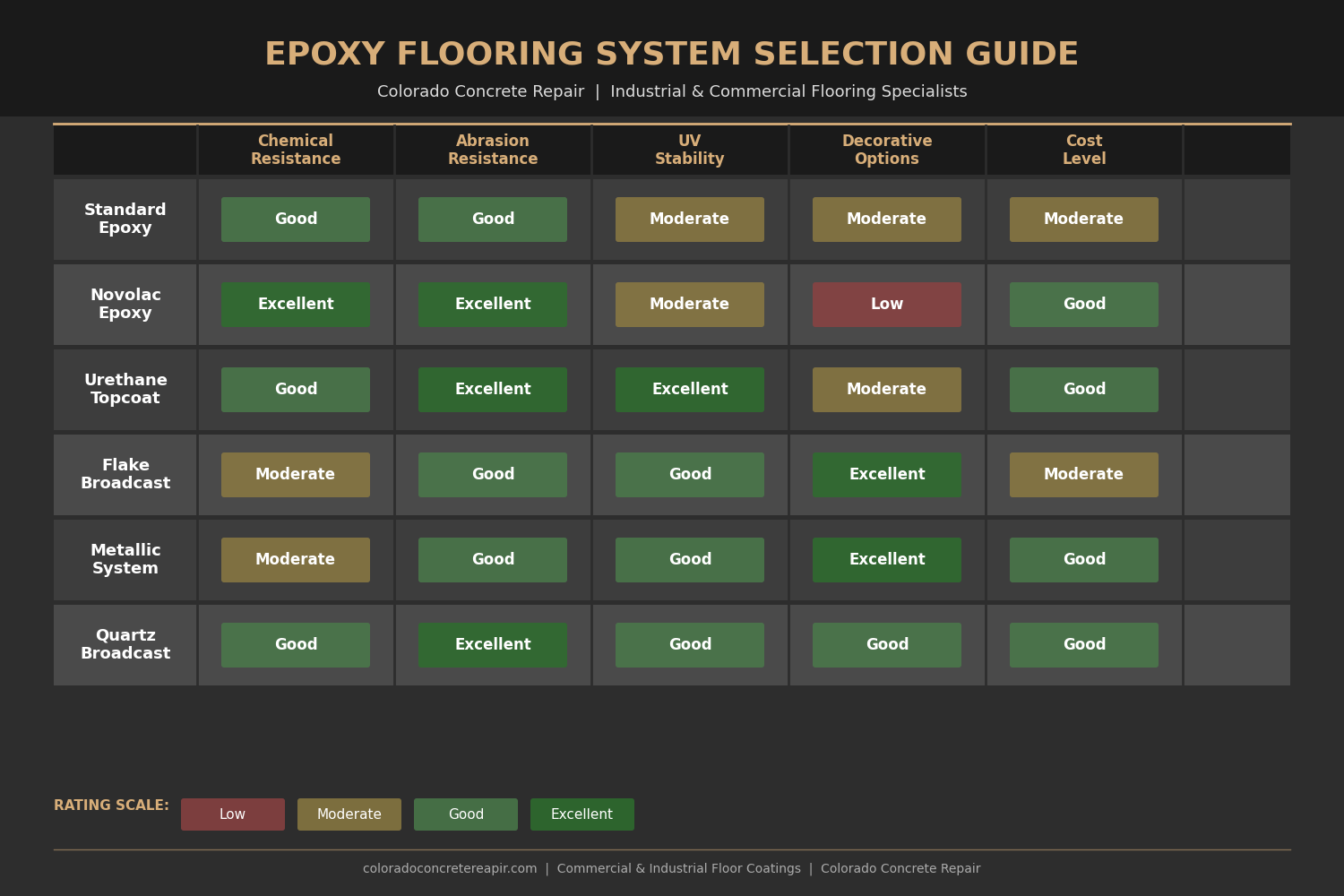
It depends on what runs over the floor, what spills on it and how wet it gets. Our own quotes show the range. Labs and clean rooms were quoted epoxy flake or epoxy slurry systems. A warehouse was quoted a heavy-duty urethane topcoat with grit. Hot, wet or chemical rooms may need urethane cement instead.
What about moisture in the floor?
Moisture coming up through concrete can lift epoxy off the floor. A new floor can read far above a coating’s moisture limit, and that can stop an install. Moisture mitigation is part of our work. Some of our quotes add a vapor barrier epoxy primer step, and some include a priced moisture test.
What does it cost?
It depends on the size of the area, the floor’s condition and the system. Crack, spall and joint repair can be a big part of the scope. Prep and repair usually take more time than the coating. We walk the floor, then send a written scope. Some repair work is quoted as time and materials.
Don’t see your question? Call 720-780-9498 — you’ll get a person who’s installed these floors.
Chemical Resistant
High-build epoxy and novolac systems rated for industrial chemical exposure — acids, solvents, fuels, and aggressive cleaning agents.
1,000+ Projects
Commercial and industrial floor work, based in Denver.
80–90%
80–90% of our time is spent on surface prep and repairs
EPOXY SYSTEMS INSTALLED ACROSS COLORADO
Warehouses, manufacturing plants, chemical facilities, fleet garages, and cleanrooms — built for the environment they serve.
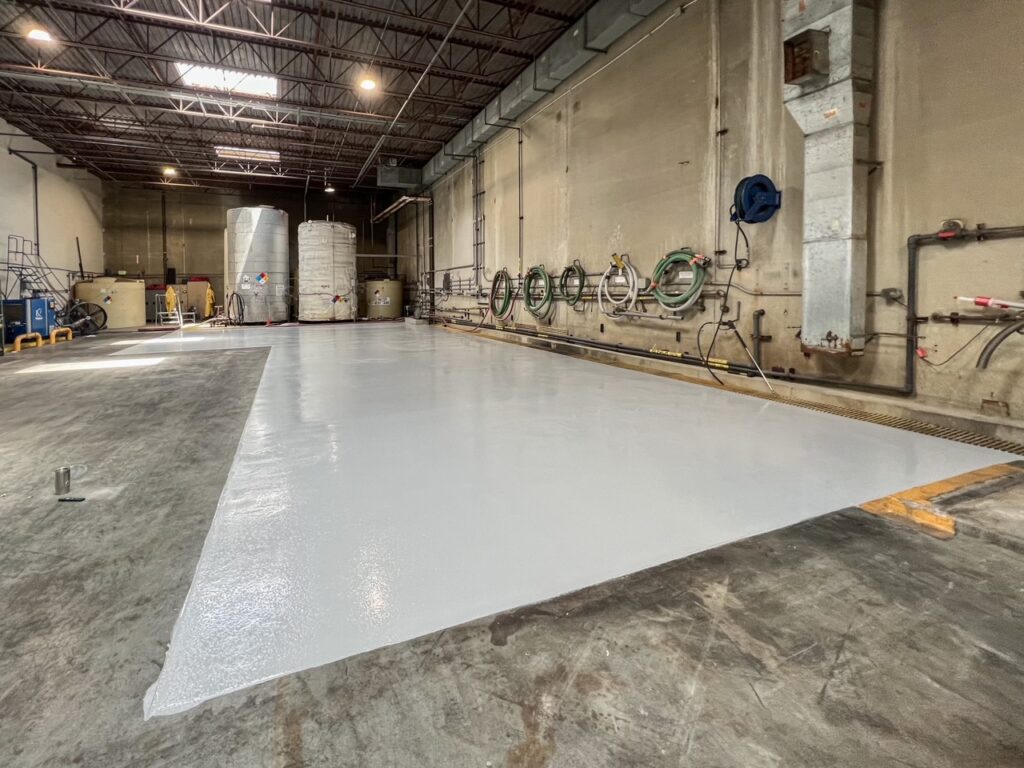
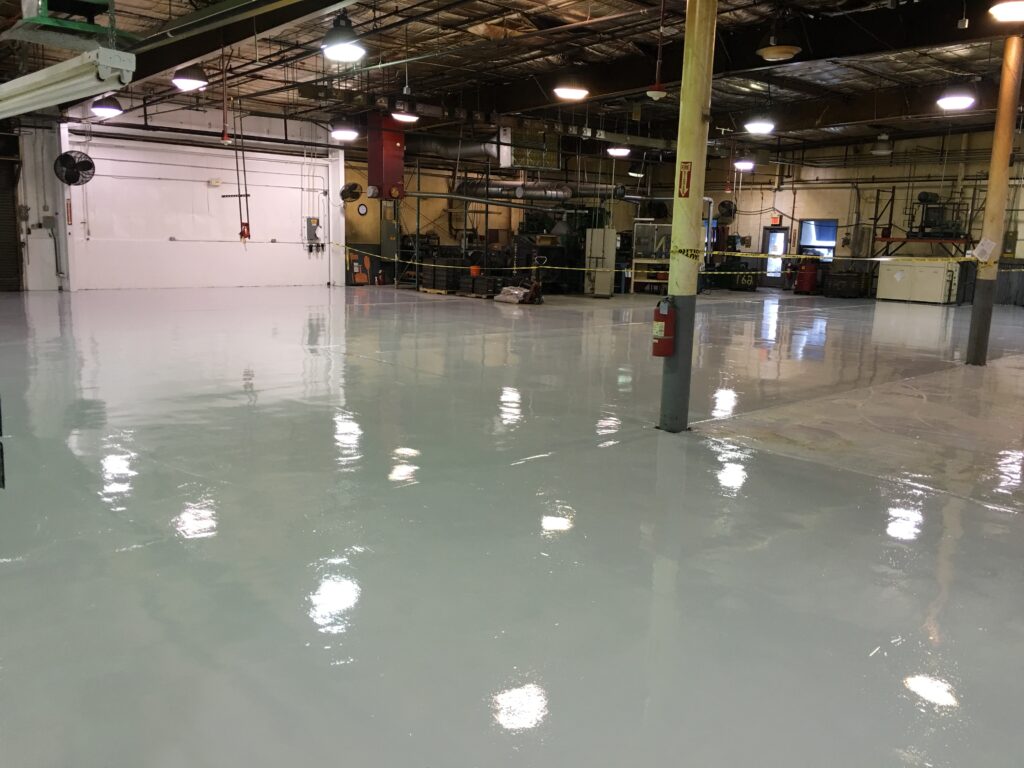
Epoxy Flooring Installations — Denver Front Range


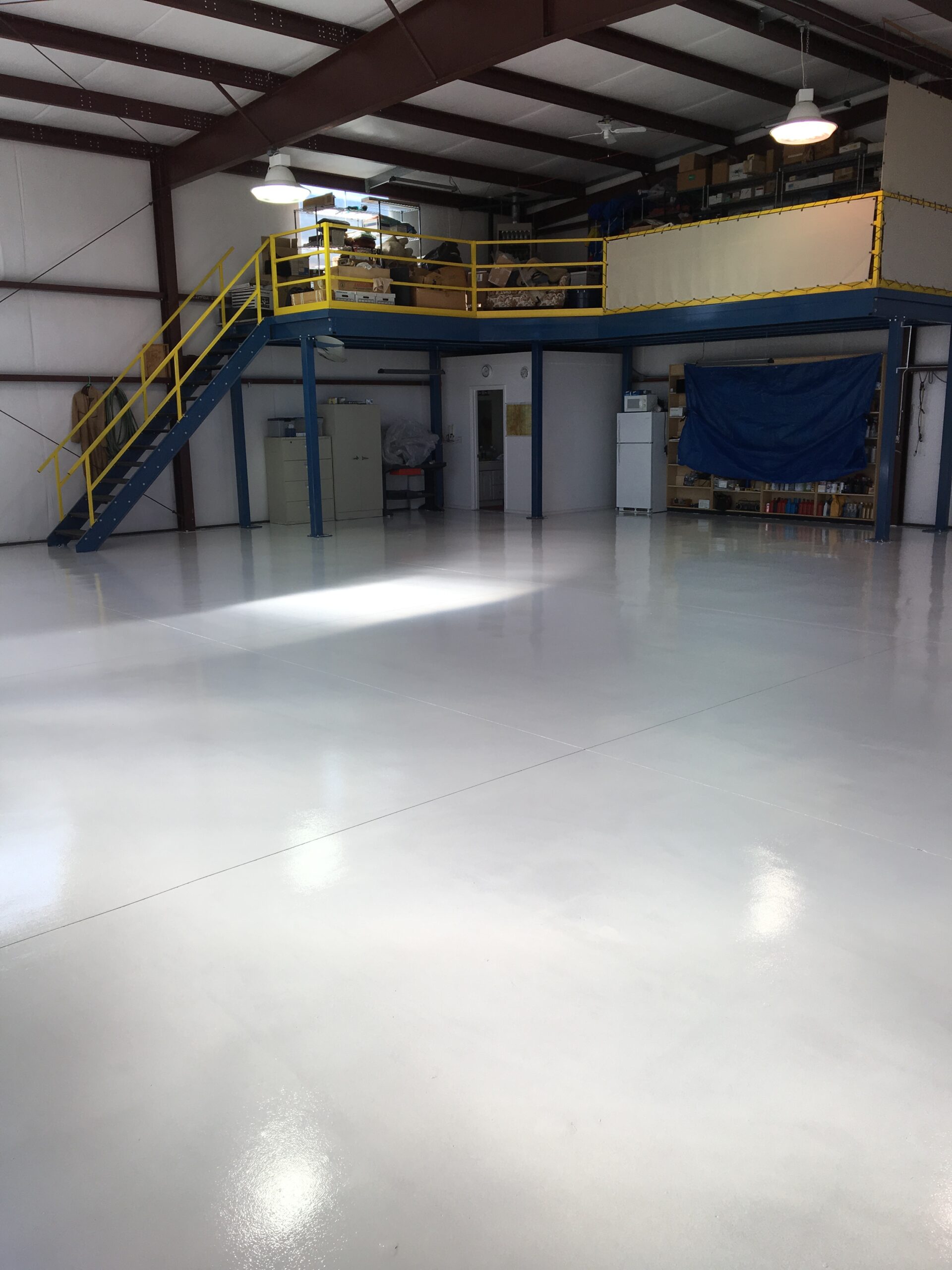
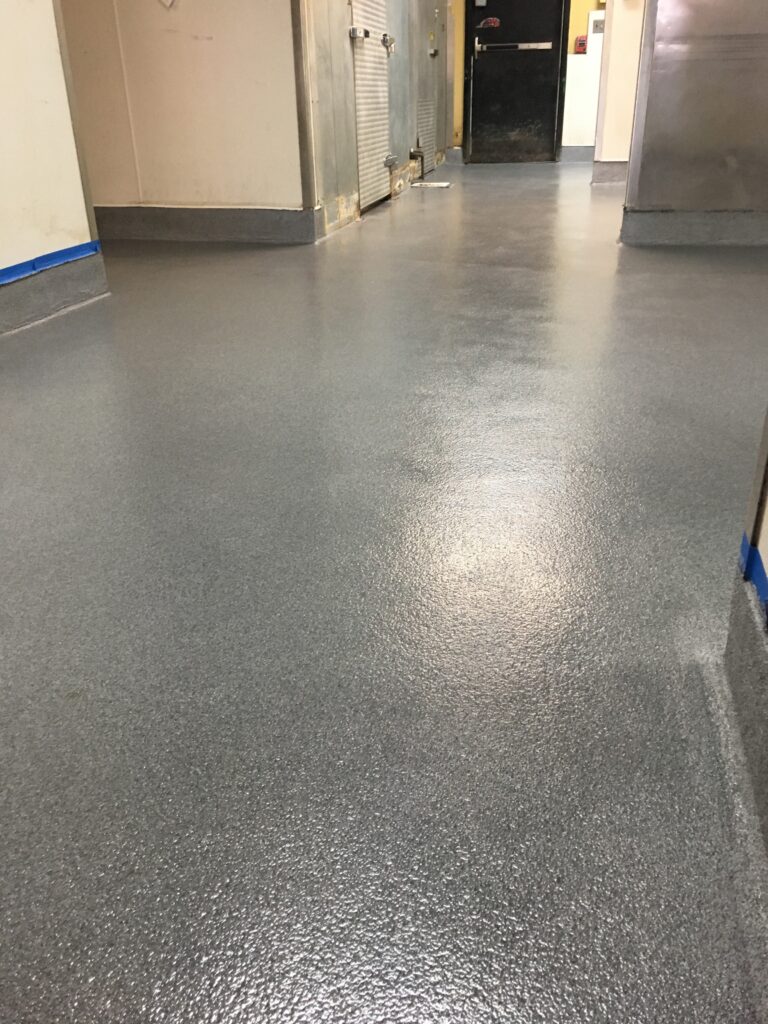
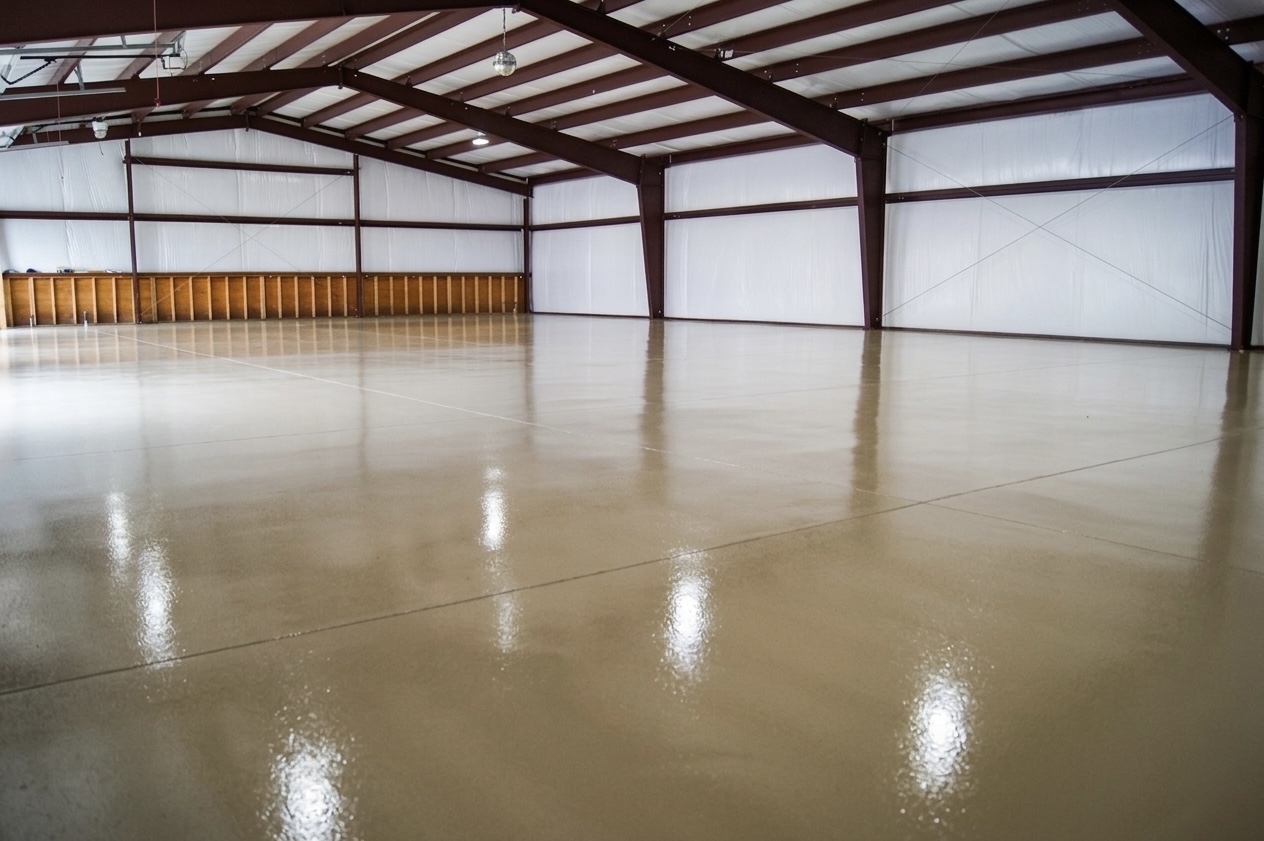
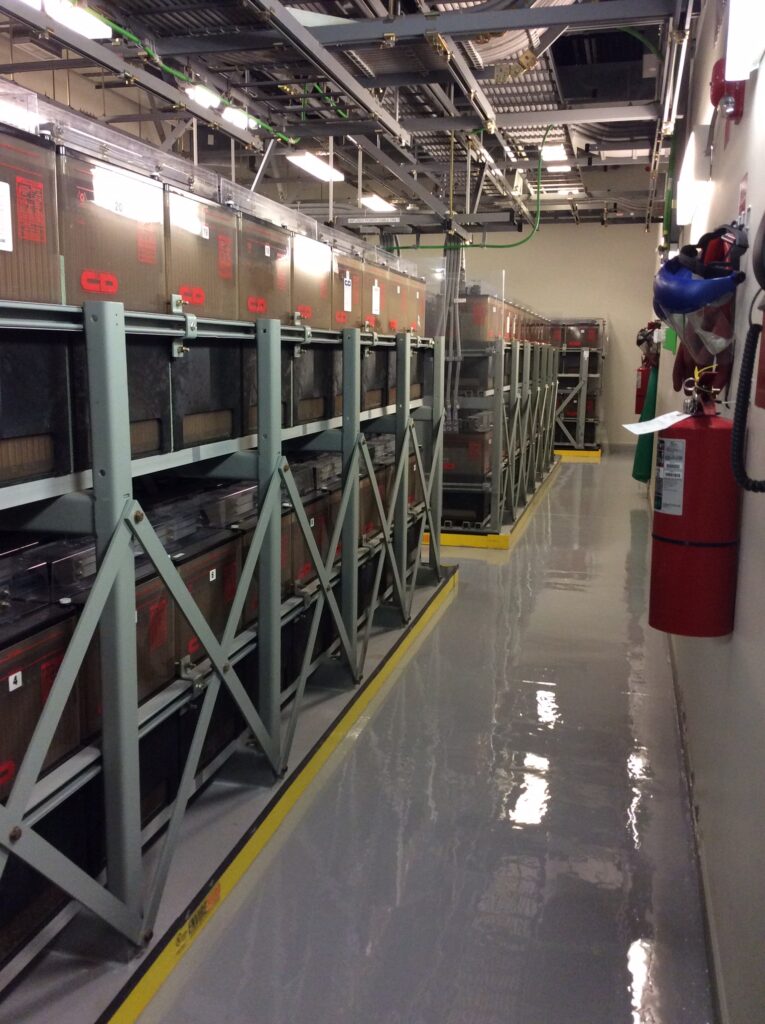
Epoxy Floor Coating Systems & Applications
Select a system to see installation details, performance strengths, tradeoffs.
100% Solids High-Build EpoxyLearn moreIndustrial & commercial▸
Best for: Warehouses, manufacturing plants, fleet garages, institutional facilities, and any environment requiring heavy-duty chemical and impact resistance at 20+ mil thickness.
✓ Strengths:
- Full-thickness chemical barrier — no volume loss during cure
- Impact and abrasion resistant for forklift and vehicle traffic
- Seamless, non-porous surface; wide color and finish options
- Compatible with polyaspartic topcoat for UV stability
Tradeoffs:
- Longer cure window than polyaspartic — plan for area downtime
- Moisture in the floor can lift it, and damp floors may need a vapor barrier epoxy primer first
- Yellows under UV without topcoat in sunlit areas
Cost drivers: substrate condition, area size, and system build.
Novolac EpoxyLearn moreChemical containment▸
Best for: Chemical storage areas, secondary containment zones, battery rooms, and environments with concentrated acid, solvent, or caustic exposure.
✓ Strengths:
- Superior chemical resistance — acids, solvents, and caustics
- Higher cross-link density than standard epoxy for extreme exposure
- Suitable for secondary containment and chemical processing areas
- Thermal resistance exceeds standard epoxy formulations
Tradeoffs:
- Highest material cost of epoxy systems
- More brittle than standard epoxy — not ideal for heavy impact zones
- Requires experienced crews due to demanding application window
Cost drivers: chemical exposure profile, containment requirements, and substrate condition.
Quartz Broadcast EpoxyLearn moreAnti-slip & decorative▸
Best for: Lobbies, showrooms, restrooms, commercial kitchens, loading docks, and any area requiring anti-slip texture with a professional finish.
✓ Strengths:
- Broadcast quartz provides durable anti-slip texture
- Multi-layer system builds to 60–125+ mils total thickness
- Wide range of color blends for decorative and branded finishes
- Excellent impact and abrasion resistance
Tradeoffs:
- Multi-day installation due to broadcast and seal coat layers
- Textured surface is harder to clean than smooth epoxy
- Higher material cost than smooth-coat systems
Cost drivers: aggregate selection, number of broadcast layers, and floor area.
Polyaspartic TopcoatLearn moreFast-cure finish coat▸
Best for: UV-exposed areas, showrooms, retail, and any epoxy installation where color stability, abrasion resistance, and fast return-to-service matter. Applied as a topcoat over epoxy — not as a standalone basecoat.
✓ Strengths:
- UV stable — prevents yellowing in sunlit or exterior-adjacent areas
- Fast cure allows same-day return to light traffic
- Excellent abrasion resistance as a finish coat
- Wide temperature application range vs. standard epoxy topcoats
Tradeoffs:
- Not a standalone system — requires epoxy or urethane cement base
- Thin film build provides topcoat protection, not structural thickness
- Short pot life demands experienced, fast-moving crews
Application: topcoat, applied over an epoxy or urethane cement base system.
Concrete Repair & PrepLearn moreScope-based · Substrate preparation▸
Best for: Cracked, spalled, or deteriorated slabs needing structural repair before an epoxy system is applied — or as a standalone service to restore slab integrity.
✓ Strengths:
- Crack injection & routing, spall filling, joint repair
- Moisture vapor mitigation and substrate leveling
- Required first step for any epoxy system with compromised concrete
Tradeoffs:
- Scope and cost confirmed during preconstruction site assessment
- Not a standalone surface finish — typically precedes a coating system
- Timeline depends on extent of damage and slab conditions
Pricing approach: Scope-based — determined during preconstruction site assessment based on damage extent, slab condition, and repair methods required.
How Our Epoxy Flooring Process Works
A practical process focused on planning, installation, and clean handoff.
STEP 01
Plan
- Investigate site conditions
- Define schedule constraints
- Select the right system
- Lock scope and prep
STEP 02
Install
- Grinding as quoted, with HEPA vacuums attached
- Crack, spall & joint fills where needed, construction joints honored
- Primer and coats per the quoted system
- Topcoat or grit when the scope includes it
STEP 03
Closeout
- Close punch list
- Final walkthrough
- Care sheet
Commercial Epoxy Floor Coating Systems We Install
We pick the system after we look at the traffic, chemicals, heat, water and cure time on that floor. Our systems come from Resinwerks, Sherwin-Williams resin flooring, Dur-A-Flex and Metzger/McGuire. Products in our quotes include Resinwerks vapor barrier epoxy primer, Resinwerks EPX-SL epoxy slurry, HDC 100 urethane topcoat and Metzger/McGuire Armor-Hard repair epoxy.
Our epoxy floor coatings include 100% solids high-build systems for warehouse and manufacturing concrete floors, novolac epoxy floor systems rated for aggressive chemical environments, quartz broadcast floor coatings for textured grip in wet-process areas, and polyaspartic topcoats where temperature and schedule allow. Each flooring system is designed for long lasting performance under real commercial and industrial conditions in Denver, CO and across the Colorado Front Range.
Surface preparation is 80-90 percent of the time we spend on a job. Our quotes for epoxy coating jobs list steps such as grinding or media blasting with HEPA vacuums attached. Where the floor needs it, they add filling and grinding flush cracks, spalls and joints, with construction joints honored. Some scopes then list a primer and an epoxy body coat. Some add a urethane topcoat with aluminum oxide grit.
If you are evaluating epoxy flooring services for a warehouse, manufacturing plant, maintenance garage, or institutional facility in Denver, CO, request a site assessment. We will walk the concrete floor, identify the conditions that matter, and recommend the right floor coating system for the application.
FREQUENTLY ASKED QUESTIONS
Epoxy Floor Systems — Common Questions
What is 100% solids epoxy, and why does it matter?
100% solids epoxy contains no solvents or water that evaporate during cure — every mil applied stays on the floor as cured material. This matters because solvent-based and water-based epoxies lose volume as they cure, leaving a thinner film than what was applied. A 100% solids system at 20+ mils delivers the full-thickness chemical barrier, impact resistance, and service life that industrial and commercial environments demand. It costs more per gallon, but the installed performance is not comparable to thin-film alternatives.
What is the real difference between epoxy and polyaspartic?
Epoxy is a two-part resin system that builds thickness, bonds to concrete, and provides chemical and impact resistance. Polyaspartic is a fast-curing coating that provides UV stability and abrasion resistance. In commercial applications, polyaspartic is commonly used as a topcoat over epoxy — adding UV stability and fast return to service. It can also be used in other system roles depending on the application and environment. The key is matching the system build to the facility’s chemical exposure, traffic, and operational requirements.
What is the downside of epoxy flooring?
Epoxy needs a clean, sound floor to stay bonded. Moisture coming up through the concrete can push it loose. In wet process rooms, water and cleaning chemicals can weaken the bond. Forklifts are hard on epoxy unless they’re small and run on white tires. Hot, wet or chemical rooms may do better with urethane cement.
How long does an epoxy floor last in a commercial or industrial setting?
It depends on the traffic, the chemicals, the cleaning and the system. We don’t put a year number on a floor. A maker’s data sheet rates a named product under its stated conditions. Water and cleaning chemicals can weaken the bond, and forklifts are hard on epoxy.
Can you repair or recoat an existing epoxy floor?
It depends on the old coating. Epoxy floor repair is part of our work, and our quotes list crack and joint repairs where a floor needs them. Epoxy will not stay bonded to concrete with oil contamination in it. A coating change can require a substantial recoat. We walk the floor, then send a written scope.
How long does an epoxy flooring installation take?
Timeline depends on floor area, substrate condition, and system selection. A standard 100% solids epoxy installation on a well-prepared slab typically takes 3–5 days including prep, application, and cure. Quartz broadcast systems take longer due to multiple broadcast and seal coat layers. We build a zone-by-zone install schedule before work begins so your operations team can plan around every phase.
Can you install epoxy in an active facility that cannot shut down completely?
Yes. Zone-phased installation is specifically designed for facilities that must stay operational. We section off one area, install and cure, then move to the next. We coordinate installation windows with your production, shipping, and maintenance schedules to minimize disruption to operations.
How long before we can drive on or use the floor after installation?
It depends on the product, the coat thickness, and the floor and air temperature. The maker’s data sheet sets the times for foot traffic, vehicle traffic and chemical service. Those times change from product to product. Access and cure conditions get agreed for each job as part of the plan we quote.
What color, texture, and finish options are available?
Epoxy systems are available in virtually any solid color, and quartz broadcast systems offer a wide range of aggregate color blends for textured, multi-tone finishes. Finish options include high-gloss smooth coat, satin, anti-slip aggregate broadcast, and decorative flake. We help you select based on your facility’s functional requirements — slip resistance, light reflectivity, cleanability — then match aesthetics to your brand or facility standards.
Does temperature affect epoxy installation or performance?
Yes. Most epoxy systems require substrate and ambient temperatures above 50°F for proper cure. Below that threshold, cure slows dramatically and adhesion suffers. In Colorado’s climate, we schedule installations to work within temperature windows and monitor slab temperature during application. For cold environments or tight schedules, polyaspartic topcoats offer a wider temperature application range than standard epoxy topcoats. We factor temperature into project planning.
Why Facility Managers Choose Colorado Concrete Repair for Epoxy Flooring
- Locally owned and operated in Denver CO since 2009
- Right material for the area — 100% solids where thickness and chemical resistance matter, water-based or solvent-based where flow and penetration are the priority. We match the material to the environment, not the other way around.
- System specified for your actual exposure — High-build epoxy for general industrial, novolac for chemical containment, quartz broadcast for anti-slip, polyaspartic topcoat for UV stability. We select the system based on the environment.
- 80-90% of our time is spent on surface prep and repairs — Shot blasting, diamond grinding, substrate repair, and moisture vapor mitigation. The coating is the last step, not the only step.
- Since 2009 in Denver. Our systems come from Resinwerks, Sherwin-Williams resin flooring, Dur-A-Flex and Metzger/McGuire.
- Polyaspartic applied where appropriate — Polyaspartic works well as a topcoat for UV stability and fast return to service. We specify it where the environment and performance requirements support it.
- Phased work around your operations. Access, phasing and off-hours work can be part of the plan we quote. We agree the zones and cure times with you before work starts.
Colorado Concrete Repair
Projects Completed
1,000+
Industry Association
AGC Member
Prep & Repair Time
80–90%
Epoxy Systems
High-Build · Novolac · Quartz · Polyaspartic
Applications
Industrial · Commercial · Institutional
Bring What You Have — We Map the Rest On Site
You do not need a finished spec to start. Tell us about the traffic, the chemistry, the temperatures, the slab, and your schedule, and we will look at the floor before we recommend a system. The site assessment is where the facts get mapped and the project gets scoped. See the full checklist of what helps to have ready on our site assessment page.
Request an Epoxy Flooring Assessment in Denver, CO
Tell us about your facility. We’ll follow up within one business day to schedule a walkthrough and discuss system options.
Polyaspartic vs. Epoxy: What the Data Sheets Actually Say
Garage-floor marketing says polyaspartic replaced epoxy. Manufacturer technical data sheets tell a different story: epoxy is the basecoat and moisture-barrier workhorse, polyaspartic is the fast-cure UV-stable topcoat, and the professional answer for industrial floors is usually a hybrid of both. We wrote up the full comparison — moisture-vapor limits, cure times, where each chemistry actually wins: Polyaspartic vs. Epoxy for Industrial Floors.
Why Colorado Concrete Repair
Commercial and industrial floors
Reviewed June 12, 2026 · Nick Ferguson, owner — industrial flooring contractor, Denver, since 2009