
Why concrete surface preparation is so important
Why Concrete Surface Preparation Matters on Commercial Floors
Colorado Concrete Repair’s surface preparation process leads off many of our quotes. Surface preparation is 80-90 percent of the time we spend on a job. This guide covers commercial and industrial floors in the Denver metro, not garages, basements or flooring underlayment.
Since 2009
Partial-depth repair, coatings and polishing in the Denver metro.
Over 1,000 Jobs
A company-wide total.
HEPA Vacuums
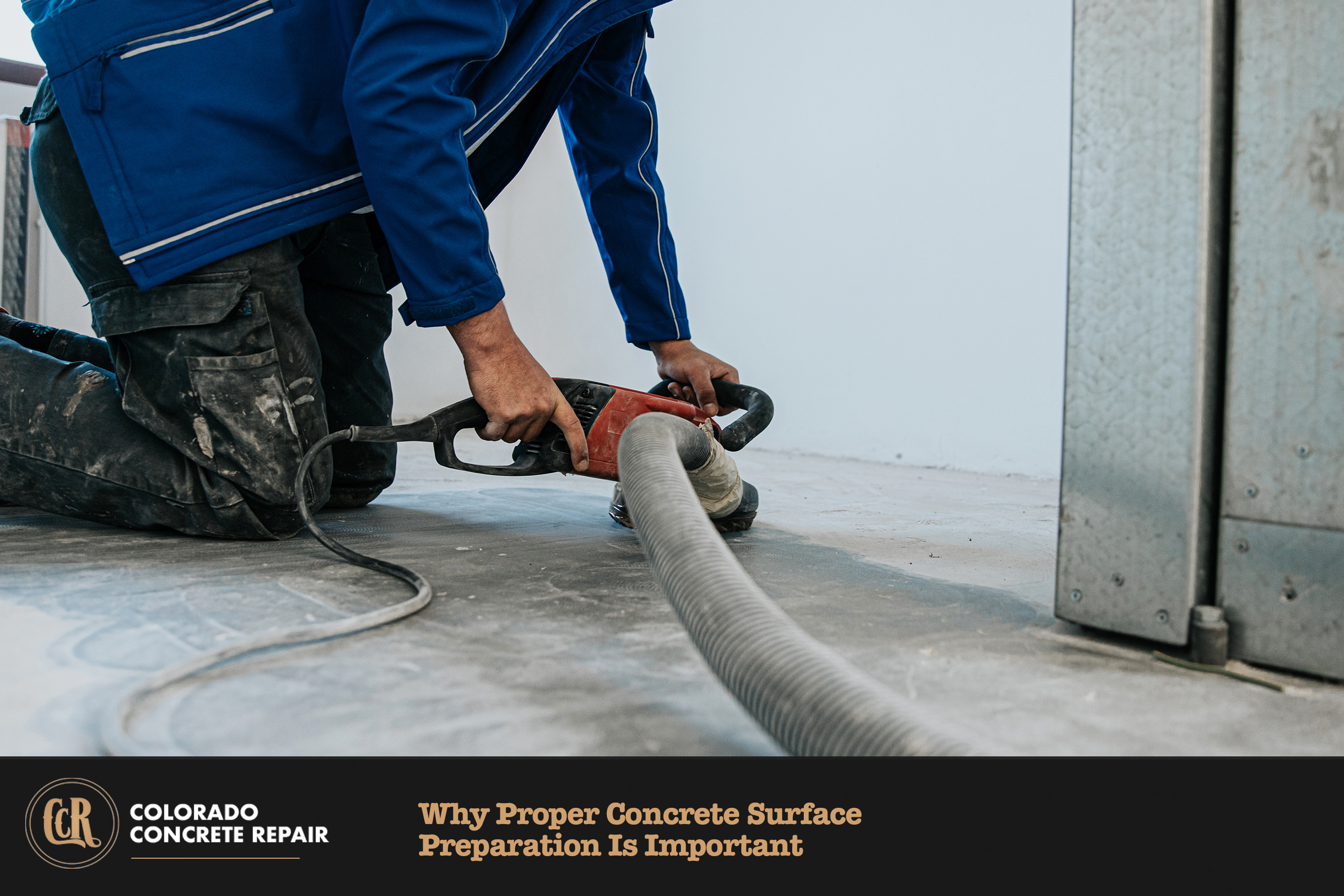
Our quotes attach grinders, blasters and scarifiers to HEPA filter vacuums.
Prep Depends on What Goes on the Floor
Open a finish to see the prep our quotes list for it.
Prep for Resin CoatingsEpoxy and urethane▼
Why it matters: Our coating quotes grind or blast to open the pores so the coating can penetrate. Several say prep finishes once the floor reaches CSP 2 or greater.
✓ In our quotes:
- Grinding or media blasting to a clean, profiled surface
- PCD tooling to strip old epoxy, if the floor has a coating
- Multiple HEPA vacuum passes into sealed bags for disposal
- Sherwin-Williams lists CSP 3 to 6 for its Poly-Crete HF urethane mortar
Watch for:
- Degreasing and contaminant removal sit outside our base scope unless the quote adds them
- Our terms ask for floors free of other trades’ debris before we start
- Primers and coats go down per the maker’s instructions
Goes with: resin coatings and urethane cement systems. See our surface preparation methods page.
Prep for Polished and Sealed FloorsGrind and hone▼
Why it matters: A sealer has to get into the concrete. Our grind and seal quotes grind from 30-grit to 80-grit diamonds to open the pores and hone the surface so the sealer can penetrate.
✓ From our quotes:
- Polish scopes that open with an 18 grit crosshatch grind where the machines can reach
- Honing from 30 grit up to 200 grit before the densifier
- A densifier applied per the maker’s specifications
- Patchwork and crack filler where the scope includes it
Limits:
- One of our quotes said patches or coatings on a heavily oiled floor would be expected to fail, and chose polish
- Cement patches in pullouts aren’t expected to match the existing concrete
- Final honing goes only as far as access and an uneven floor allow
Goes with: grind and seal, densified and polished concrete. See our installation process.
Prep for Repairs and PatchesDown to sound concrete▼
Why it matters: In our repair quotes, patches go back on sound, clean concrete. Unsound concrete comes out first.
✓ Our quotes list:
- Loose and broken concrete chipped out with chipping hammers
- Old coating ground off around the repair, where there is one
- A HEPA vacuum sweep before the patch material goes in
- Construction joints left open where the quote honors them
Limits:
- We do partial-depth repair, not slab replacement
- When a patch can take traffic is set by its maker’s sheet
- Phased areas and off-hours shifts are quoted when needed
Goes with: floors with spalls, broken joints or hollow spots. For a walk-through, request a site assessment.
CONCRETE SURFACE PREPARATION QUESTIONS
Frequently Asked Questions
Why is surface preparation important?
A coating or sealer has to get into clean, open concrete. Our grind and seal quotes say the grinding removes the top layer of dirt and concrete and opens the pores so the sealer can penetrate. Our coating quotes grind or blast to a stated profile before the primer for the same reason.
How does surface preparation affect coating performance?
Coating performance starts with what’s left on the concrete. One of our quotes for a heavily oiled floor said patches or coatings there would be expected to fail, so it called for polished concrete instead. Our standard terms leave degreasing out of the base scope unless the quote adds it. Ask early if your floor has oil.
What are the main methods of surface preparation?
On commercial floors, our quotes name grinding most often, then scarifying, media blasting and shot blasting. Grinding uses diamond tooling. KTA rates scarifying and shot blasting rougher than grinding on the ICRI profile scale. Our quotes hook each machine to a HEPA filter vacuum. The coating maker’s sheet sets how rough the floor needs to be.
Can this work be done while our facility stays operational?
Yes, when the plan is built around it. A quote can phase the floor by area or move the grinding to off-hours shifts. Each area needs racks and equipment moved out before we start. Grinders and scarifiers in our quotes are hooked to HEPA vacuums. The product’s data sheet and the site conditions decide when traffic can return.
How do I choose the right contractor for concrete surface preparation?
Decide first whether you want prep only, or prep and finish from one contractor on one scope. Prep-only firms work in Denver too. Our quotes put the prep, the repairs and the coating or polish on one scope. Either way, ask what profile they’ll reach, how they’ll handle oil and old coatings, and what their terms say about moisture.
Planning Prep for a Commercial Floor
Call and we’ll set a time to walk the floor and talk through the prep it needs.