
Urethane Cement Flooring Denver
Thermal-Shock-Resistant Flooring for Commercial Kitchens, Food Plants, Pharma, and Heavy Industrial Wash-Down Areas
Colorado Concrete Repair installs urethane cement flooring systems for Denver-area facilities where heat, cold, wash-down cycles, impact, and chemical exposure quickly expose the limits of standard coatings. When your floor moves from steam cleaning to cold water rinse, from freezer transition to production traffic, or from caustic sanitation to constant wheeled loads, urethane cement is often the system that keeps the slab protected and the operation moving. Our team uses urethane cement mortar-float and patchwork systems in environments that demand durability, sanitation, and practical phasing around live operations.
OR, TELL US ABOUT YOUR PROJECT:
65+ Urethane Projects
Documented Jobber history across kitchens, food processing, industrial aisles, patchwork repairs, and specialty resinous flooring scopes.
USDA / cGMP Aligned
Where the facility requires it, we can specify urethane cement systems suitable for sanitary, cleanable environments in food and pharmaceutical settings.
Thermal Cycling Resistant
Built for conditions that move between hot wash-down, cold rinse, freezer transition, and heavy production traffic without asking epoxy to do a job it was not designed to do.
WHY URETHANE CEMENT
When Standard Epoxy Starts to Fail, Urethane Cement Enters the Conversation
The question is not whether epoxy is a good material. It is whether epoxy is the right material for your actual operating conditions. In many Denver industrial and food-grade environments, the floor fails because the thermal and chemical demands exceed what a standard coating layer can tolerate over time.
Steam, Wash-Down, and Chemical Exposure
Commercial kitchens, meat and food processing, and beverage production areas rarely fail from one dramatic event. They fail from repetition: hot water, cool-down, sanitizers, fats, sugars, acids, rolling traffic, and constant cleaning. Urethane cement is selected in these spaces because it is installed at greater thickness, bonds aggressively to prepared concrete, and performs better in demanding wash-down environments than standard thin-film systems.
That is why urethane cement work appears in Colorado Concrete Repair’s real project history across facilities such as the Ellie Caulkins Opera House basement kitchen, Winter Park Resort’s Moffat Market kitchen, Rocky Mountain Natural Meats, and other environments where sanitation and uptime matter just as much as appearance.
Freeze / Thaw and Thermal Shock
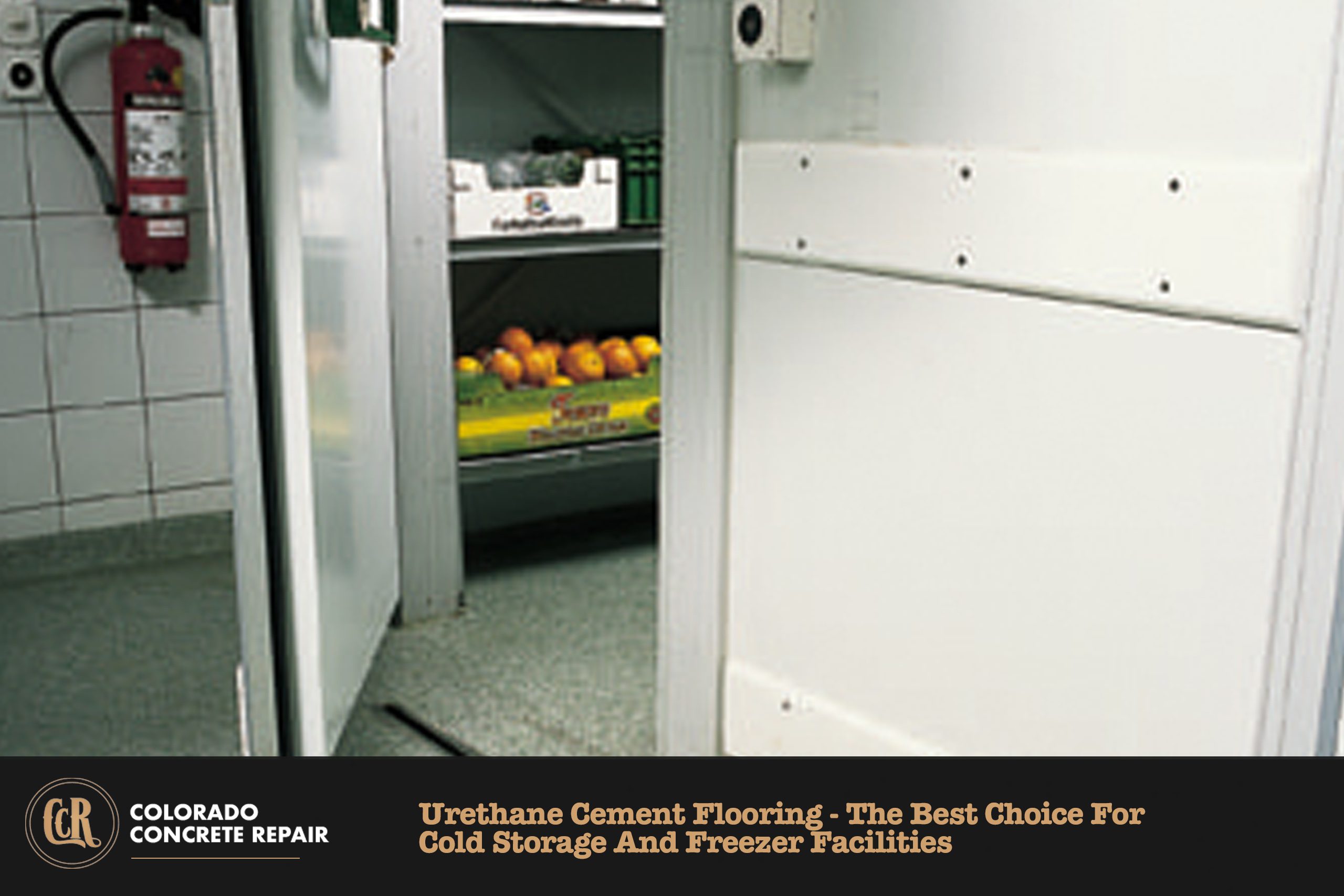
Freezer thresholds, cold storage transitions, and production rooms that cycle between hot cleaning and cold operation create stress that can break bond lines. This is where owners often discover that a low-cost coating package did not solve the problem. Urethane cement is regularly specified for thermal shock resistance, especially in transitions where an ambient slab, cold room, and wet cleaning protocol converge.
For leadership teams, the decision is less about selecting the most aggressive product and more about selecting the system that matches how the floor is actually used. The cost of choosing the wrong system is usually not cosmetic. It is downtime, safety risk, sanitation concern, and paying twice.
Where This Shows Up in the Field
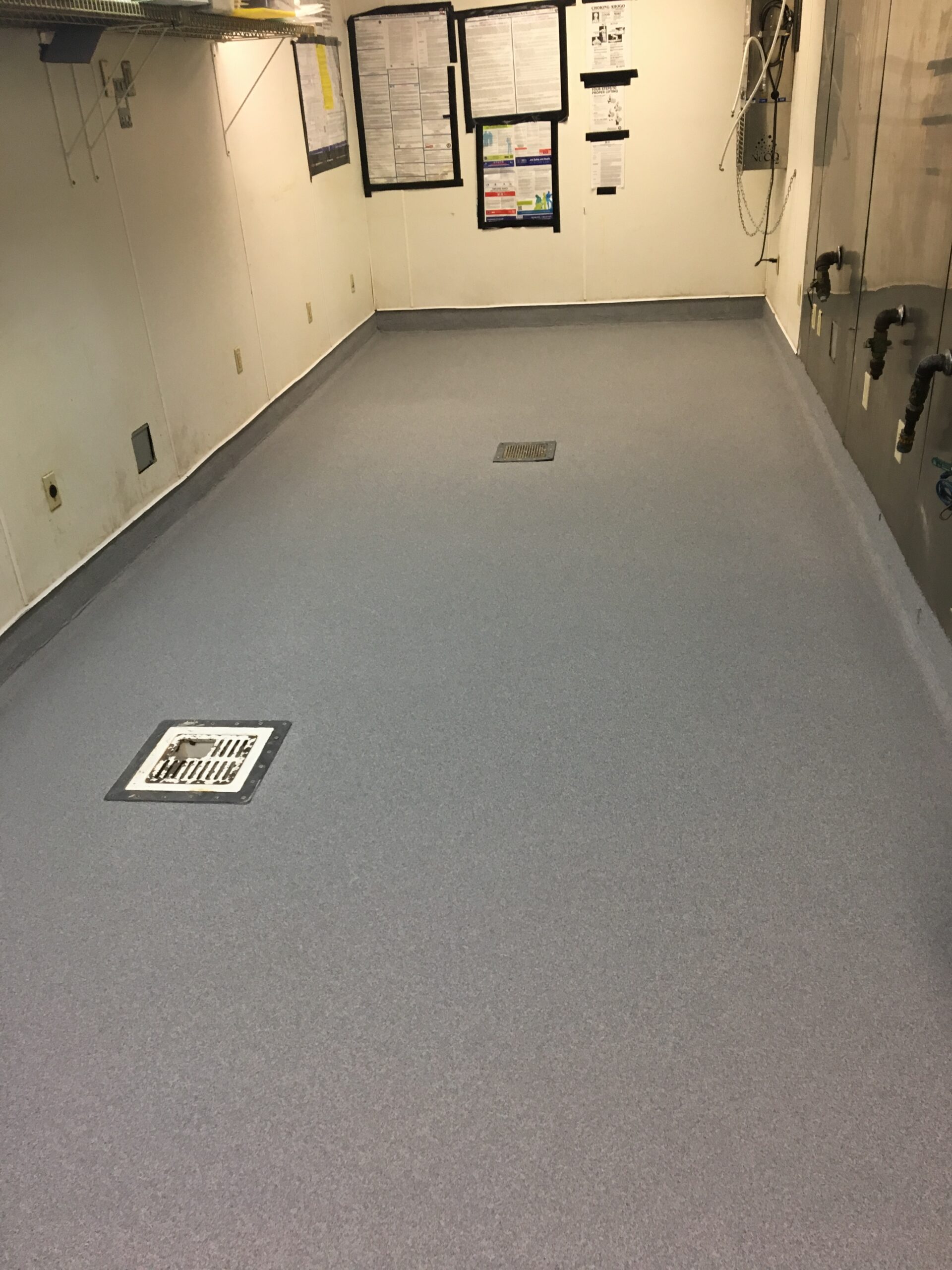
Our urethane cement experience is not theoretical. CCR’s Jobber history shows 65 urethane-related projects and service categories that include Urethane Cement MF (Mortar Float) and Urethane Cement Patchwork. Those scopes range from full kitchen floors to localized repair programs in active production facilities.
Examples from actual project records include urethane cement installation in the Ellie Caulkins Opera House basement kitchen, urethane cement kitchen flooring at Winter Park Resort’s Moffat Market, high-strength urethane aisle work at Cook Compression, meat-processing patchwork at Rocky Mountain Natural Meats, bakery resurfacing activity for Once Again Nut Butter, pharmaceutical epoxy-urethane work for 5280 Contract Flooring / STAQ Pharma, and warehouse scopes such as Protecto Wrap’s epoxy floor with urethane topcoat. The pattern is consistent: facilities with process-driven flooring demands require specification discipline, not commodity pricing.
Common Triggers for Urethane Cement
- Frequent steam cleaning or hot-water sanitation
- Daily chemical wash-down or food byproduct exposure
- Cold-room or freezer transition thresholds
- Impact from carts, pallet jacks, and wheeled production traffic
- Need for monolithic cove details and sanitary transitions
- Slab deterioration requiring mortar-float resurfacing or patchwork
Application Environments
A practical look at where urethane cement is commonly specified and why owners move away from standard coatings.
Food Processing & Meat Facilities
Protein, oils, wash-down chemistry, and strict cleaning protocols are a difficult mix for generic flooring systems. Urethane cement is often the safer long-term choice for production rooms, cut areas, prep rooms, and adjacent processing corridors. Rocky Mountain Natural Meats is one example of the kind of meat-processing environment where patchwork and compatible resinous detailing matter.
Commercial Kitchens
Kitchen floors do not fail because they look old. They fail because they live under heat, grease, detergent, impact, and aggressive nightly cleaning. CCR’s project record includes kitchen urethane cement work in environments such as the Ellie Caulkins Opera House basement kitchen and Winter Park Resort’s Moffat Market kitchen, where durability and cleanability are operational requirements.
Pharmaceutical & cGMP Spaces
Pharma environments need more than a clean appearance. They require a system that fits SOPs, cleaning regimes, slip-resistance goals, and production phasing. CCR’s project history includes epoxy-urethane work for 5280 Contract Flooring / STAQ Pharma, illustrating the overlap between high-performance resinous systems and controlled manufacturing spaces.
Brewery & Beverage Production
Beverage floors bring together acids, sugars, CO2 wash-down, and forklift or cart traffic. Even when a full urethane cement build is not needed throughout the facility, it is often the right specification for wet production zones, drains, and abuse points where repeated cleaning and thermal movement create failures.
Industrial Manufacturing
Not every urethane project is food-grade. Some are driven by impact, abrasion, and operational wear. Cook Compression’s textured epoxy and high-strength urethane aisle work is a useful example of how facilities combine systems by zone rather than forcing one product across the entire building.
Cold Storage Transitions
Polyaspartic can play a role as a topcoat in selected assemblies, but it is not the answer to thermal shock. At cooler and freezer transition zones, owners typically need a system that tolerates slab movement, moisture, and temperature change. That is precisely where urethane cement earns its place in the specification.
SYSTEMS COMPARED
Urethane Cement vs. Epoxy vs. Polyaspartic
The right answer depends on temperature swing, cleaning method, abuse level, and downtime tolerance. Price alone is a poor specification tool.
Urethane Cement MF (Mortar Float)$$$–$$$$ · Heavy-duty wet process areas▼
Best for: Commercial kitchens, food and beverage production, pharmaceutical wash-down areas, freezer transitions, and slabs needing a thick resurfacing build.
✓ Strengths:
- Excellent thermal shock and thermal cycling resistance
- Higher build thickness helps bridge minor slab wear and create a durable working surface
- Strong option for wash-down, impact, and sanitation-focused environments
- Commonly specified with integral cove details and slip-resistant textures
Tradeoffs:
- Higher installed cost than standard epoxy
- Texture and build can be more utilitarian than decorative finishes
- Requires disciplined substrate prep, moisture review, and experienced installation
Standard High-Build Epoxy$$ · Dry to moderate industrial use▼
Best for: Warehouses, dry production, light chemical exposure, and facilities without harsh thermal shock or constant hot-water wash-down.
✓ Strengths:
- Cost-effective and versatile across many commercial and industrial spaces
- Good appearance and color consistency
- Strong performance in the right environment with proper preparation
Tradeoffs:
- More vulnerable to thermal shock, hot-water abuse, and aggressive wash-down cycles
- Typically not the preferred system for wet food production and steam-cleaned kitchens
- Thin-film builds do less to address slab wear and process abuse
Polyaspartic Topcoat Assembly$$–$$$ · Fast return in select zones▼
Best for: Selected topcoat applications where fast return to service, UV stability, or additional wear protection is useful over a properly designed base system.
✓ Strengths:
- Fast cure profile can help compress schedules in appropriate applications
- Useful as a topcoat in some resinous assemblies
- Good finish retention in the right environment
Tradeoffs:
- Not a standalone answer for thermal-shock kitchen and food-processing floors
- Should not be positioned as a substitute for urethane cement in abuse zones
- System success depends heavily on what sits beneath it
How CCR Works With Your Team
A specification-first approach for operations leaders, facility teams, and project stakeholders.
STEP 01
Site Assessment
We review current failure modes, cleaning methods, traffic patterns, slab condition, moisture concerns, and shutdown constraints. The goal is to understand where urethane cement belongs, where another system may be sufficient, and how phasing should be structured.
STEP 02
System and Scope Alignment
We align the flooring build with your facility demands, whether that means urethane cement MF, patchwork repairs, cove detailing, epoxy in lower-abuse zones, or a compatible topcoat where appropriate. Every area does not need the same assembly.
STEP 03
Phased Installation and Handoff
We install around operating realities, document the work area by area, and hand the project back with practical expectations for cure, use, and maintenance. The objective is not simply a new floor. It is a floor that matches the business it supports.
FREQUENTLY ASKED QUESTIONS
Urethane Cement Flooring — Common Questions
How thick is a typical urethane cement floor?
It depends on the environment and the build specified. Urethane cement mortar systems are commonly installed at a thicker build than standard epoxy because they are expected to absorb more abuse and deliver better thermal shock performance. Patchwork details can be more localized, while full mortar-float systems are chosen when the slab surface needs broader resurfacing and protection.
How quickly can urethane cement return to service?
Cure time depends on product chemistry, thickness, ambient conditions, and whether topcoats are included. In practice, owners choose urethane cement partly because it can support aggressive scheduling compared with many conventional systems. Exact return-to-service timing should be confirmed during project planning based on the specified assembly and your operating temperature.
Why does urethane cement cost more than standard epoxy?
The installed cost is usually higher because the system is thicker, more demanding to install, and intended for harsher conditions. That premium is often justified when the alternative is repeated coating failure in wash-down, temperature-swing, or heavy-abuse areas. The more accurate comparison is not material-to-material. It is lifecycle cost versus operational disruption.
What temperature range can urethane cement handle?
Urethane cement is chosen specifically because it performs well under thermal cycling and thermal shock that can damage other systems. The exact temperature tolerance depends on the manufacturer and system design, but it is widely used where floors move between hot process cleaning, cold rinse, refrigerated operation, and freezer-adjacent conditions.
Can urethane cement be applied over an existing coating?
Sometimes, but not by default. Existing coatings must be evaluated for bond, contamination, thickness, and compatibility. In many failure situations, the correct answer is removal back to sound concrete so the new system can bond directly to a properly prepared substrate. Shortcuting this step is one of the fastest ways to repeat the same problem.
Is urethane cement always the right choice for food and industrial flooring?
No. It is the right choice for specific abuse profiles, not every room in every building. Some dry warehouses, corridors, packaging areas, or secondary spaces may be better served by epoxy or another system. Strong specifications usually combine systems by zone rather than overbuilding the entire facility.
Why Colorado Concrete Repair for Urethane Cement Work
- Real urethane project history — 65 documented urethane-related jobs in the Jobber record, not a page built around hypothetical use cases.
- Cross-sector experience — kitchens, meat processing, resort dining, warehouse environments, pharmaceutical manufacturing, and industrial production.
- Mortar-float and patchwork capability — useful when owners need more than a topcoat and the slab itself requires durable rebuilding.
- System-by-zone thinking — a kitchen wash-down area, warehouse aisle, and freezer transition do not need the same build.
- Executive-level practicality — recommendations should reduce lifecycle risk, not simply maximize short-term invoice value.
- Honest use of polyaspartic — where relevant, it belongs as a topcoat in a broader system, not as a substitute for urethane cement in abuse zones.
Urethane Cement Snapshot
Documented Urethane Jobs
65+
Service Categories
MF · Patchwork
Representative Facilities
Kitchen · Pharma · Plant
Representative Project
STAQ Pharma
Example Warehouse Scope
Protecto Wrap
Urethane Cement — Decision-Maker Reference Guide
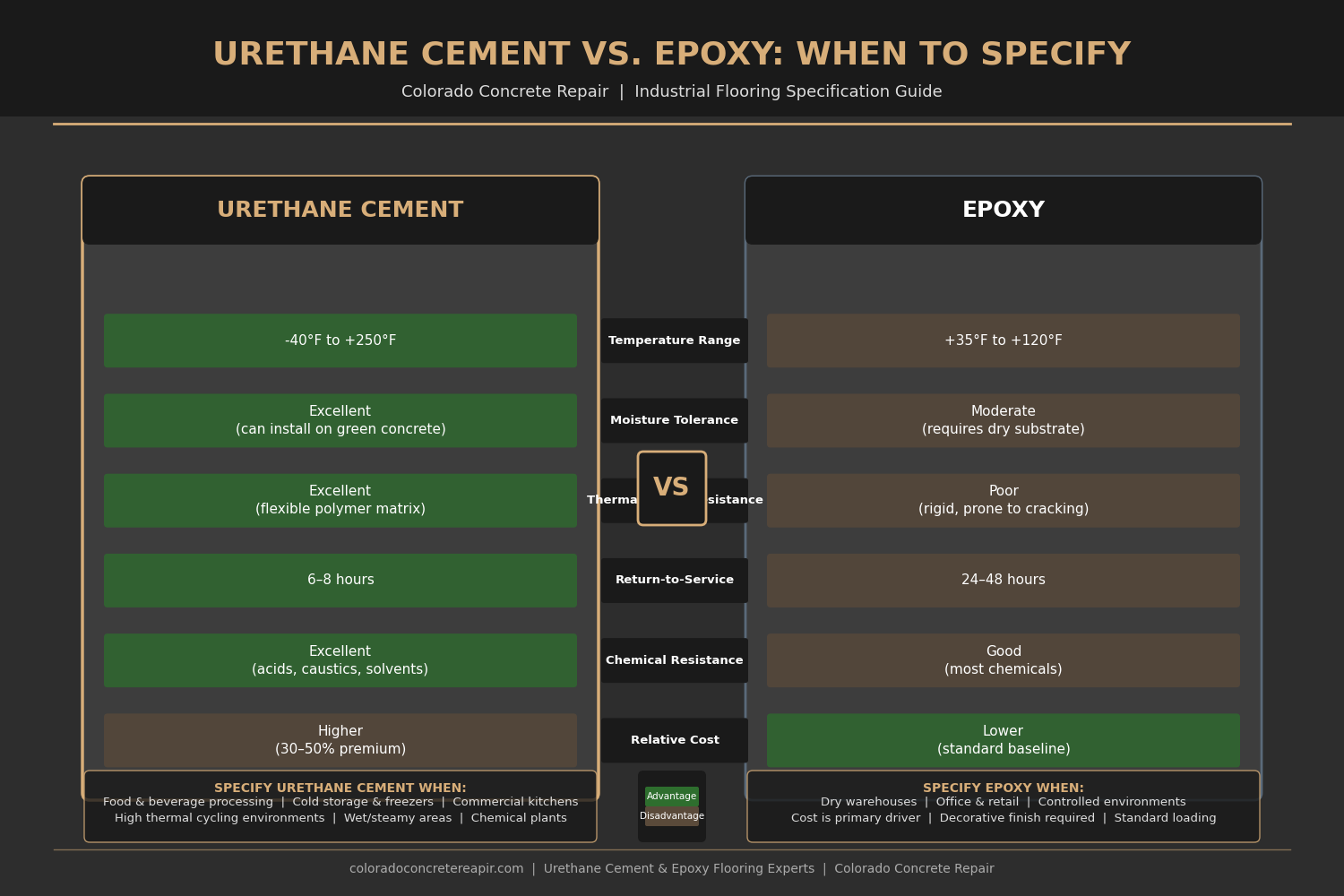
Interactive specification guide — Colorado Concrete Repair
Discuss Your Urethane Cement Scope
If your facility is dealing with wash-down failure, thermal shock delamination, deteriorated kitchen flooring, or a slab that needs more than a cosmetic coating, schedule a Site Assessment with Colorado Concrete Repair. We will review the environment, the failure mode, and the system options that actually fit the operation.
OR, TELL US ABOUT YOUR PROJECT: