
FOOD & BEVERAGE · PHARMACEUTICAL · INDUSTRIAL
Urethane Cement Flooring Denver — Thermal Shock Resistant Systems for Extreme Environments
Specified for wet processing, hot wash-down, thermal shock, chemical exposure, and sanitary transitions where standard systems are a poor fit.
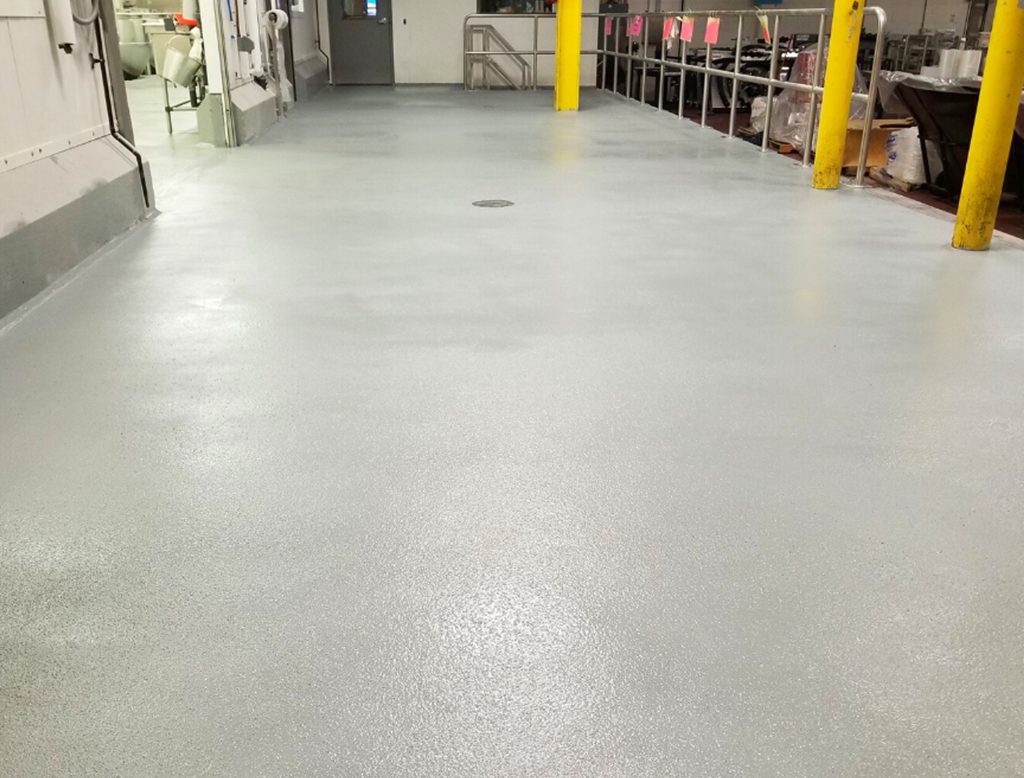
Urethane cement, food facility · our install
Quick answers · this page
How hot can washdown water be before it kills a floor?
Tell us the washdown temperature, the floor’s normal operating temperature and how often it is cleaned. We match those conditions to the selected system’s documented limits, including its topcoat. A temperature rating for one urethane-cement product is not a rating for every urethane-cement floor.
Is it USDA/FDA compliant?
A product label alone does not establish whether a floor fits your facility’s requirements. Share the requirements your facility team needs the floor to meet. We review the selected system’s documentation, cleaning needs, texture, drains and transitions when developing the scope.
Don’t see your question? Call 303-974-6707 — you’ll get a person who’s installed these floors.
Installs on Damp Concrete
Unlike epoxy, urethane cement can be applied on damp or slightly wet concrete — a decisive advantage when slabs cannot be adequately dried before coating.
Thermal-shock resistance for washdown areas
When a chilled floor receives hot washdown water, system choice matters. Match the installed system, thickness and topcoat to the operating and cleaning conditions and the selected product’s documentation.
Seamless surfaces for easier cleaning
A continuous floor with properly detailed coves and drain transitions can support a facility’s cleaning process. Select the system and details around the facility’s operating requirements; the flooring alone does not establish compliance.
Request a Urethane Cement Flooring Assessment in Denver, CO
What is urethane cement flooring?
A blend of urethane resin, cement powder, water, and aggregates that forms a seamless surface with exceptional thermal shock resistance, chemical resistance, and moisture tolerance. Also called polyurethane mortar or urethane mortar. Unlike epoxy, its flexible matrix absorbs substrate movement and thermal expansion without cracking.
How is urethane cement different from epoxy?
Urethane cement and epoxy serve different operating conditions. For hot washdowns, wet processing or thermal cycling, compare the specific systems’ documented temperature, moisture and chemical limits. CCR fits the flooring to the business’s operations and maintenance instead of treating one resin type as the answer for every facility.
What environments is urethane cement best suited for?
Food production, cold storage transition zones, beverage manufacturing, pharmaceutical production, and other wet-processing environments with steam cleaning, thermal cycling, floor drains, or sanitary-compliance requirements. Also used when slabs cannot be adequately dried for standard epoxy installation.
Can urethane cement be applied over existing concrete?
Yes, on properly prepared surfaces. Existing coatings must be removed. Concrete must be profiled to CSP 2–3 via diamond grinding or shot blasting. Unlike epoxy, urethane cement tolerates higher substrate moisture — but the slab must still be structurally sound and clean.
What does urethane cement flooring cost in Denver?
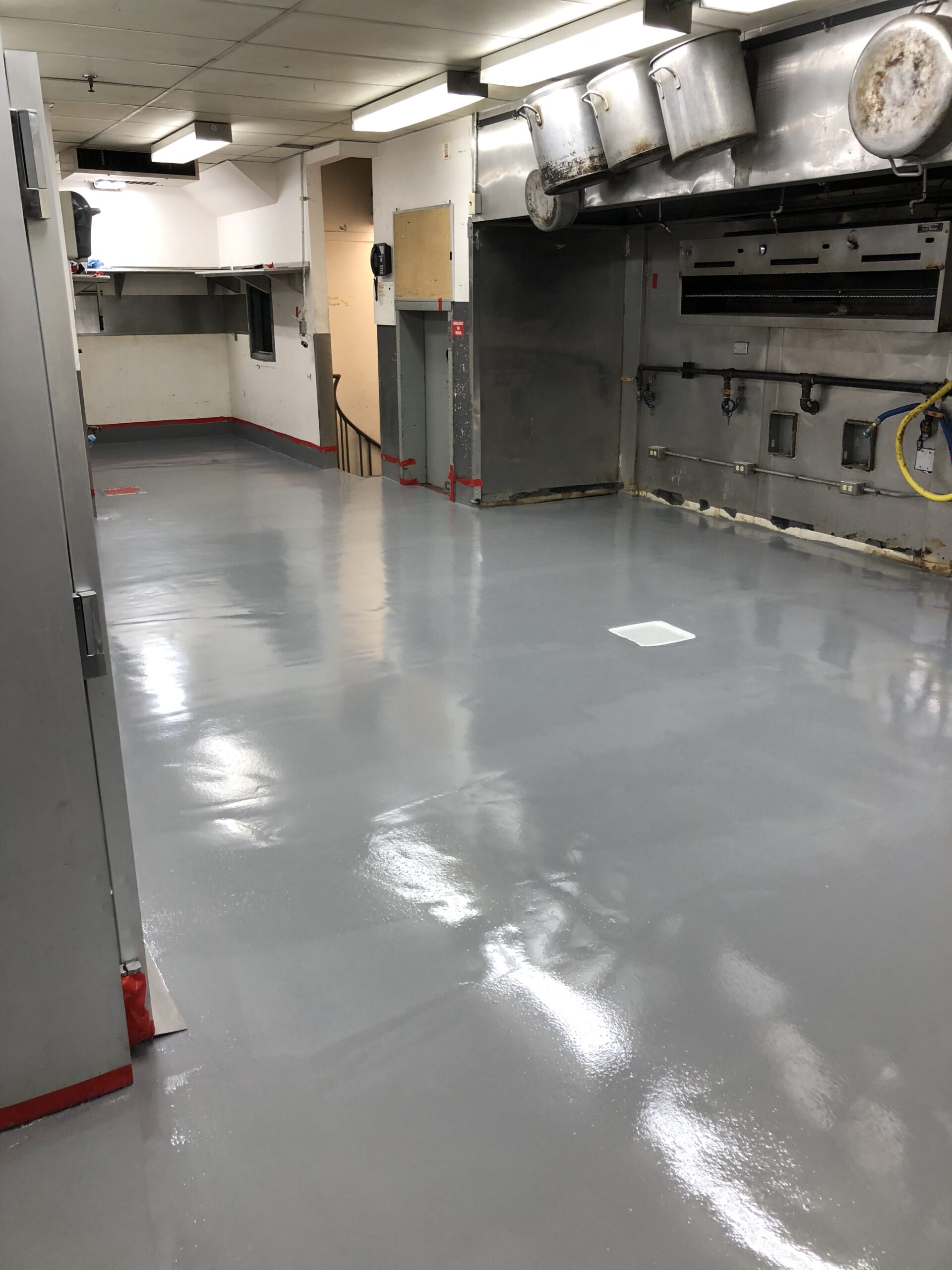
There is no single price; cost follows the scope of your floor. The main cost drivers are prep and repair (removing old coatings, grinding or shot blasting, and repairing cracks, spalls and joints); the system and thickness selected for each area; coves, slopes to drain and transitions at drains, walls and doors; the size of the area and access to it; and phasing, such as work split across several weekend or after-hours shutdowns. BioCem SF is one urethane-cement option we use; its manufacturer lists food and beverage production among its applications. In Winter Park, we installed urethane cement flooring for a new cooler in a commercial kitchen, including a floor slope transition and cove base (completed October 2018). For a written scope and proposal for your area, call 303-974-6707 to set up a site assessment.
How long does urethane cement last?
Service life depends on the environment, surface preparation, cleaning protocol, traffic, and system build. In demanding thermal-cycle environments, urethane cement is often chosen because it is better suited to those conditions than standard epoxy.
What are the urethane cement system types?
Self-leveling (1/8” thick, smooth, for food/pharma). Broadcast aggregate (3/16”, textured, for wet environments). Trowel-grade (1/4”+, heavy industrial). Slurry (1/16”, thin resurfacing coat). Mortar (repair and reinforcement). System selection depends on substrate condition, temperature range, and traffic load.
Is urethane cement slip-resistant?
Yes. Aggregate broadcast during installation provides customizable slip resistance for wet or greasy environments. Broadcast aggregate density and particle size are specified based on the facility’s wet conditions and footwear requirements.
Urethane Cement Flooring vs. Standard Epoxy Systems
When the environment demands more than epoxy can deliver, urethane cement is the engineered answer.
Our urethane cement systems are most commonly specified for food processing facilities and cold storage flooring applications — both of which benefit from integrated cove base systems for a fully sealed floor-to-wall transition.
| Criteria | Urethane Cement | Standard Epoxy |
|---|---|---|
| Thermal Shock | −40°F to +250°F — handles daily cycling | Fails under thermal cycling — cracks and delaminates |
| Apply on Damp Slab | Yes — tolerates higher substrate moisture | No — dry slab required (MVB primer extends tolerance) |
| FDA/USDA Seamless | Yes — seamless, coved base, no harboring zones | Partial — joint-dependent; gaps can harbor bacteria |
| Chemical Resistance | Excellent — oils, acids, caustics, steam | Good (standard); Excellent (novolac only) |
| Best Environment | Food production, cold storage, pharma, kitchens | Dry warehouses, labs, service areas, electronics |
Professional Installation Process
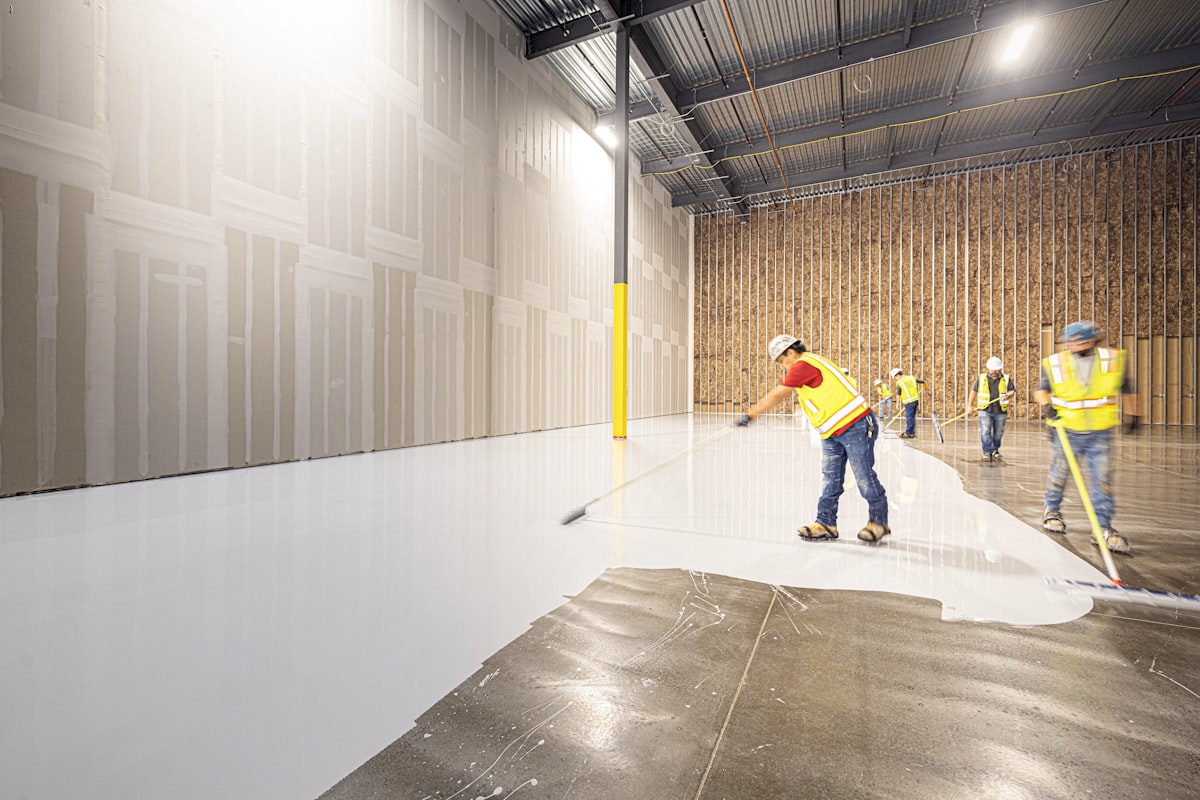
How Our Urethane Cement Installation Process Works
We review site conditions with your team, discuss schedule and operating constraints, and compare suitable system options. The goal is to align scope, phasing, and expectations before work begins.
After scope approval, we execute the selected system and prep approach for the area and use case. Work is sequenced to match operational needs and project constraints defined during planning.
We complete a final walkthrough with your team, confirm installed scope, and share practical care guidance. Any remaining punch-list items are documented and closed through the agreed handoff process.
More Questions About Urethane Cement Flooring
Can urethane cement be used outdoors?
Yes, with appropriate formulation. UV-stable urethane cement versions are available for covered outdoor areas and loading docks. Confirm UV stability with the specific product TDS for uncovered exterior applications.
What colors are available in urethane cement?
Medium grey, dark grey, tan, green, red, and black are standard. Custom colors are available with lead time. Color selection is more limited than epoxy — urethane cement is specified for performance, not aesthetics.
Does urethane cement require special surface prep?
Yes. CSP 2–3 profiling required via diamond grinding or shot blasting. Substrate moisture tolerance is higher than epoxy, but the slab must still be structurally sound, clean, and free of surface contamination. Existing coatings must be fully removed.
Is urethane cement compatible with floor drains?
Yes. Seamless installation around floor drains with coved transitions is one of the primary use cases for this system. Proper drain-to-floor transitions eliminate the ledges and gaps that trap bacteria and cleaning chemicals in food and pharmaceutical facilities.
What is the maintenance protocol for urethane cement floors?
Use the selected system manufacturer’s cleaning instructions. Confirm the cleaner, concentration, water temperature and cleaning equipment before using hot washdown or steam cleaning; suitability varies by system and topcoat.
Does urethane cement meet NSF/ANSI standards?
If your facility requires a particular listing or standard, identify it before choosing the floor. Check the selected product’s current documentation and scope against that requirement. A general food-grade description is not proof of a specific certification.
Abrasion Resistance and Chemical Protection in Urethane Cement Systems
Urethane cement systems deliver high abrasion resistance across heavy-traffic industrial floors. Where forklifts, pallet jacks, and steel-wheeled equipment cycle daily, abrasion from repeated impact and friction degrades standard coatings within months. Urethane cement’s dense polymer matrix maintains surface integrity under this kind of load, keeping floors durable and reducing the frequency of repair or recoating cycles. The result is a floor that holds up where durability is not optional.
Chemical protection is a core feature of urethane cement in food production, pharmaceutical, and industrial processing environments. Unlike standard epoxy flooring products, urethane cement resists aggressive chemicals including acids, caustics, oils, and cleaning agents used in food and pharmaceutical operations. The seamless surface provides protection against chemical infiltration and prevents mold growth at floor joints and drain transitions — an important benefit in any USDA or FDA-regulated facility. Additionally, the system is low risk for delamination when properly installed on prepared substrates.
Urethane Cement Performance Features and Long-Term Results
The performance features that make urethane cement the preferred flooring system in demanding environments include: thermal shock tolerance, abrasion and impact resistance, resistance to chemical attack, mold-resistant seamless surface, and tolerance of moisture vapor emission from the slab. Resinwerks Bio-Cem SF, for example, lists a service temperature range of −50°F to 200°F. How long the floor lasts depends on correct installation — including keyways cut at edges, joints, and drains to prevent delamination — and on a routine maintenance program.
For Denver and Front Range food processing, cold storage, and pharmaceutical production facilities, a urethane cement scope should cover surface preparation, system specification, a slab moisture check, and application. CCR makes it easy to get an accurate scope; contact us to schedule a site assessment and we will walk the floor and identify the system that fits your facility’s specific requirements.
Cementitious Urethane vs. Standard Floor Coatings
Cementitious urethane flooring systems outperform standard floor coatings in environments where thermal shock, chemical attack, and heavy mechanical loads converge. A conventional floor coating — whether epoxy or polyurethane — bonds to the concrete surface as a film. Urethane concrete bonds through a cementitious matrix that becomes part of the substrate, which is why cementitious urethane tolerates thermal shock resistance demands that crack or delaminate standard floor coatings in food processing, brewery, and pharmaceutical facilities.
Self leveling urethane concrete systems create a monolithic, seamless urethane floor surface that eliminates joints where bacteria and moisture accumulate. Unlike thin-film floor coatings, a self leveling cementitious urethane installation delivers slip resistance even when wet, resists aggressive chemical washdowns, and maintains its bond through freeze-thaw cycling. For facilities that need high performance flooring solutions under USDA or FDA sanitary requirements, urethane concrete is the baseline — not an upgrade.
High Performance Urethane Floor Systems with Integrated Cove Base
Colorado Concrete Repair installs high performance cementitious urethane flooring solutions that include integrated cove base transitions at wall-to-floor junctions. Cove base eliminates the 90-degree corner where contaminants collect in sanitary environments. Combined with the urethane floor surface, cove base creates a fully sealed containment plane from wall to drain. These urethane concrete flooring systems are engineered for facilities where standard floor coatings have already failed — processing plants, beverage production areas, chemical handling areas, and cold storage environments that demand thermal shock resistance and long-term slip resistance under real operational loads.
Why Colorado Concrete Repair
Colorado Concrete Repair is a locally owned industrial flooring contractor serving the Denver metro area. Our certified installers bring decades of combined experience to every project — engineered flooring systems built to your facility’s exact operational requirements.
- Locally owned and operated in Denver CO since 2009
- Certified installers — not a pop-up franchise
- Validated installation protocols for every substrate type
- Preconstruction consultation on every project
- Scope locked at approval — engineered scope, in writing
- Engineered flooring systems for industrial and commercial facilities
- Work sequenced around your facility’s operational schedule
- Single point of contact from site assessment through final walkthrough
OR, TELL US ABOUT YOUR PROJECT:
Urethane Cement Performance, In Numbers
- Thermal-shock service: handles repeated surface swings of well over 100°F — 180°F washdown water on chilled slabs, steam cleaning, freezer thresholds.
- Cold-room service: rated for service temperatures down to −50°F (Resinwerks Bio-Cem SF data sheet). Installation requires ambient and floor temperatures between 40°F and 85°F, so freezers and coolers must be brought into that range to install.
- Moisture tolerance: can go over damp or green concrete where epoxy would blister — manufacturer technical data sheets put urethane cement’s moisture-vapor tolerance well above standard epoxies, which is why it’s the basecoat answer on wet slabs.
- Return to service: zone-by-zone installs over nights, weekends, and shutdown windows; fast turnover to traffic per system data sheet.
- Surface prep: 80–90% of every job is preparation — mechanical profiling so the system bonds to sound concrete. That’s why our floors last.
Every system we install is backed by the manufacturer’s published technical data sheet — ask us for the data sheet for your spec, and we’ll match the system to your zone’s temperature, chemical, and washdown profile. Urethane cement is the backbone of our food processing and cold storage work.
Washdown and Thermal-Shock Questions
What temperature swings can urethane cement handle?
The answer depends on the complete system and the temperature cycle in the room. BioCem SF is one urethane-cement option we use; its manufacturer identifies thermal-shock resistance. We compare the proposed system with your operating and cleaning temperatures, the frequency of temperature changes and the required finish before recommending it.
Why does epoxy fail in washdown areas?
We do not choose a replacement from the word ‘epoxy’ alone. We look at the visible floor condition and discuss prior coatings, cleaning, spills and maintenance with your team. That helps us compare preparation and system options for the room. Thermal-shock resistance is one reason to consider urethane cement; the proposed product, topcoat and installation details still need to fit the job.
Can urethane cement be installed during a weekend shutdown?
Often, yes, where access and scope allow. We can plan work in phases, so a weekend shutdown may cover one room or area rather than the whole floor, with the next area in a later window. How much fits in one shutdown depends on the prep and repair the slab needs, the system and thickness selected, and the size of the area. When each area can return to service depends on the selected product’s data sheet and site conditions, including room and slab temperatures, so we confirm it in the schedule for your site rather than quoting fixed hours. Bring your shutdown dates, sanitation windows and the rooms that must reopen first. Call 303-974-6707 to plan it.
Is urethane cement USDA/FDA compliant?
Urethane cement can be a food-production flooring option, but the product name is not a blanket compliance statement. BioCem SF is one urethane-cement option we use; its manufacturer lists food and beverage production among its applications. We discuss the room’s cleaning, traffic, drains and transitions with your facility team and match the proposed system to the requirements they identify.
Call 303-974-6707 for an on-site floor assessment, or Request a Site Assessment.
Why Colorado Concrete Repair
Floors under J.M. Smucker · Green Chef · Dessert Holdings · Izzio Bakery · Denver Beer Co. · Leiters Health
Reviewed June 12, 2026 · Nick Ferguson, owner — industrial flooring contractor, Denver, since 2009