
Concrete Floor Load Bearing Capacity in Warehouses and Industrial Facilities
Concrete Floor Load Bearing Capacity in Warehouses and Industrial Facilities
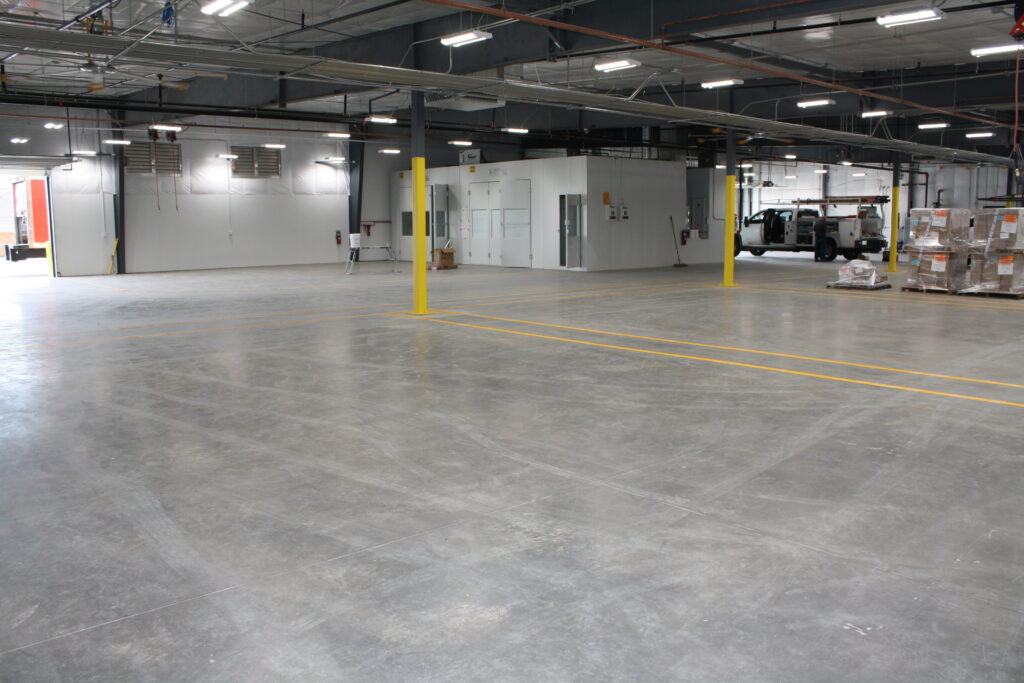
Colorado Concrete Repair doesn’t rate how much a slab can carry. That’s engineering work, and we don’t do engineering. We repair the joints, crushed areas and coatings that heavy wheels and loads break. This guide covers that work and where our epoxy flooring services fit. Our work is on commercial and industrial floors around Denver. Driveways and homes aren’t our work.
Since 2009
Joint, patch and coating work for commercial floors, out of Denver.
More Than 1,000 Jobs
Company-wide, all job types.
AGC Member
We belong to Associated General Contractors (AGC).
Heavy Loads on Concrete Floors
Open a topic. Product figures come from the maker’s data sheet, not from us.
What Heavy Wheels Do to a FloorSigns of load damage▼
What buyers see: Heavy forklift wheels crack and chip joint edges. An engineer on a public forum named “joint failure due to the forklift wheels, especially with steel and hard rubber wheels.”
✓ What the makers say:
- Metzger/McGuire lists MM-80 for floors with hard-wheeled traffic and heavy loads
- Metzger/McGuire lists Armor-Hard HDR for steel-wheeled carts and forklift trucks
- Metzger/McGuire says slabs that rock under forklifts are usually the result of slab curl or voids below
- Per Metzger/McGuire, semi-rigid joint fillers have no government or ASTM standard
What we don’t do:
- We don’t rate slab capacity or do engineering
- We don’t replace slab panels. Partial-depth repair is our work
- We don’t publish a weight any floor can hold
Where it shows up: forklift aisles, dock areas and ramps in our repair quotes. See our commercial flooring options page.
How Our Quotes Repair Load DamagePatch and joint steps▼
The repair: Our warehouse repair quotes find the damage first, then cut it back to sound concrete. One quote cuts a shelf at least 1/2 inch deep for the patch to sit in.
✓ Repair steps:
- Sounding with chains or hammers to mark crushed and hollow areas
- Saw cuts on HEPA vacuums, then chipping out the unsound concrete
- Crushed areas refilled with Metzger/McGuire Armor-Hard Concrete Repair Epoxy
- Joints sawed clean, filled with polyurea and shaved flush
Then:
- Strategic grinding along patches and joints where necessary, for a smooth forklift crossing
- Stabilizer foam through holes drilled along hollow-sounding joints, to fill voids under the slab
- Cure time before traffic comes from each product’s data sheet
Where it’s used: warehouse joint and patch repair scopes. See our installation process.
Working Around a Running WarehouseAisles & cure▼
What buyers ask: “Can joints be fixed without closing aisles?” A quoted plan can split the work by area or move it to off-hours shifts.
✓ Ways a quote can handle it:
- Repair areas marked off with floor paint before work starts
- Repairs split into phases by area
- Weekend or off-hours shifts, when quoted
- HEPA vacuum cleanup of each work area
Limits:
- Our standard terms assume a 40-hour week, Monday through Friday
- Racks and equipment have to be moved out of each area before we start
- Each product’s data sheet and the site conditions set the cure
Where it applies: warehouses and plants that need to keep moving. To plan a walk-through, request a site assessment.
CONCRETE FLOOR LOAD BEARING CAPACITY QUESTIONS
Frequently Asked Questions
How much weight can a concrete floor hold?
That comes from the slab’s design, and a structural engineer has to rate it. We don’t give a number for your floor. What we repair is the damage heavy loads leave, such as crushed areas, spalled joints and failed coatings. If you’re adding racks or heavier equipment, talk to an engineer first.
What repair materials are made for heavy forklift traffic?
Makers publish their own figures. Resinwerks lists 13,500 psi compressive strength (ASTM C579) for its Epoxy Mortar Resurfacer. Metzger/McGuire lists a Shore D86+ hardness for Armor-Hard, made for floors with hard-wheeled traffic. Those are lab figures for the material. They aren’t a rating for your floor.
Why do forklifts break concrete floor joints?
Buyers and engineers point to the wheels. One engineer on a public forum named steel and hard rubber wheels as the cause of joint failure. Metzger/McGuire says softer fillers deflect under loads and let the joint edges spall. Our joint quotes saw the joint clean, fill it with polyurea and shave it flush.
Can this work be done while our facility stays operational?
Yes, if the repairs are phased. Repairs can run in phases by area, or on nights and weekends when the quote includes them. Each area has to be clear of racks and equipment first. For Armor-Hard, Metzger/McGuire lists 8 hours or less to hard-wheeled traffic at 70°F. Other products follow their own sheets.
How do I choose the right contractor for load-bearing floor work?
Split the job in two. A structural engineer answers what the slab can carry. A floor repair contractor fixes the joints, patches and coatings. We do the second part, with partial-depth repair on commercial and industrial floors around Denver. Ask any contractor which products they’ll use and what the maker’s sheet says about traffic.
Floor Breaking Up Under Heavy Traffic?
Call us and we’ll walk the aisles with you and look at the joints and patches.