Temperature Effects on Epoxy Flooring: What Commercial Facilities Need to Know
Epoxy Floor Temperature: Service Temperature, Install Range and Cure Time
Room and floor temperature decide when epoxy can go down and how fast it cures. Heat and cold in service set limits too. The maker’s data sheet sets each number for each product. Colorado Concrete Repair installs commercial epoxy flooring in the Denver area. This page is about epoxy floors, not epoxy glue. We don’t coat home garages. Pole barns are the one exception to our no house work line.
Since 2009
Commercial and industrial floors in the Denver area.
More than 1,000 jobs
Our company-wide count across all our floor work.
60 to 90°F
Install range Resinwerks lists for its LEVEL-GUARD EP epoxy.
Epoxy Floor Temperature Limits by System
Pick a system to see what its maker’s sheet says about temperature and where our quotes use it.
100% Solids EpoxyResinwerks: install 60 to 90°F▼
Best for: Body coats and broadcast coats in rooms that can hold the 60 to 90°F install range Resinwerks lists for LEVEL-GUARD EP. Our quotes use Resinwerks LEVEL-GUARD EP as the primer, broadcast coat or mid coat.
✓ Strengths:
- Resinwerks lists LEVEL-GUARD EP at foot traffic in 24 hours and heavy traffic in 36 hours at 70°F.
- Resinwerks lists its install range as 60 to 90°F.
- Our quotes put it under colored quartz, sand or flake broadcast.
- Our quotes can top it with a Kinetic polyaspartic or an HDC 100 urethane topcoat.
Tradeoffs:
- Below 60°F, the room is outside the install range on its sheet.
- On high-moisture slabs, the sheet calls for Vapor Barrier Epoxy primer first.
- The sheet doesn’t state a service temperature.
In our quotes: colored quartz, sand and flake floors. See our commercial epoxy flooring page.
Novolac Chemical-Resistant EpoxyResinwerks: install 60 to 90°F▼
Best for: Rooms with chemical exposure. Resinwerks names secondary containment, industrial and manufacturing, battery charging, and auto and equipment service areas.
✓ Strengths:
- Resinwerks calls Novolac Epoxy a chemical-resistant floor and wall coating.
- Resinwerks lists foot traffic in 16 hours and heavy traffic in 3 to 5 days at 72°F.
- Resinwerks lists its install range as 60 to 90°F.
- We offer novolac systems.
Tradeoffs:
- The sheet doesn’t state a service temperature.
- Above 75% RH, Resinwerks says to use Vapor Barrier Epoxy as the primer.
- For frequent hot water washdowns or thermal shock, one of our quotes points to BioCem MF urethane cement.
Chemical-resistant floors. See our installation process.
Quartz Broadcast EpoxyResinwerks: epoxy coats 60 to 90°F▼
Best for: Floors that need texture. Our colored quartz quotes use LEVEL-GUARD EP epoxy as the primer and broadcast coat, then polyaspartic topcoats.
✓ Strengths:
- Resinwerks lists 60 to 90°F as the install range for LEVEL-GUARD EP.
- Resinwerks lists Kinetic HS polyaspartic at 30 to 90°F and says not to apply it below 32°F.
- Our quotes broadcast the quartz to rejection, then sweep and vacuum the excess.
- Our quotes can use an HDC 100 urethane topcoat with aluminum oxide for wear and slip resistance.
Tradeoffs:
- Resinwerks lists LEVEL-GUARD EP at foot traffic in 24 hours at 70°F.
- Above 75% RH, the Kinetic HS sheet calls for Vapor Barrier Epoxy primer.
- Our standard terms price floors under 3 lbs/1,000 sq ft or 75% RH. Above that, the primer may need to change to a moisture mitigation system, and that would be a change order.
In our quotes: hallways, a restroom and a food pantry. See our epoxy flooring systems.
Polyaspartic Topcoat SystemsFast-cure & UV-stable▼
Best for: Facilities with compressed shutdown windows, UV-exposed areas, and any environment requiring rapid return-to-service. Most effective as a topcoat over epoxy or urethane base.
✓ Strengths:
- Rapid cure — light traffic in 4–6 hours, full traffic within 24 hours
- UV stable — resists yellowing in sunlit or showroom environments
- Excellent abrasion and gloss retention as a finish coat
- Enables same-day or next-day return to service
Tradeoffs:
- Thinner film build than 100% solids epoxy — topcoat-level protection, not structural
- Short pot life demands experienced, fast-moving crews
- Best performance as part of a multi-layer system, not standalone
Common applications: fast-turnaround installs, UV zones, Resinwerks polyaspartic systems.
COMMERCIAL EPOXY FLOORING QUESTIONS
Frequently Asked Questions About Temperature Effects On Epoxy Flooring
What temperature does epoxy flooring need to go down?
It goes down inside the range on the product’s sheet. Resinwerks lists 60 to 90°F for its LEVEL-GUARD EP epoxy and its Vapor Barrier Epoxy primer. Its Kinetic HS polyaspartic sheet lists 30 to 90°F and says not to apply below 32°F. Sherwin-Williams lists 50 to 120°F, at least 5°F above the dew point, for ArmorSeal 1000 HS epoxy.
Can epoxy flooring go down in a cold building or freezer?
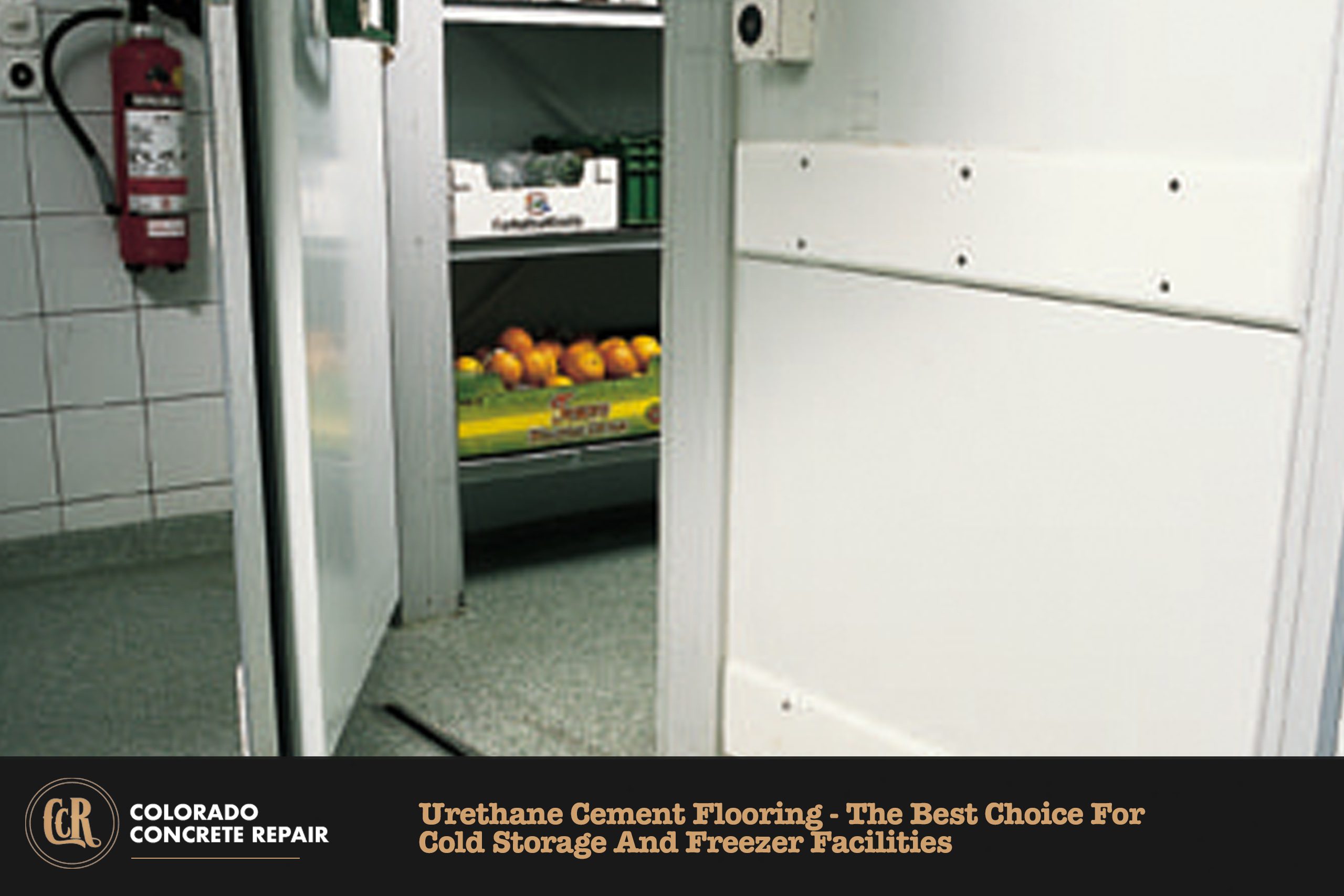
Only inside the range on the product’s sheet. One of our freezer quotes required the work area to stay above freezing, except the freezer’s joint filler, which was to go in at its daily temperature, about 0°F. Cold slows cure too. Sherwin-Williams lists ArmorSeal 1000 HS at foot traffic in 24 hours at 77°F and 48 hours at 50°F.
What heat can an epoxy floor take in service?
The product’s sheet sets it, and several sheets we read don’t state one, including Resinwerks LEVEL-GUARD EP and Novolac Epoxy. Sherwin-Williams lists dry heat to 180°F for ArmorSeal 1000 HS. For frequent hot water washdowns or thermal shock, one of our quotes calls BioCem MF urethane cement an ideal selection.
How soon can we use the floor after epoxy installation?
It depends on the product and the temperature. Resinwerks lists LEVEL-GUARD EP epoxy at foot traffic in 24 hours and heavy traffic in 36 hours at 70°F. It lists Kinetic HS polyaspartic at 3 to 5 hours and 12 hours at 72°F. Sherwin-Williams lists double the foot traffic time at 50°F as at 77°F for ArmorSeal 1000 HS.
What is the difference between epoxy and polyaspartic?
On temperature, the install ranges differ. Resinwerks lists 60 to 90°F for LEVEL-GUARD EP epoxy and 30 to 90°F for Kinetic HS polyaspartic, which it says not to apply below 32°F. Resinwerks lists heavy traffic at 12 hours at 72°F for Kinetic HS and 36 hours at 70°F for LEVEL-GUARD EP. Our quotes include epoxy coats under a polyaspartic topcoat.
Request a Site Assessment
Tell us the room temperature, the heat or cold your floor sees and your shutdown window. Give us a call and we’ll set up a time to look at the floor.