
Commercial Concrete Floor Finishes: A Decision Guide for Facility Managers
Commercial Concrete Floor Finishes: A Decision Guide for Facility Managers
The concrete floor finishes our quotes cover for commercial and industrial floors are polished concrete, grind and seal, epoxy and urethane coatings, urethane cement and a polishable overlay. This guide compares them by what our quotes list and where each one falls short. Colorado Concrete Repair is based in Denver. We don’t do house work, so no garages or basements. Pole barns are the one exception. For coatings, see our epoxy flooring services.
Since 2009
Commercial and industrial floor work, based in Denver.
More Than 1,000 Jobs
Our company-wide count of the jobs we’ve done.
Nights or Phases
Off-hours and phased work can be part of a quoted plan.
Commercial Concrete Floor Finishes Compared
Open a topic to see each finish, the prep under it and how the work gets scheduled.
Which Concrete Floor Finish Fits Which FloorFive finishes▼
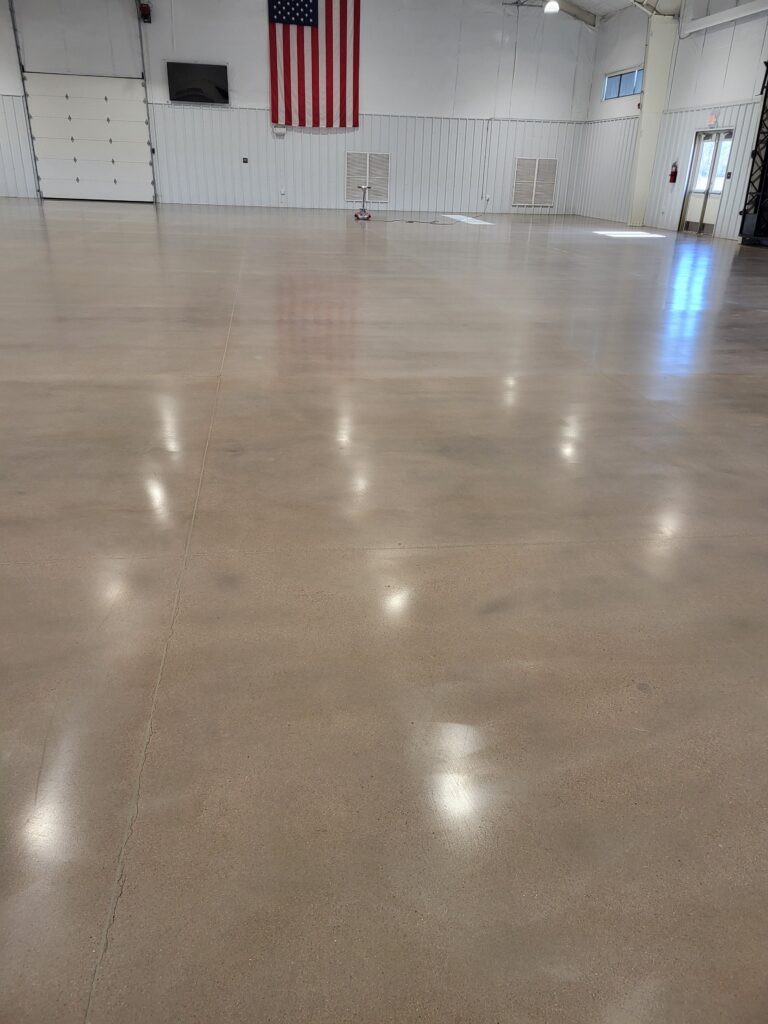
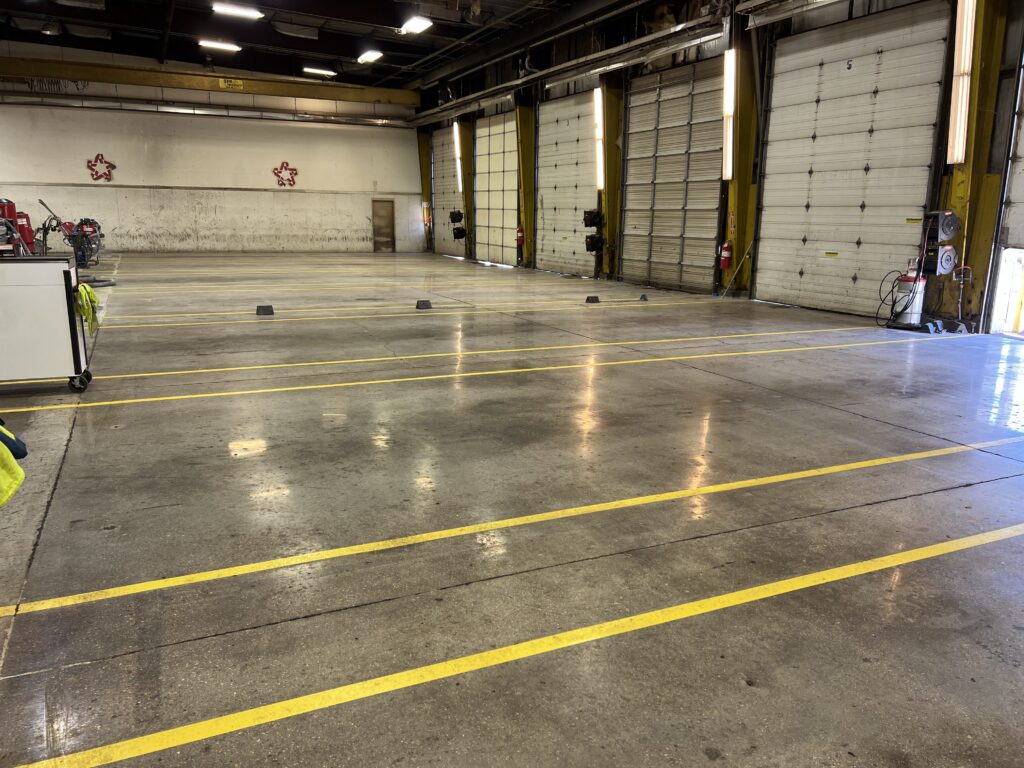
The finishes: Our quotes cover polished concrete, grind and seal, epoxy and urethane coatings, urethane cement and polishable overlays. We usually install one system on a floor. The scope for each floor sets the pick.
✓ What our quotes list:
- Polished concrete: ground, densified, then polished to 400 and then 800 grit
- Grind and seal: ground from 30 to 80 grit, then 2 to 3 thin sealer coats
- Coatings: systems such as Resinwerks EPX-SL epoxy slurry with an HDC 100 urethane topcoat
- Urethane cement: 1/4 inch BioCem MF with silica sand broadcast, for wet and hot rooms
Limits:
- Cement patches in polished and sealed floors aren’t expected to match
- A change from one coating to another can mean a substantial recoat
- Where the old floor can’t be polished, our quotes add an overlay at least 1/2 inch thick
Common applications: commercial and industrial floors. See our commercial flooring options page.
Prep Under Any FinishGrinding, patches & joints▼
Prep: Our quotes for finish work list prep steps such as diamond grinding with grinders attached to HEPA vacuums. Many state the surface profile, for example a CSP of 2 or greater. Patching, crack and joint repair go in where the scope for that floor includes them.
✓ In our quotes:
- Diamond grinding on HEPA vacuums
- Shot blasting where the machine can reach
- Joints sawn on a HEPA vacuum, filled with flexible polyurea and shaved flush
- Patching, crack and joint repair where the scope includes them
Limits:
- The prep follows the scope picked for that floor
- Our standard terms assume the slab is under 75 percent relative humidity
- Above that, a moisture mitigation system may replace the primer
Common applications: polish, sealer and coating scopes. See our installation process.
Scheduling a Finish Around Your OperationNights & phases▼
Scheduling: Downtime is a real worry for buyers. Access, phasing and off-hours work can be part of a quoted plan. We agree access and cure conditions for the job.
✓ In a quoted plan:
- Off-hours work, when the quote includes it
- Phased work, when the quote includes it
- Access agreed for the job
- Cure conditions agreed for the job
Limits:
- Cure time depends on the selected product and conditions
- The maker’s data sheet sets return to foot traffic, vehicle traffic and chemical service
- Off-hours and phasing are quoted, not assumed
Common applications: polish, sealer and coating scopes. To start, request a site assessment.
COMMERCIAL CONCRETE FLOOR FINISHES
Questions About Commercial Concrete Floor Finishes
What are the main types of commercial concrete floor finishes?
Our quotes cover five. Polished concrete is ground, densified and polished to 400, then 800 grit. Grind and seal is ground to 80 grit, then sealed in thin coats. Epoxy and urethane coatings go down as a system with a topcoat. Urethane cement goes down about 1/4 inch thick. A polishable overlay goes over concrete that can’t be polished.
Polished, sealed or coated: what’s the difference?
Polish and grind and seal both start with diamond grinding in our quotes. Grind and seal stops at 80 grit so the sealer can soak in, then gets 2 to 3 thin coats. Polish keeps going to 200 grit, then a densifier, then 400 and 800 grit. A coating is a resin system such as epoxy with a urethane topcoat.
How long does a commercial concrete floor finish last?
We don’t put a year count on it. The product, the exposure and the conditions change the answer. One of our quotes refreshes an existing polished floor by honing it from 50 to 200 grit, densifying it and polishing it again. A change from one coating to another can mean a substantial recoat.
Can this work be done while our facility stays operational?
It depends on the floor and your schedule. Access, phasing and off-hours work can be part of a quoted plan. Cure time depends on the product and conditions. The maker’s data sheet sets when foot traffic, vehicles and chemicals can go back on the floor, and we agree access and cure conditions for the job.
Which finish fits a wet, hot or chemical room?
For wet and hot rooms, our quotes use urethane cement, such as 1/4 inch BioCem MF with silica sand broadcast. Resinwerks lists BioCem MF for breweries, food and beverage plants and pharmaceutical facilities. For chemical rooms, novolac epoxy is one of the systems we offer. The maker’s data sheet sets its chemical ratings.
Request a Site Assessment
Tell us what runs over the floor and how it gets cleaned. Give us a call and we’ll set up a time to look at it.