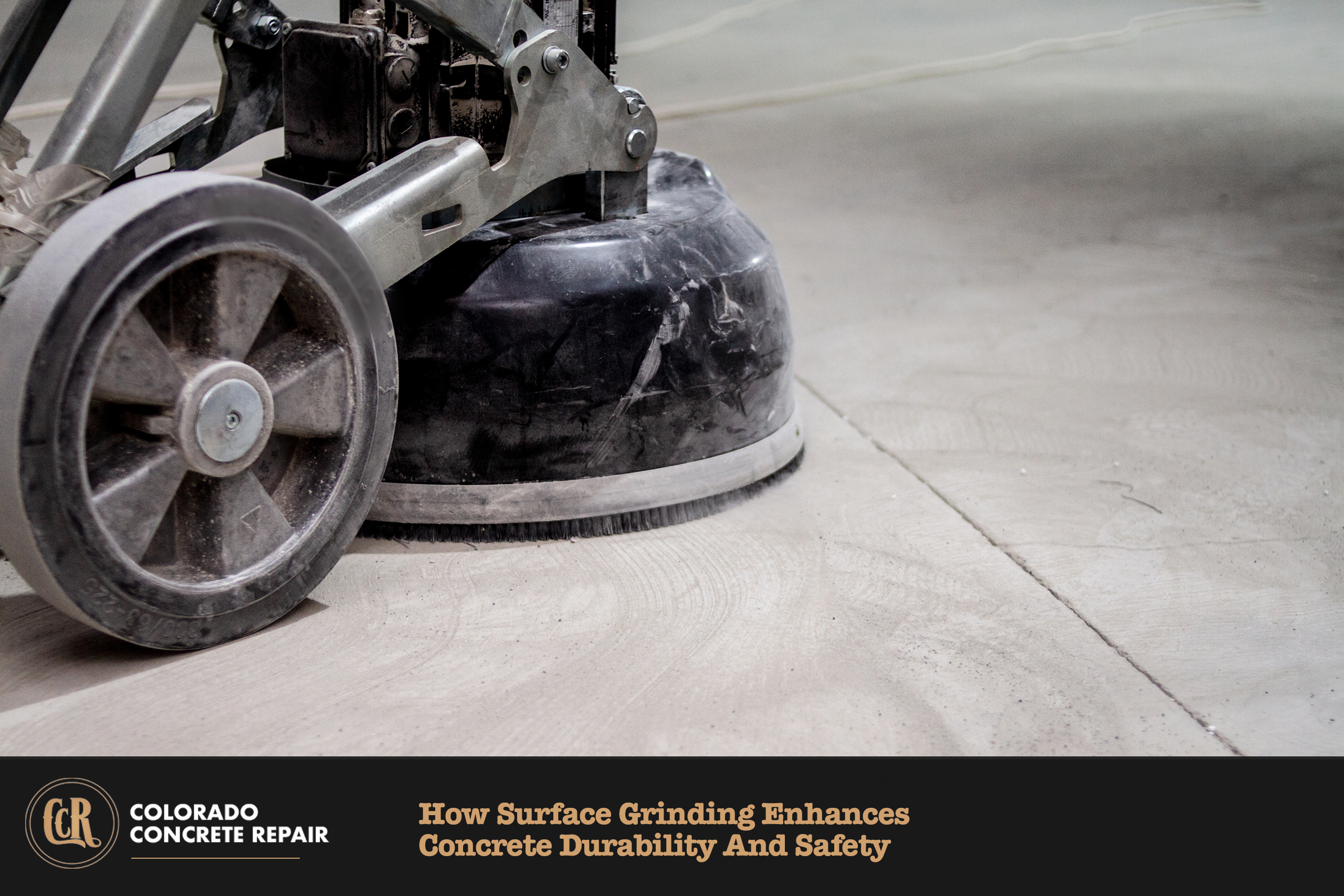
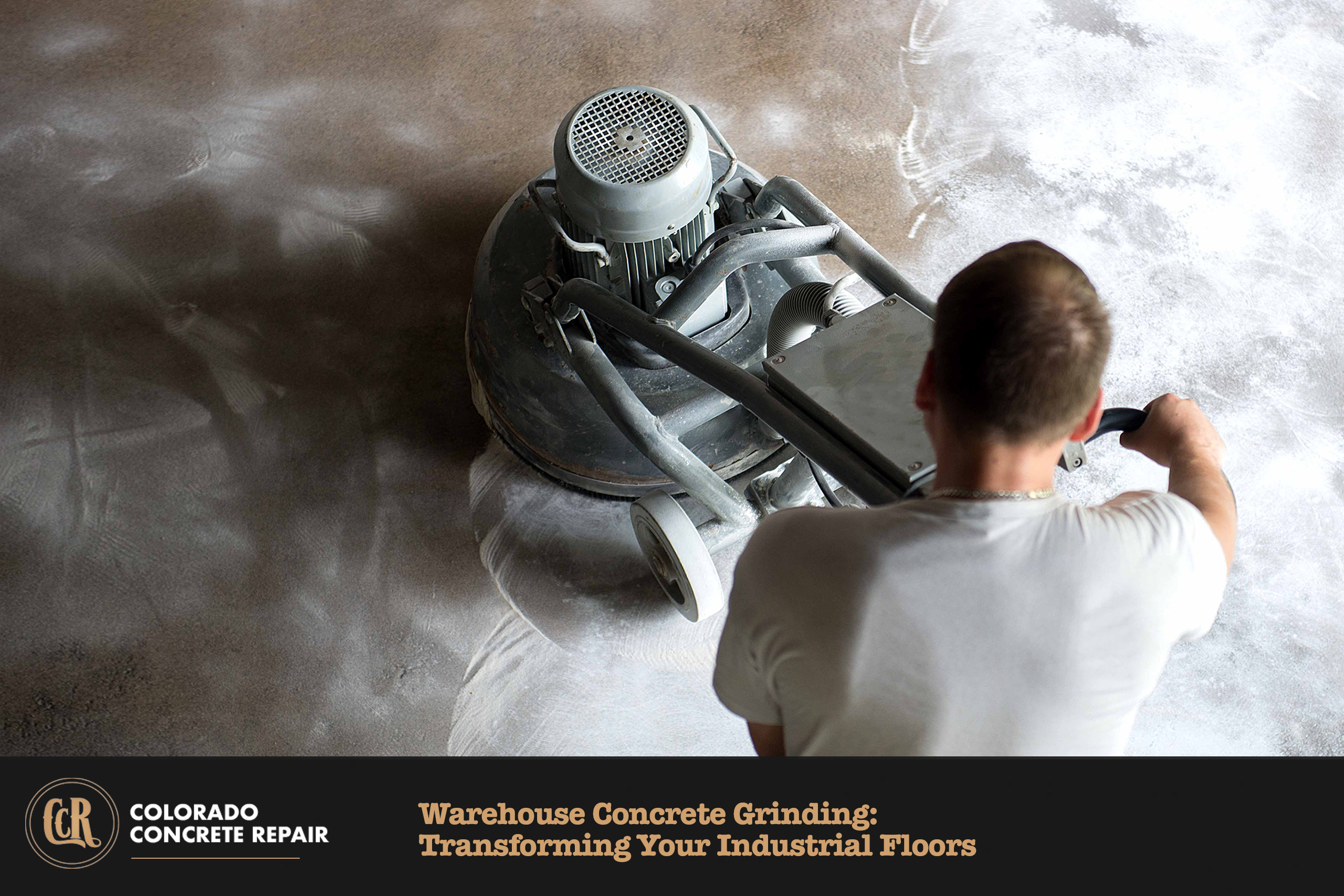
Warehouse Concrete Grinding: Transforming Your Industrial Floors
Warehouse Concrete Grinding: Transforming Your Industrial Floors
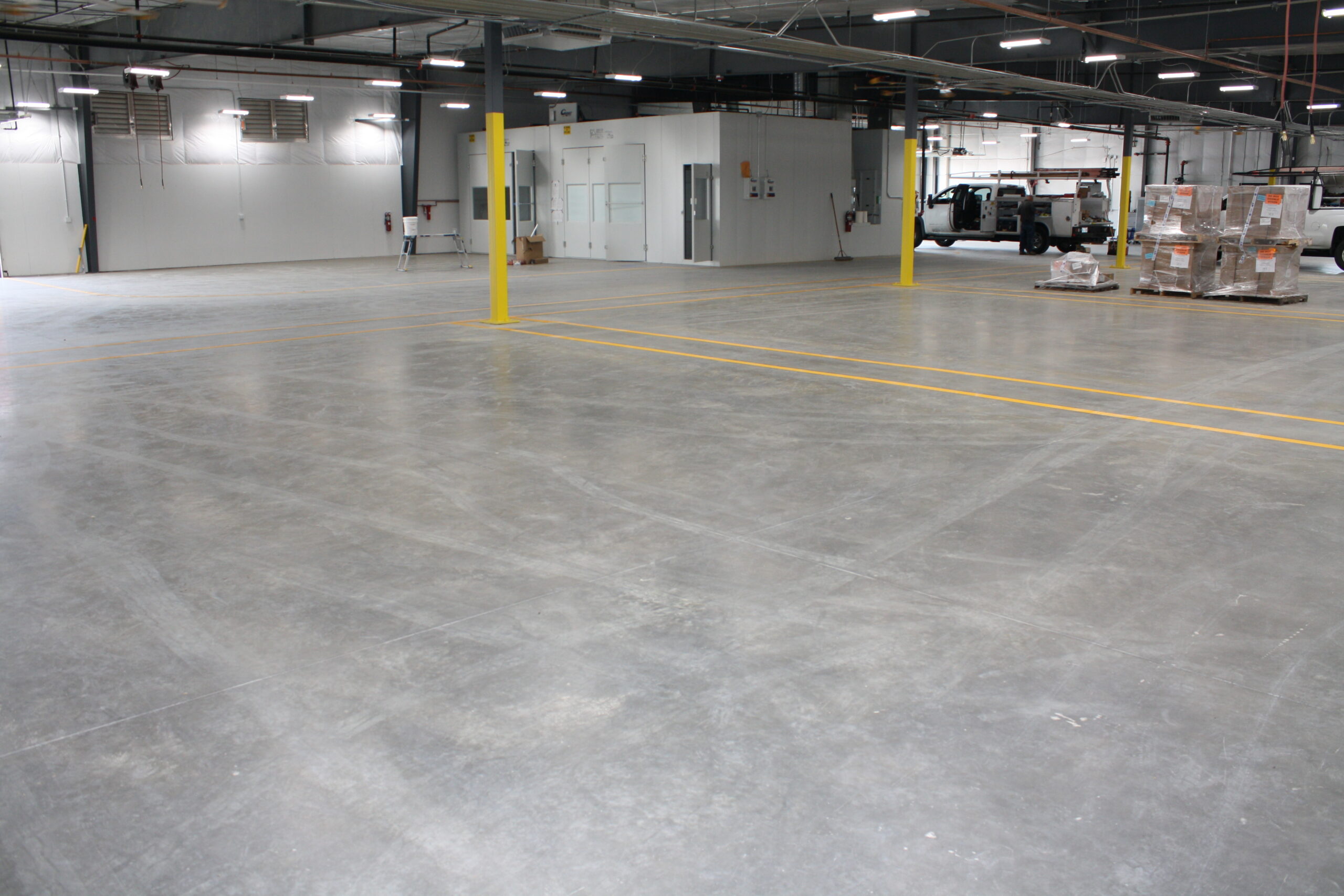
Uneven surfaces, dusting slabs, and coating failures all trace back to one root issue — insufficient surface preparation. Colorado Concrete Repair uses industrial diamond grinding and engineered surface preparation to establish the flatness, profile, and cleanliness that warehouse floors demand before any repair, coating, or polishing system is applied.

ICRI CSP 1–9 Profiles
Diamond grinding produces surface profiles ranging from CSP 1 through CSP 3, matched precisely to the coating or overlay system specified for each project.
Single-Day to Multi-Week
CCR executes grinding projects scaled from single-day warehouse aisle prep to multi-week engagements across full distribution center floors — all phased around facility operations.
Dust-Controlled Process
All grinding equipment is paired with industrial HEPA vacuum systems, keeping airborne particulates contained and eliminating post-work dust contamination.
Warehouse Grinding Applications and Techniques
Expand each section to see how concrete grinding solves specific warehouse flooring challenges.
Pre-Coating Surface PreparationProfile & Bond▼
Best for: Warehouse floors scheduled for epoxy, polyaspartic, or urethane cement coatings where substrate profile and cleanliness determine adhesion performance.
✓ Strengths:
- Creates the precise CSP profile specified by Resinwerks and other coating manufacturers
- Removes surface contaminants, sealers, and laitance that cause delamination
- Opens the concrete pore structure for proper coating penetration
Tradeoffs:
- Grinding alone may not achieve CSP 4+ profiles — shot blasting may be required
- Multiple passes needed on heavily contaminated or sealed floors
Common applications: epoxy flooring prep, urethane cement substrate preparation, polyaspartic topcoat systems
Flatness Correction for Forklift AislesHigh-Traffic Leveling▼
Best for: Warehouse aisles and travel lanes with high spots, curl, or uneven joint transitions that affect forklift ride quality and product handling.
✓ Strengths:
- Reduces vibration and equipment wear on forklifts and pallet jacks
- Improves surface consistency in picking, staging, and shipping zones
- Can be targeted to specific aisles without full-floor disruption
Tradeoffs:
- Deep slab corrections may require multiple equipment passes
- Will not correct structural settlement or sub-base issues
Common applications: narrow-aisle warehouses, very-narrow-aisle (VNA) racking zones, order-picking lanes, polished concrete leveling
Dust Mitigation and Concrete DensificationSlab Hardening▼
Best for: Warehouses with dusting slabs that shed particulates into the air, contaminate products, and interfere with scanning and automation equipment.
✓ Strengths:
- Grinding followed by lithium densifier permanently hardens the surface
- Eliminates airborne concrete dust that affects indoor air quality
- Creates a durable, low-maintenance surface that resists tire marks
Tradeoffs:
- Does not add chemical resistance — a coating may still be required for chemical exposure zones
- Multiple grind-and-densify passes needed for severely dusting slabs
Common applications: e-commerce fulfillment centers, food distribution warehouses, polished concrete maintenance programs
Joint Edge PreparationPre-Fill Grinding▼
Best for: Control joints and saw cuts with deteriorated edges that need preparation before joint fill with EUCO QWIKJOINT UVR or Metzger/McGuire systems.
✓ Strengths:
- Cleans joint edges for maximum fill material adhesion
- Removes high spots and spalled edges adjacent to joints
- Creates smooth transitions that reduce impact from wheeled traffic
Tradeoffs:
- Requires careful depth control to avoid over-grinding adjacent slab areas
- Some joints may need routing before fill, adding to project scope
Common applications: warehouse joint maintenance, distribution center floor programs, concrete repair and joint fill coordination
WAREHOUSE CONCRETE GRINDING FAQ
Frequently Asked Questions About Warehouse Concrete Grinding
How is concrete grinding different from shot blasting?
Grinding uses diamond-segmented tooling to mechanically abrade the surface, producing profiles in the CSP 1–3 range and correcting flatness. Shot blasting propels steel media at the surface, achieving CSP 3–5+ profiles suited for heavier coating systems. CCR often uses both methods on the same project — grinding for flatness and blasting for profile — based on the coating manufacturer’s specification.
Can warehouse grinding be done without shutting down operations?
Yes. CCR phases grinding projects around warehouse traffic patterns, isolating work zones while keeping adjacent aisles and staging areas operational. Dust is controlled at the source with HEPA vacuum systems, so airborne contamination does not migrate into active inventory or equipment areas.
Why does surface preparation matter for warehouse coatings?
Every resinous coating system — epoxy, polyaspartic, urethane cement — requires a specific concrete surface profile (CSP) for proper adhesion. Without it, the coating delaminates under forklift traffic and chemical exposure. Surface preparation through grinding or shot blasting is the single most important factor in coating longevity.
How long does a warehouse grinding project take?
Timeline depends on floor area, slab condition, and the profile required. CCR has completed grinding engagements ranging from single-day aisle prep to multi-week full-floor projects across distribution centers along the Denver Front Range. A site assessment determines the scope, phasing plan, and timeline specific to your facility.
Does grinding solve dusting concrete in warehouses?
Grinding removes the weak surface layer that generates dust, and when followed by a lithium-silicate densifier, it permanently hardens the slab surface. For warehouses where dusting affects product quality or equipment, the grind-and-densify approach is one of the most effective and economical long-term solutions.
Request a Site Assessment
Tell us about your facility. We’ll evaluate your substrate condition, exposure profile, and operational constraints — then recommend the right repair or coating system.