Concrete Floor Damage Warning Signs Commercial Properties Should Not Ignore
Concrete Floor Damage Warning Signs Commercial Properties Should Not Ignore
Cracked, chipping or flaking concrete, broken joints and coatings that peel are the floor problems buyers describe in their own words. This guide covers what each sign can mean on a plant or warehouse floor, and which signs shouldn’t wait. Colorado Concrete Repair is based in Denver. We don’t do house work, so no garages, basements or driveways. Pole barns are the one exception. For the repair itself, see our concrete repair services.
Since 2009
Commercial and industrial floor work, based in Denver.
More Than 1,000 Jobs
Our company-wide count of the jobs we’ve done.
Nights or Phases
Off-hours and phased work can be part of a quoted plan.
Concrete Floor Damage Warning Signs by Type
Open a sign to see what it looks like, what to watch for and what it can mean.
Cracked FloorsRandom cracks▼
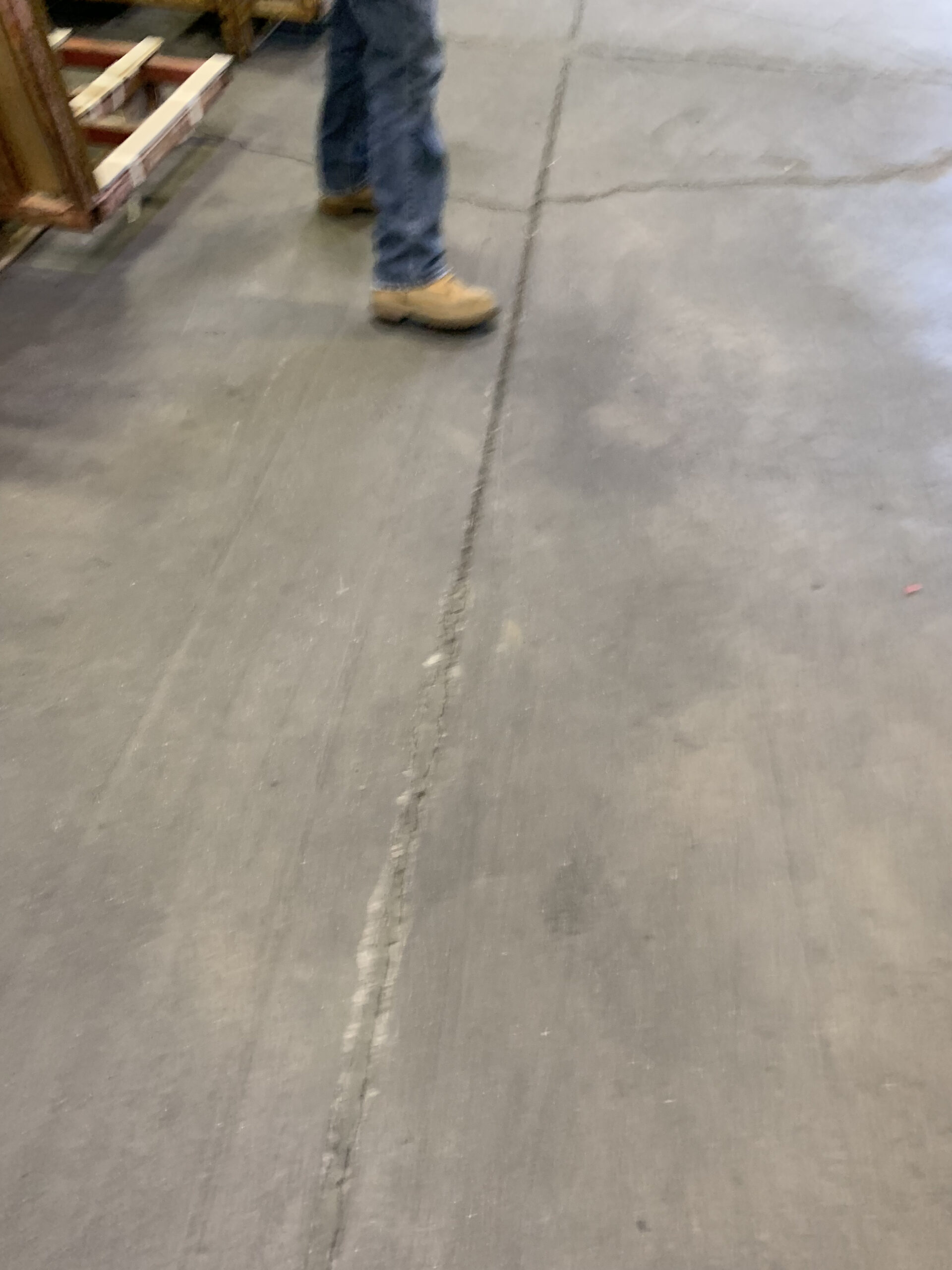
What you see: Random cracks across a plant or warehouse floor. Metzger/McGuire, one of the makers we install, lists its Rapid Refloor for random cracks and surface spalls and popouts. For wider or moving cracks, its sheet says to rout the crack and fill it with RS 88 or MM-80.
✓ What to watch:
- Cracks that could hold moisture, which USDA FSIS has cited in a plant
- Cracked floors in a food plant, which FSIS weekly checks look for
- Cracks that open wider or move, which the maker’s sheet says to rout and fill with RS 88 or MM-80
- Random cracks with surface spalls or popouts, which the maker lists together
What it can mean:
- Buyers say patching is a nightmare
- One buyer saw patched freezer cracks fail until the floor was dug out
- Our quotes list crack repair where the scope calls for it
Common applications: plant, warehouse and freezer floors. See our concrete repair services.
Spalled, Chipped or Pitted ConcreteChips, holes & ruts▼
What you see: Chipped, pitted or broken concrete with holes, gouges or ruts. Buyers call it chipping, flaking or gravelling. Metzger/McGuire lists uses for its Armor-Hard kit that include holes, gouges, ruts, popouts and broken slab panel corners.
✓ What to watch:
- Pitted concrete in a food plant, which one SQF site says is not acceptable
- Broken slab panel corners
- Concrete breaking into loose grit, which buyers call gravelling
- Ruts and gouges
What it can mean:
- Our quotes list patching where the scope calls for it
- Metzger/McGuire also lists Armor-Hard as a topping for delaminated slabs
- A few of our quotes list ripping out and replacing a section
Common applications: warehouse, plant and shop floors. See our repair process.
Uneven, Settled or Rocking SlabsRocking & uneven floors▼
What you see: A slab that rocks or deflects when a forklift crosses it, or a step up from one slab to the next. Metzger/McGuire says rocking is usually the result of slab curl or voids below grade. FacilitiesNet lists a sudden change in floor elevation of more than 1/4 inch as a hazard.
✓ What to watch:
- Slab edges that move under forklift loads
- A step of more than 1/4 inch between slabs
- Hollow spots in the floor
- A freezer floor that heaves, which one engineer traced to failed underfloor heat
What it can mean:
- Metzger/McGuire lists Spal-Pro Stabilizer for slabs that deflect or rock under material handling loads
- Some of our quotes list stabilizer foam injection or self-leveling work where the scope calls for it
- We don’t do structural engineering
Common applications: warehouse, plant and freezer floors. See concrete repair options.
Broken Joints and Forklift DamageJoint edges & wheels▼
What you see: Chipped or broken joint edges in warehouse and plant floors. An engineer names forklift wheels as a cause of joint failure, especially steel and hard rubber wheels. An engineer also says joint costs can be huge once forklifts damage the joints or the sealant needs replacing.
✓ What to watch:
- Joint edges chipping where forklifts cross
- Steel or hard rubber forklift wheels
- Soft joint filler that gives under loads
- Heavier loads and smaller, harder wheels, which the MM-80 sheet names
What it can mean:
- Metzger/McGuire says softer fillers deflect under loads and let joint edges spall
- Metzger/McGuire sells Edge-Pro 90 to protect joint edges from spalling under material handling traffic
- Our quotes list joint repair where the scope calls for it
Common applications: warehouses and plants. See our commercial joint repair page.

WARNING SIGN QUESTIONS
Frequently Asked Questions About Concrete Floor Damage Warning Signs
Which concrete floor damage signs shouldn’t wait?
Four signs are worth a call soon. Joint edges breaking up under forklift wheels. A slab that rocks or deflects under a load. Cracks or holes that could hold moisture in a food plant, which USDA FSIS has cited. A step of more than 1/4 inch, which FacilitiesNet lists as a hazard.
What does it mean when a slab rocks under a forklift?
Metzger/McGuire says rocking is usually the result of slab curl or voids below grade. It lists its Spal-Pro Stabilizer for slabs that deflect or rock under material handling loads. Some of our quotes list stabilizer foam injection where the scope calls for it. We don’t do structural engineering, and a few quotes list ripping out and replacing a section.
Why does a floor coating keep failing in the same spots?
Buyers point to a few causes. One food plant guessed that cleaning chemicals and water had weakened the bond to the concrete. Others describe blisters and a slab that wasn’t really dry. Our standard quote terms assume the slab is under 75 percent relative humidity. Above that, a moisture mitigation system may replace the primer.
Do cracks in a food plant floor matter for an audit?
They can. USDA FSIS weekly checks look for cracked floors, per Food Safety Magazine. FSIS has cited cracks, holes and broken flooring that could hold moisture. One SQF Level 3 site wrote that pitted concrete floors are not acceptable, but an epoxy surface without cracks is okay. We don’t promise an audit result.
Does a crack at a joint need work right away?
If forklifts cross it, it’s worth a look soon. An engineer names forklift wheels as a cause of joint failure, especially steel and hard rubber wheels. Metzger/McGuire makes its Edge-Pro 90 filler to protect joint edges from spalling under material handling traffic. Buyers say joint costs can be huge once forklifts damage them.
Request a Site Assessment
Tell us what you’re seeing on the floor. Give us a call and we’ll set up a time to look at it.